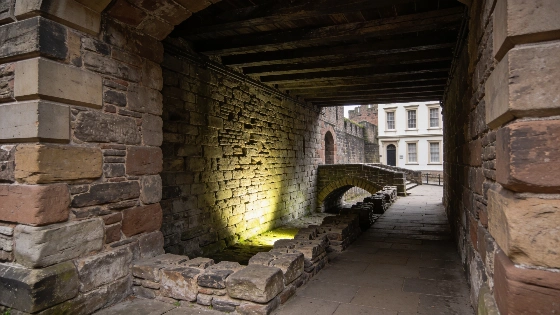
Archaeologists using advanced digital scanning have identified the remains of a 13th-century bridge beneath Chester Castle in England, challenging previous assumptions about the site's medieval architecture and preservation
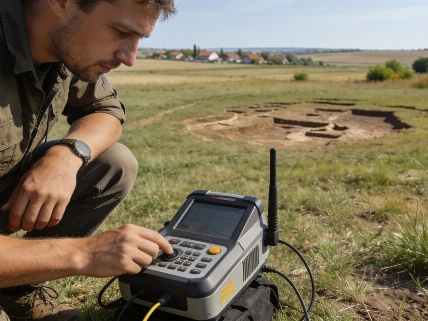
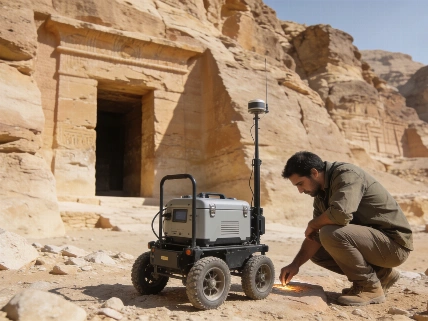
Archaeologists have identified the remains of a substantial medieval bridge beneath Chester Castle in northwest England, using digital survey methods that avoided any excavation. The discovery was made during a comprehensive digital documentation project at the castle complex, which combined laser scanning, drone imaging, and three-dimensional modeling to record both surface and subsurface features.
Uncovering Medieval Masonry
The breakthrough occurred when researchers examined underground passages beneath Chester Crown Court, a structure occupying the site of the castle's former 18th-century prison. Within a narrow corridor, a section of masonry was observed that differed markedly from the surrounding Georgian stonework. Comparative analysis of the stone and construction techniques indicated that this wall segment was medieval in origin, contrasting with the late 18th-century architecture attributed to Thomas Harrison's redevelopment of the site.
This finding challenges the long-standing view that Harrison's renovations had removed most medieval elements from this part of the castle. The wall, measuring nearly three meters in height, suggests that significant portions of the earlier structure remain intact below the current complex and adjacent car park. High-resolution digital scans allowed the team to map the wall's position and compare it with historical plans, revealing that it formed part of a bridge constructed in the 13th century to span the castle's defensive ditch.
Dating and Interpretation
Analysis of the structure's alignment and construction methods, together with historical records, supports a construction date between 1260 and 1280 CE. During this period, a fortified gatehouse replaced an earlier entrance, and the bridge likely provided access across the ditch to the castle's inner ward. The gatehouse itself was later demolished during Harrison's 18th-century works. Researchers propose that the bridge may have included a drawbridge mechanism, drawing comparison to the medieval bridge at Beeston Castle, where similar defensive features survive.
The digital survey was conducted as part of the Digital Dimensions project, a collaboration involving the University of Chester, Cheshire Constabulary, English Heritage, Historic England, SCCS North, and the Hartree National Centre for Digital Innovation. The project aims to create detailed 3D models of historic sites and to support heritage crime prevention. In addition to the bridge discovery, the initiative has provided specialist training for police officers in the use of digital technologies to protect vulnerable archaeological sites.
Preservation and Broader Context
The newly identified bridge remains contribute to a more nuanced understanding of Chester Castle's architectural evolution. The site's original stone gateway, known as the Agricola Tower, survives nearby and contains the Chapel of St Mary de Castro, which is notable for its 13th-century wall paintings. The presence of substantial medieval masonry beneath later structures demonstrates the complexity of site preservation and the potential for further undiscovered features within the castle grounds.
Digital documentation methods are increasingly important in archaeology, allowing researchers to record and analyze structures that are inaccessible or at risk of disturbance. The Chester Castle project highlights how non-invasive techniques can reveal significant evidence without excavation, preserving fragile heritage for future study. Comparable approaches have been used at other sites in Britain, such as the investigation of early Roman connections at Iron Age cemeteries, as seen in the analysis of burial grounds in eastern England.
According to project leaders, the discovery at Chester Castle underscores the value of proactive digital recording in uncovering previously unknown archaeological features. The evidence suggests that further medieval structures may survive beneath the current castle complex, but their extent and preservation remain to be established through future research.
Digital survey techniques such as laser scanning and 3D modeling are transforming archaeological practice by enabling the detailed recording of sites without physical intervention. These methods capture precise spatial data, allowing researchers to analyze construction phases, identify hidden features, and compare new findings with historical documentation. While digital models cannot replace the information gained from excavation, they provide a critical tool for heritage management, especially where excavation is not feasible or would risk damaging surviving structures.