A laboratory system used machine learning to classify five odors and send instructions to wearable scent dispensers. Participants recognized individual smells more often than combinations, while every scent still came from a preloaded supply
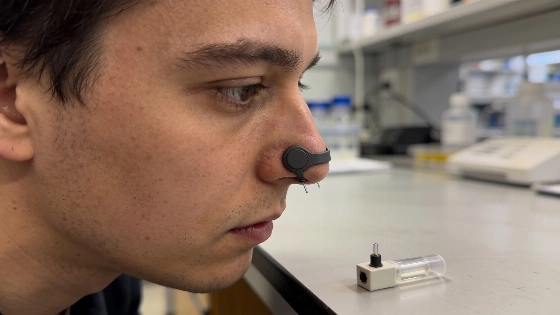
Fourteen healthy volunteers tried to identify odors delivered through Scentronic, a networked sensing and dispensing system developed by researchers at The Ohio State University and Zhejiang Laboratory in China. Participants identified individual odors correctly 73% of the time and combinations about 71% of the time. The results, reported in Science Advances, reflect a controlled laboratory test of a limited set of scents.
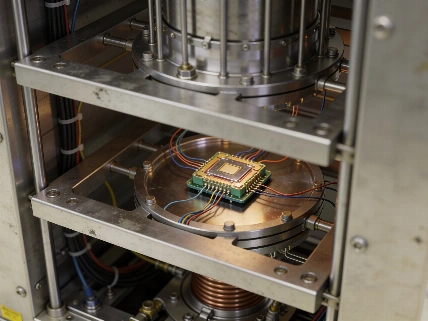
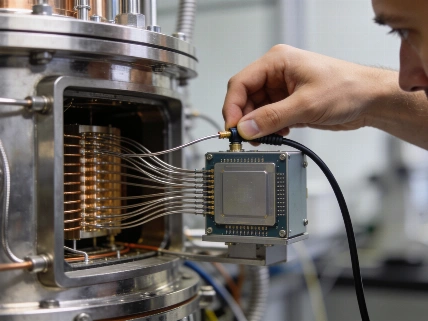
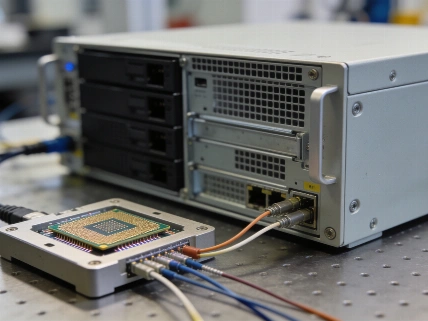
Scentronic links an artificial-intelligence electronic nose to a receiving scent dispenser. The nose uses an array of six gas sensors to detect patterns associated with volatile compounds-the molecules responsible for smells-and machine-learning software classifies those patterns. Digital instructions travel over the internet to the receiving device, which releases a corresponding stored scent near the user.
The network carries digital information, not odor molecules. The receiver uses scented liquids and miniature vibrating atomizers to create an airborne mist, and can release only scents already loaded into it. The system so selects from a prepared scent library rather than rebuilding an odor from its chemical ingredients. Identifying a scent category and reproducing every component of the original smell are distinct tasks.
The study tested five everyday aromas: beer, cake, coffee, orange and red wine. The reported 73% and 71% figures measure how often participants recognized individual scents and combinations, respectively. Scent signal response was about 0.6 seconds, while classification of more complex food odors took several seconds; the response time and the classification process measure different stages of the system.
Those figures describe a small, controlled test rather than performance across a broad population or unfamiliar odor mixtures. The team says it plans to test the system outside the laboratory, use more complex evaluations and improve controls for possible participant bias.
Researchers demonstrated Scentronic in wristband, necklace and handheld forms. The team also developed a version that releases scent-infused flavored liquids, extending the experiment from smell toward part of a drinking experience. In a proposed application, a person selecting a digital drink in virtual reality could receive a corresponding flavored liquid at home; the study presents this as a possible use, not a deployed service.
The researchers have also identified possible uses in virtual social gatherings, online shopping and healthcare research involving sensory perception or its loss. These applications remain separate from the volunteer recognition test. For a comparison with another effort to connect software to physical systems, Science Report has covered Amazon's physical AI platform; Scentronic instead connects chemical sensing and classification to a dispenser that releases a prepared material.
The engineering process has three stages: sensing, classification and delivery. Sensors measure patterns in the air, a machine-learning model assigns a category to those measurements, and the dispenser releases a prepared scent associated with that category. Chunyu Yang, an Ohio State doctoral student in materials science and engineering and the study's lead author, described the system as connecting "smelling something here" with "recreating the corresponding smell somewhere else." The reported recognition results concern participants identifying the dispensed odors, while the scents themselves come from preloaded supplies.