

During sols 5060-5062, Curiosity kept remote observations going while recharging, then tested whether CheMin could transfer data during an orbiter downlink. The initial result looked promising and still required engineering analysis
On sol 5061, Curiosity tested a high-CPU CheMin data transfer while sending data to an orbiter. The trial explored whether overlapping the activities could reduce the time the rover stayed awake and save power. NASA operations systems engineer Remington Free described the test as running CheMin's "Get Data" activity at the same time as an orbiter transmission.
Testing parallel work
The Oct. 30, 2026, planning report described the test as having gone well, while noting that engineering staff still needed to analyze the results before approving similar activity pairs for routine use. CheMin's "Get Data" activity moves science data from the instrument to Curiosity's flight computers. Free said the team was evaluating ways to use less power as the rover's electrical output declines with age.
The recharge plan covered three consecutive Martian sols, 5060 through 5062, with the engineering test on sol 5061. NASA's strategy is to shorten the rover's awake time by running compatible activities in parallel; the report did not quantify power savings from this trial. A separate Mars rover report covered Perseverance's dust measurements on spacesuit samples.
The Nazca campaign
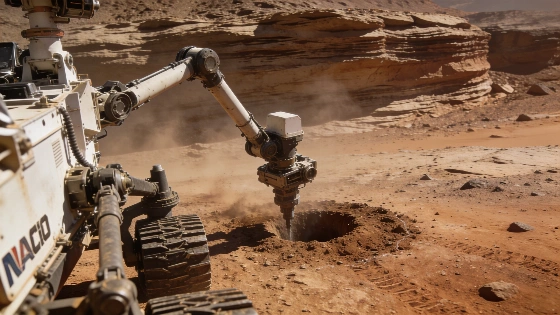
The recharge period followed Curiosity's drilling at Nazca, identified in the preceding NASA planning report as the rover's 49th drill hole. The hole had been drilled, ChemCam had examined the tailings, and sample portions had been delivered to both SAM and CheMin. The sample's science data were still being transmitted from Mars to Earth in that report.
Remote observations
Each sol included a morning science block. ChemCam observations and Remote Micro-Imager mosaics covered targets called Titicaca and Pampas, with Salta also included in the observation plan. The rover took Mastcam images of its calibration target and drill site.
Navcam studies monitored dust devils, while Mastcam collected tau observations and twilight images. The plan also continued remote study of the Nazca crystal formations, nearby layered rocks and bedrock.
Curiosity sends data to Earth through scheduled orbiter relay passes. OrbitalHub reported that rovers can lose line of sight to Earth for about 12 hours a day, and that the loss of NASA's MAVEN spacecraft in 2026 shifted relay traffic to the remaining orbiters. For February through May 2026, the report gave average daily relay volumes of 2,228.1 megabits for ESA's ExoMars Trace Gas Orbiter, 850.6 megabits for NASA's Mars Reconnaissance Orbiter and 107.3 megabits for Mars Odyssey. OrbitalHub's account of the relay network also noted Odyssey's reduced role among the active orbiters.







