A UK-led team has integrated prototype cold-atom quantum clocks into operational military radar, demonstrating networked radar synchronization without GPS timing and testing resilience under simulated electronic attack conditions
In June 2026, Saab UK, Aquark Technologies, and the Royal Navy's Disruptive Capabilities and Technologies Office (DCTO) conducted a field trial integrating cold-atom quantum clocks with operational military radar systems. The experiment, carried out at multiple UK sites and involving the Royal Navy's experimentation vessel XV Patrick Blackett, tested whether radar networks could maintain precise synchronization and coherent target tracking without relying on satellite-based timing signals such as GPS or GNSS.
Quantum Clocks in Radar Networks
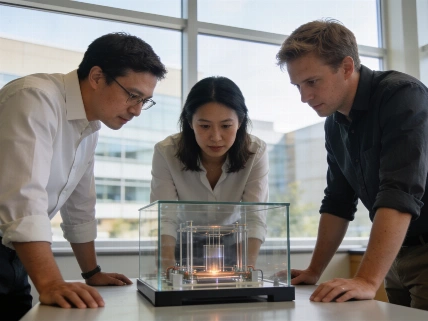
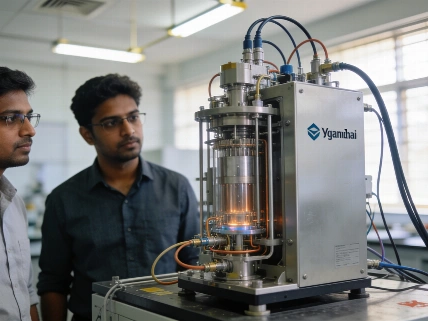
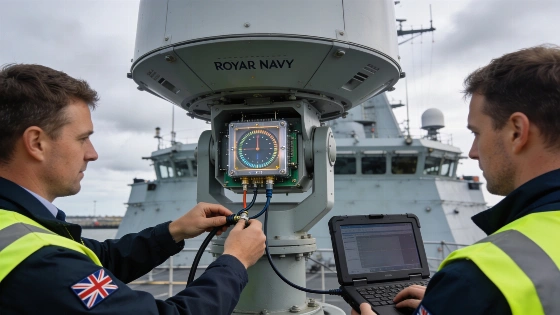
Modern cooperative radar systems depend on sub-nanosecond timing to correlate target tracks across geographically separated sensors. In contested environments, electronic jamming or spoofing of satellite timing can degrade radar performance, leading to loss of target resolution and unreliable airspace monitoring. To address this vulnerability, the trial deployed two AQlock 2.0 prototype cold-atom clocks-developed by Aquark Technologies using a magnetic-field-free "Super-Molasses Trap" architecture-directly into Saab's Giraffe 1X 3D radar units. The clocks were designed to provide a stable, independent timing reference for radar synchronization, even when external signals were unavailable or compromised.
Experimental Conditions and Results
The field test evaluated radar network performance under simulated GNSS-denied and electronic spoofing scenarios. Both AQlock 2.0 units were cold-started from power-off and reached operational timing precision in under 30 minutes. During live operation, multiple Giraffe 1X radars fused target tracking data into a single coherent air picture, relying exclusively on the quantum clocks for synchronization. When artificial timing distortions were introduced to simulate spoofing, the system exhibited predictable degradation in track fusion, but recovered rapidly once clock synchronization was restored. These results suggest that cold-atom clocks can provide a practical timing backbone for radar networks operating in environments where satellite timing is unreliable or actively targeted.
Technical Benchmarks and Limitations
While the trial demonstrated successful integration and operation of cold-atom clocks in a real-world defense setting, several engineering questions remain. The AQlock 2.0 prototypes achieved initialization and synchronization within 30 minutes, but long-term stability, environmental robustness, and maintenance requirements under operational stress were not fully characterized. The experiment did not report detailed timing stability metrics, such as Allan deviation or drift rates, over extended deployments. Additionally, the trial focused on radar synchronization rather than direct quantum enhancement of radar detection or resolution. The clocks' performance was benchmarked against the loss of GNSS signals, but a full comparison with state-of-the-art classical timing references under identical field conditions was not included.
Deployment Pathways and Security Context
This field trial marks the third collaboration between Aquark Technologies and the Royal Navy's DCTO, and establishes a pathway for deploying cold-atom timing infrastructure across naval, land, and aerospace platforms. The ability to maintain radar network coherence without external timing signals is of growing interest for defense and critical infrastructure, especially as electronic warfare capabilities advance. The trial's focus on operational integration and resilience under spoofing conditions distinguishes it from laboratory demonstrations of quantum clocks. For context, recent advances in quantum-secured communication hardware, such as the ELVIS QKD system's independent security audit, have also highlighted the importance of robust quantum devices for national security applications (see coverage of quantum key distribution hardware evaluation).
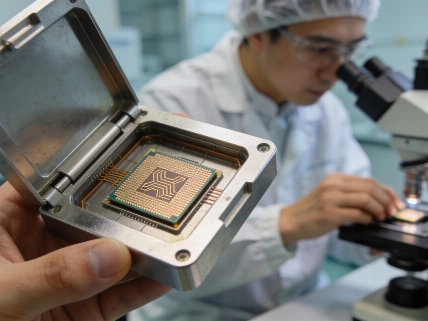
Cold-atom clocks operate by trapping and cooling atoms-typically alkali metals such as rubidium or cesium-using laser light and magnetic fields, then measuring the frequency of a well-defined atomic transition. This frequency serves as a highly stable time reference, with performance that can surpass classical quartz or crystal oscillators, especially over long averaging times. In practical systems, the challenge lies in engineering compact, robust, and low-maintenance devices that can operate outside laboratory conditions. The integration of such clocks into radar and communication networks aims to provide secure, tamper-resistant timing for critical infrastructure, but widespread deployment will depend on further evidence of reliability, manufacturability, and cost-effectiveness in real operational environments.