Quantum Optics Jena's ELVIS quantum key distribution system has completed an independent ISO/IEC 23837 hardware security evaluation, testing for side-channel vulnerabilities in entanglement-based QKD devices
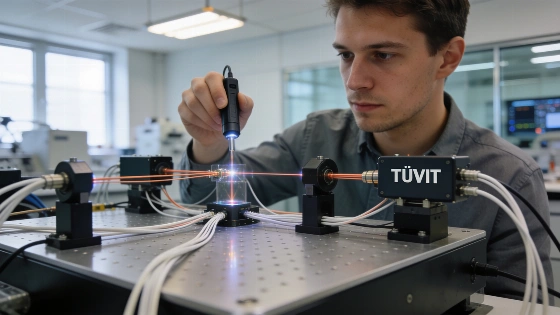
Quantum Optics Jena GmbH (QOJ), a German developer of quantum communication systems, has announced that its ELVIS quantum key distribution (QKD) hardware has completed an independent security evaluation under the ISO/IEC 23837 standard. The assessment, conducted by TÜV Informationstechnik GmbH (TÜVIT) over a three-month period, focused on identifying hardware-level vulnerabilities in the entanglement-based QKD platform. According to the company, the evaluation found no major exploitable side-channel weaknesses in the tested devices.
Entanglement-Based QKD Hardware
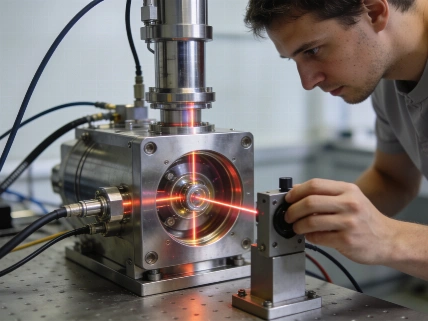
The ELVIS system uses entangled photon pairs to distribute cryptographic keys between network nodes, aiming to provide security based on quantum mechanical principles. While the theoretical security of QKD protocols is well established, practical implementations can be compromised by hardware imperfections. Attackers may exploit side channels in lasers, single-photon detectors, modulators, or optical splitters to extract key information without detection. The ISO/IEC 23837 standard was developed to address these real-world risks by defining test procedures for hardware security in commercial QKD systems.
Security Evaluation and Test Conditions
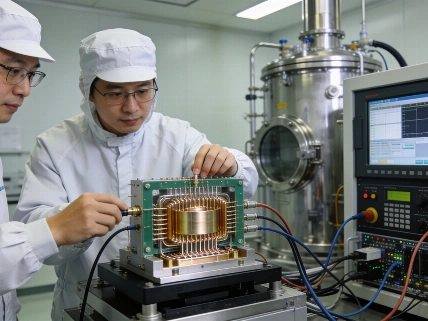
TÜVIT's audit subjected the ELVIS hardware to six targeted side-channel attack scenarios, including attempts to manipulate or eavesdrop on physical components. The evaluation included benchmarking against ISO/IEC 23837 requirements, multi-party key distribution tests, and verification of the system's eavesdropping detection mechanisms. Over the three-month audit, no major hardware vulnerabilities were identified, though the company has not disclosed detailed test results or minor findings. The assessment methodology was developed as part of the QuNET+BlueCert initiative, a German federal research program involving Fraunhofer institutes and academic partners, which aims to establish standardized certification protocols for quantum communication networks.
Certification and Sector Implications
Independent hardware certification is a critical step for QKD vendors seeking to deploy systems in telecommunications, energy, finance, and defense. Achieving ISO/IEC 23837 compliance provides a framework for evaluating the physical security of quantum communication devices beyond theoretical protocol guarantees. However, the absence of major vulnerabilities in one audit does not guarantee immunity from future attack methods or implementation flaws. The ELVIS evaluation highlights the growing emphasis on hardware-level certification as quantum communication moves toward commercial and government adoption. For context on recent quantum hardware initiatives, a UCLA-led team is developing a trapped-ion quantum computer architecture targeting 60 logical qubits, with a focus on error correction and digital quantum simulation, as described in this related report.
Remaining Engineering Challenges
Despite progress in hardware certification, several engineering challenges remain before QKD can be widely deployed. Device variability, calibration drift, optical loss, and integration with existing network infrastructure all affect real-world performance. Side-channel attacks continue to evolve, and certification standards must adapt to new threat models and device architectures. The ELVIS evaluation demonstrates that independent testing is feasible, but ongoing transparency and reproducibility will be essential for building trust in quantum-secured networks.
Quantum key distribution (QKD) is a method for securely distributing cryptographic keys using quantum states, typically photons. Entanglement-based QKD protocols exploit the quantum correlations between entangled particles to detect eavesdropping attempts. While the underlying physics can guarantee security in principle, practical systems are vulnerable to attacks that exploit imperfections in hardware components. Side-channel attacks target these weaknesses, making independent hardware certification and continuous security evaluation essential for any QKD deployment beyond the laboratory.