China's Tianwen 3 mission is advancing toward a 2028 launch window, with plans to return Martian surface samples to Earth by 2031 using a multi-stage spacecraft and strict planetary protection protocols
China is moving to claim a major milestone in planetary science, as its Tianwen 3 mission advances toward a 2028 launch with the goal of returning Martian surface samples to Earth. If successful, China could become the first nation to deliver material from Mars, overtaking NASA's delayed sample-return plans and reshaping the global balance in deep space exploration.
Mission Architecture
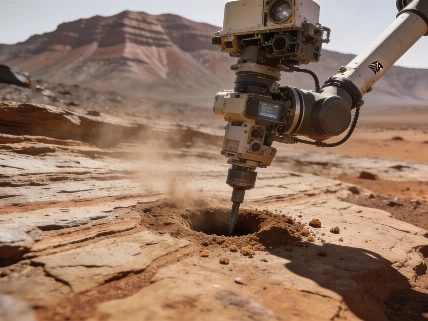
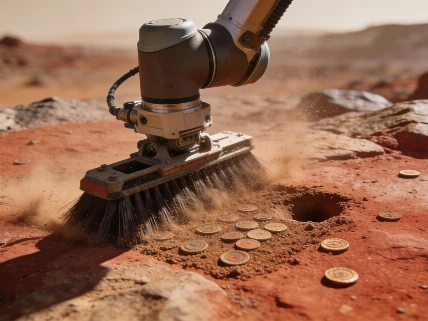
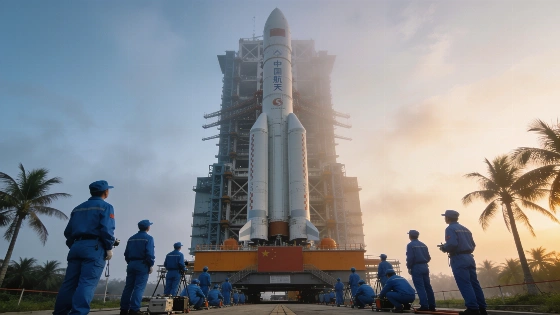
The Tianwen 3 mission is designed as a complex, multi-component operation. The architecture includes a lander, an ascender to lift collected material from the Martian surface, an orbiter, a service capsule, and an Earth reentry module. The mission will launch on two Long March 5 heavy-lift rockets from the Wenchang Space Launch Site in Hainan province, targeting the December 2028 to January 2029 Mars launch window. The plan calls for the spacecraft to collect approximately 500 grams of Martian regolith and rock, with a scheduled return to Earth in 2031.
Prototype development is underway, with Chinese teams working to address the technical challenges of autonomous landing, sample collection, ascent from Mars, and secure return. The mission's timeline is ambitious, especially as NASA's own Mars Sample Return project faces uncertainty over funding and schedule, as noted in reported earlier coverage.
Scientific Objectives
The primary scientific goal of Tianwen 3 is to search for evidence of past or present life on Mars. Mission scientists are prioritizing the detection of potential biosignatures-chemical, isotopic, or morphological features that could indicate biological activity. The mission will also investigate the planet's geological history, water activity, and habitability, with landing site selection guided by the likelihood of preserving ancient biosignatures.
Chinese researchers are developing a new geological map of Mars to inform the final landing site decision, expected by the end of 2026. The returned samples will be analyzed at microscopic, molecular, and isotopic scales, providing data on Martian mineralogy, geochemistry, and environmental evolution. Even if no signs of life are found, the samples are expected to yield irreplaceable scientific value for understanding planetary processes and the conditions for life's emergence.
Planetary Protection and Laboratory Infrastructure
Sample return missions from Mars present unique risks, both in preventing terrestrial contamination of Mars and in safeguarding Earth's biosphere from potential extraterrestrial material. China is constructing a dedicated planetary protection laboratory in Hefei's Deep-Space Science City, tasked with sterilization, unsealing, processing, and biological risk assessment of the returned samples. The facility will operate under international planetary protection guidelines to minimize the risk of cross-contamination.
Mission planners emphasize a two-way protection system, with protocols to prevent forward contamination of Mars by terrestrial microbes and to contain any unknown biological agents that might be present in Martian material. The laboratory will support both the technical requirements of sample handling and the scientific analysis needed to interpret the mission's findings.
International Context and Scientific Stakes
China's progress on Tianwen 3 comes as NASA's Mars Sample Return faces delays and budgetary uncertainty, raising the possibility that China could achieve the first successful return of Martian material. The mission's timeline, if met, would represent a significant shift in planetary exploration leadership. Some experts have compared the situation to the original Sputnik moment, when the Soviet Union's early space achievements forced a strategic reassessment in the United States and beyond.
With the potential to deliver the first direct samples from Mars, Tianwen 3 could provide unprecedented insight into the planet's history and habitability. However, the technical and scientific challenges remain formidable, from autonomous landing and ascent to contamination control and sample analysis. The mission's outcome will depend not only on engineering success but also on the rigor of planetary protection and the transparency of scientific results. If China delivers on its schedule and scientific objectives, the consequences for planetary science and international space competition will be immediate and profound.
Sample return missions are among the most technically demanding in planetary exploration. They require precise landing, secure sample collection, ascent from a planetary surface, and safe return to Earth. Planetary protection protocols are enforced to prevent biological contamination in both directions. Returned samples are typically analyzed in specialized laboratories using a range of techniques, including microscopy, spectroscopy, and isotopic analysis, to search for biosignatures and reconstruct planetary history. The scientific value of such missions depends on both the integrity of the samples and the transparency of the analytical process.