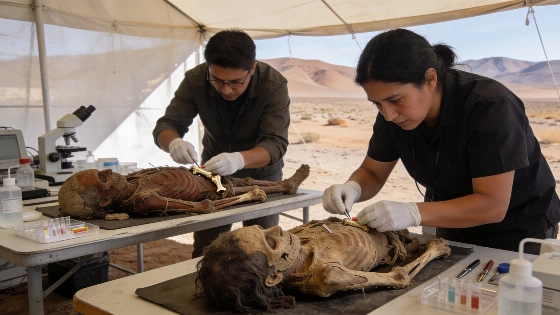
Researchers have recovered ancient smallpox DNA from two Inca mummies in northern Chile, providing the first direct molecular evidence that European-introduced smallpox reached South America during the early colonial period
Ancient DNA analysis of two mummified individuals from northern Chile has produced the earliest known smallpox genomes from the Americas, offering direct evidence that the disease arrived with European colonization. The study, published in Science, examined skeletal remains from the Camarones 9 cemetery, a site associated with the Inca period, and identified variola virus DNA in both an adult female and an adult male who lived between 1492 and 1631 CE.
Evidence from Camarones 9
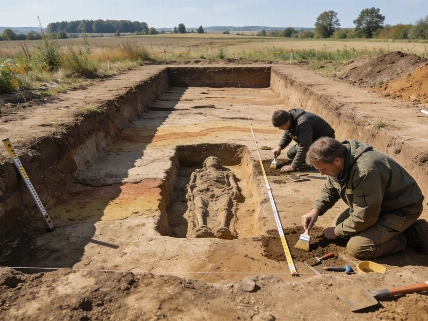
The two mummies were excavated from a cemetery in the arid coastal region of northern Chile, where preservation conditions have allowed for the survival of ancient biomolecules. Researchers extracted DNA from bone samples and, while initially investigating population history, unexpectedly detected sequences matching the variola virus, the causative agent of smallpox. The viral genomes recovered from both individuals were nearly identical, suggesting infection during the same outbreak or from a closely related strain circulating in the region.
Radiocarbon dating and archaeological context place the burials within a period spanning the arrival of Europeans in the Americas and the early decades of colonial rule. The Camarones 9 site, with its well-documented Inca-period mortuary practices, provides a secure context for interpreting the introduction of new pathogens into Indigenous populations. The presence of smallpox DNA in these remains offers the first molecular confirmation of a disease that, according to historical records, devastated Indigenous communities but has rarely been directly identified in ancient American skeletons.
Genomic Insights and Historical Impact
Comparative analysis revealed that the ancient variola genomes represent an extinct lineage, branching from a European strain that diverged around the late 13th century. This lineage predates modern smallpox strains, supporting the interpretation that the virus was introduced to South America by European contact rather than evolving locally. The study's findings align with historical accounts of smallpox outbreaks following the Spanish conquest, but provide a rare opportunity to examine the pathogen's evolution and spread using direct evidence from human remains.
Estimates based on historical and demographic data suggest that smallpox, along with other introduced diseases and colonial violence, contributed to a dramatic population decline-up to 90%-among Indigenous peoples of the Americas by 1600 CE. The identification of smallpox DNA in Inca-period mummies adds to a growing body of evidence for the biological consequences of colonial encounters, complementing osteological studies of disease lesions in other ancient remains, such as the 16th-century Peruvian toddlers with possible smallpox-related bone changes.
Limitations and Future Directions
While the detection of variola virus DNA in two individuals is a significant advance, the limited sample size and geographic scope mean that broader patterns of smallpox transmission and evolution in the Americas remain uncertain. The absence of historical records documenting smallpox in this specific community highlights the value of molecular evidence in reconstructing disease history, but also underscores the need for further sampling across different regions and time periods.
Researchers emphasize that additional ancient DNA studies are needed to clarify the diversity of smallpox strains introduced to the Americas and to trace the pathogen's adaptation to human hosts. The study also raises questions about the mechanisms by which variola virus lost the ability to infect nonhuman animals, a process observed in the inactivation of certain viral genes in the ancient genomes. Understanding these evolutionary changes may inform research on related viruses, such as mpox, which continue to pose public health challenges today.
Context and Comparative Research
The recovery of ancient smallpox DNA from Inca mummies builds on a wider effort to document the biological and social impacts of colonialism in South America. Similar approaches have been used to investigate dietary transitions, as seen in stable isotope studies of maize-based farming in precolonial Brazil, which challenge assumptions about Indigenous subsistence strategies. For example, analysis of isotopic evidence from the Brazilian Cerrado has revealed the complexity of ancient agricultural practices (see this related research), illustrating how direct scientific evidence can refine our understanding of past population health and adaptation.
As more ancient pathogen genomes are recovered from archaeological contexts, researchers anticipate a clearer picture of how infectious diseases shaped demographic and cultural change in the Americas. The integration of molecular, osteological, and contextual data remains essential for interpreting the consequences of colonial contact and for addressing the ethical responsibilities involved in studying human remains from descendant communities.
Ancient DNA analysis is a powerful tool for reconstructing the presence and evolution of pathogens in past populations. The preservation of viral DNA depends on environmental conditions, burial context, and postmortem processes, with arid or frozen environments often providing the best survival. Molecular identification of ancient pathogens requires careful contamination control and authentication, as well as comparison with modern and historical genomes. While ancient DNA can reveal direct evidence of infection, it is important to recognize that not all diseases leave detectable traces in skeletal remains or preserved tissues, and that sampling limitations may bias our understanding of past epidemics.