The Zilog Z80, a foundational 8-bit microprocessor for early computing and embedded systems, has reached end-of-life status after decades of use, raising questions about legacy hardware support and the persistence of retrocomputing communities
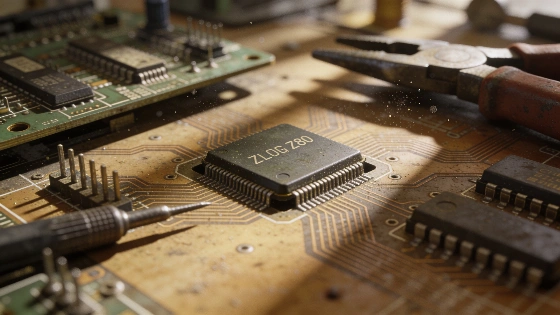
The Zilog Z80 microprocessor, first introduced in July 1976, has officially reached end-of-life status following a decision by its current owner, Littelfuse, to discontinue production of the standalone chip and its associated peripherals in 2024. The Z80 played a central role in the development of early home computers, industrial controllers, and arcade systems, and its architecture influenced generations of hardware and software design. Despite its age, the processor remained in production for nearly five decades, a rare longevity in the fast-moving semiconductor industry.
Originally designed as an 8-bit microprocessor compatible with the Intel 8080 instruction set, the Z80 offered expanded registers and additional instructions, making it attractive for both consumer and industrial applications. Its adoption in systems such as the Sinclair ZX Spectrum, Amstrad CPC, and Sega Master System established the Z80 as a standard platform for software development and hardware integration. The chip's simplicity, reliability, and extensive documentation contributed to its widespread use in embedded systems well beyond the era of mainstream personal computing.
Legacy and Continued Use
While official production of the original Z80 has ceased, the processor's architecture persists in derivative systems and software projects. Notably, the eZ80 system-on-chip, used in devices like the TI 84+ CE calculator, maintains compatibility with legacy Z80 code while offering enhanced performance. Hobbyist and retrocomputing communities continue to develop new operating systems, toolchains, and multitasking demonstrations for the Z80, extending its relevance through open-source projects and educational initiatives. These efforts highlight the enduring appeal of transparent, well-documented hardware platforms for experimentation and learning.
Among the notable software developed for the Z80 was Z80-RIO, an operating system created by Zilog to support its hardware ecosystem. Although Z80-RIO did not achieve the commercial success of the processor itself, it remains a point of interest for those studying the evolution of early operating systems and the challenges of software adoption in a rapidly changing market.
Production Figures and Technical Context
During its nearly 50-year production run, the Zilog Z80 was manufactured in the millions, with estimates suggesting over 1 billion units shipped worldwide across all variants and licensed versions. The processor operated at clock speeds ranging from 2.5 MHz in early models to over 20 MHz in later iterations and derivatives. Its 8-bit data bus and 16-bit address bus allowed access to 64 kilobytes of memory, a significant capacity for its time. The chip's instruction set and hardware simplicity made it a preferred choice for both commercial products and educational kits, supporting a wide range of programming languages and development tools.
Despite the end of official production, the Z80's influence persists in both hardware and software. Emulators, FPGA implementations, and compatible microcontrollers allow continued experimentation and preservation of Z80-based systems. However, the discontinuation of original silicon raises concerns for industries and hobbyists reliant on authentic parts, particularly in applications where hardware certification or long-term support is required.
Implications for Legacy Systems
The end-of-life announcement for the Z80 underscores broader challenges in maintaining legacy hardware within critical infrastructure, industrial automation, and educational environments. As original components become scarce, organizations must evaluate the risks of hardware obsolescence, including supply chain vulnerabilities, increased costs for certified replacements, and the potential need for system redesign or emulation. For retrocomputing communities, the transition may accelerate interest in open-source hardware, software preservation, and alternative approaches to sustaining vintage computing platforms.
While the Z80's discontinuation marks the close of a significant chapter in microprocessor history, its architectural legacy and the communities it inspired continue to shape the landscape of embedded computing and digital preservation. The processor's transparent design and extensive documentation remain valuable resources for understanding the evolution of computer engineering and the enduring importance of accessible, well-understood hardware platforms.
Understanding the distinction between automation and autonomy is essential when evaluating legacy microprocessors like the Zilog Z80. The Z80 executed instructions deterministically based on programmed input, without adaptive learning or independent decision-making. Unlike modern AI accelerators or embedded neural processors, the Z80's operation was fully defined by its instruction set and the software provided by human developers. This clear separation between hardware capability and software logic remains a foundational concept in computer engineering, informing both the design of new systems and the preservation of historical platforms.