

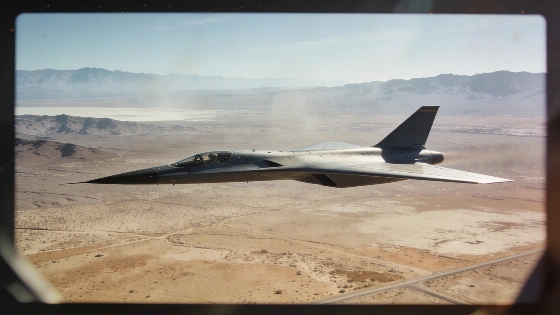
Mike Lippert's Oct. 21 flight followed the X-59's busiest week of testing and scheduled maintenance. The aircraft had first flown in 2025 and made its first supersonic flight in June 2026
The flight came after the X-59's busiest week of testing to date, following scheduled maintenance and a review of the aircraft's systems. For NASA test pilot Mike Lippert, it was a first: his initial flight aboard the quiet supersonic research aircraft. The one-hour sortie reached a maximum speed of Mach 1.4 and an altitude of 55,000 feet, NASA reported.
After a busy test week
The sequence matters. Lippert flew on Oct. 21, 2026, after the maintenance work and systems review; the aircraft was not making its first flight. The X-59 had already flown numerous times, with its inaugural flight in November 2025. Its first supersonic flight took place on June 5, 2026.
NASA's flight research also includes work on the ground: a separate wing airflow test at Langley used pressure-sensitive paint to record changes across a model wing. That wind-tunnel experiment was distinct from Lippert's flight at Armstrong.
One hour in flight
Lippert took off from NASA's Armstrong Flight Research Center in Edwards, California, and landed one hour later. During the flight, he reached a maximum speed of Mach 1.4 and an altitude of 55,000 feet, information from NASA's Quesst mission team.
The X-59 is part of NASA's Quesst mission, which is studying whether aircraft can fly supersonically while producing substantially reduced sonic booms. Its earlier milestones put Lippert's flight in context: the aircraft first flew in November 2025 and passed the sound barrier for the first time on June 5, 2026. Lippert's Oct. 21 flight marked his first time at the controls, adding a pilot key stage to the aircraft's ongoing test program.
What the key stage shows
NASA's reported flight profile included supersonic operation at high altitude, reaching Mach 1.4 and 55,000 feet. Those figures describe the aircraft's speed and altitude during the sortie; the flight's basic purpose sits within Quesst's broader research into quieter supersonic flight.
This was Lippert's first flight in the aircraft, not the X-59's first flight or its first supersonic flight. NASA said the sortie followed scheduled maintenance and a systems review after the aircraft's busiest testing week to date.







