SpaceX is preparing to launch Starship Flight 13 from Starbase, Texas, aiming to deploy 20 Starlink Version 3 satellites and test upgraded booster recovery systems in a mission scheduled for July 16
SpaceX is set to conduct its thirteenth Starship test flight on July 16, targeting a 6:45 p.m. EDT (2245 GMT) launch from the Starbase facility in South Texas. The mission is designed to evaluate both the deployment of next-generation Starlink Version 3 satellites and the performance of upgraded flight and recovery systems. This test follows a nearly two-month pause after Flight 12, which ended with the loss of the Super Heavy booster during its return phase. After a review of the anomaly and corrective actions, the Federal Aviation Administration has cleared SpaceX to resume Starship launches.
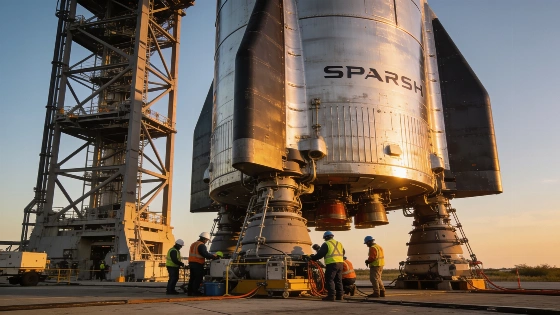
The primary objective of Flight 13 is to gather engineering data on the Starship and Super Heavy V3 vehicles under real flight conditions. The mission will begin with the ignition of all 33 Raptor 3 engines on the Super Heavy booster, generating up to 18 million pounds (about 8,200 metric tons) of thrust at liftoff. Approximately 2.5 minutes after launch, the booster is scheduled to separate from the Starship upper stage and attempt a controlled splashdown in the Gulf of Mexico. This approach continues SpaceX's efforts to refine booster recovery procedures, particularly after the landing burn failure observed during Flight 12.
Starlink V3 Deployment
One of the central milestones for this flight is the planned deployment of 20 Starlink Version 3 satellites. These satellites are intended to test Starship's payload deployment mechanisms in space. Unlike operational Starlink launches, the satellites on this mission are expected to reenter Earth's atmosphere after the demonstration, rather than remain in orbit. The outcome will provide critical data on Starship's ability to deliver and release payloads, a capability essential for future operational missions.
In addition to satellite deployment, the flight will continue to test upgrades to Starship's propulsion, avionics, and flight control systems. Engineers will monitor the vehicle's ascent and descent to assess the performance of these modifications. After completing the satellite deployment, Starship will follow a suborbital trajectory, reentering the atmosphere over the Indian Ocean and concluding with a planned splashdown about one hour after launch. This descent phase is expected to yield further information on the spacecraft's heat shield and guidance systems.
Mission Context and Technical Details
The Starship system, consisting of the Super Heavy booster and Starship upper stage, is designed as a fully reusable launch vehicle for missions to Earth orbit, the Moon, and Mars. The Raptor 3 engines, which power both stages, represent SpaceX's latest iteration of methane-fueled rocket propulsion. The Starlink Version 3 satellites are larger and more capable than previous versions, but this flight's payload is limited to 20 units for demonstration purposes. The mission's success will be measured by the quality of engineering data collected, the performance of the upgraded systems, and the effectiveness of the satellite deployment process.
Flight 13 remains a developmental test rather than an operational mission. While a successful deployment of Starlink satellites would demonstrate progress toward routine payload delivery, the primary goal is to validate design changes and gather data to inform future flights. The mission's outcome will influence the timeline for Starship's transition from experimental flights to operational launches carrying commercial or scientific payloads.
Understanding booster recovery is central to the Starship program's long-term viability. Controlled splashdowns allow engineers to analyze vehicle behavior during descent and landing, informing future attempts at more ambitious recovery methods, such as catching the booster with ground-based infrastructure. Each test flight incrementally advances the system toward full reusability, a key requirement for reducing launch costs and enabling high-frequency missions.
SpaceX's Starship program is subject to regulatory oversight, with the Federal Aviation Administration responsible for launch licensing and safety reviews. The resumption of test flights after Flight 12's anomaly reflects both technical progress and regulatory approval. As with all developmental missions, significant uncertainties remain, and the results of Flight 13 will be closely scrutinized by both engineers and external observers.
Starship's ability to deploy payloads in space is a prerequisite for its use in operational missions, including those supporting satellite constellations, lunar landings, and eventual Mars expeditions. The demonstration of Starlink Version 3 deployment is a step toward validating this capability, but further tests and operational flights will be required before Starship can be considered a reliable commercial launch vehicle.
SpaceX will provide live coverage of the launch, with streaming expected to begin 30 minutes before liftoff. The mission's progress and any anomalies will be reported in real time, offering the public and the scientific community direct insight into the test flight's outcomes.
Spacecraft commissioning is the process by which a newly launched vehicle or instrument is systematically tested and calibrated before entering routine operations. For Starship, commissioning includes verifying propulsion, avionics, guidance, and payload deployment systems under flight conditions. Data collected during this phase are used to identify design flaws, validate engineering models, and inform necessary modifications. Only after successful commissioning can a spacecraft be considered ready for operational missions, and each test flight contributes to this iterative process.