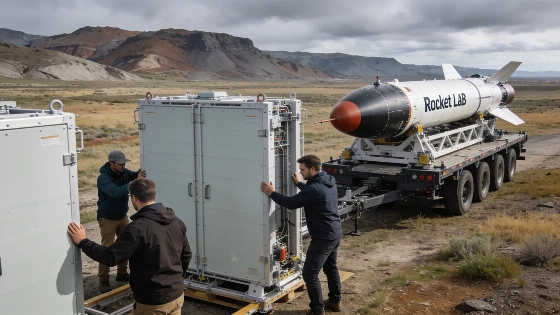
Rocket Lab has introduced GHOST, a portable launch infrastructure designed to enable rapid deployment of Electron and HASTE rockets from almost any location, aiming to support both orbital and hypersonic test missions with increased flexibility
Rocket Lab has announced a new portable launch system, GHOST, intended to expand the company's ability to conduct orbital and suborbital missions from a wider range of locations. The system is designed to package all necessary launch infrastructure into standard shipping containers, allowing for rapid deployment and setup in diverse environments. This approach is intended to support both commercial and national security missions that require flexible launch scheduling and locations.
Design and Capabilities
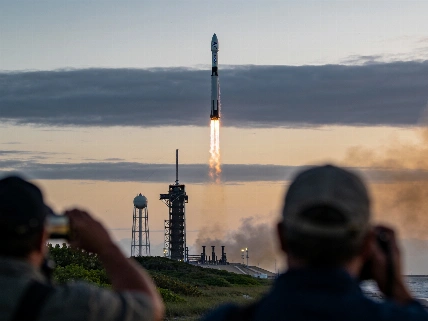
GHOST, which stands for Global Hypersonic & Orbital Spaceport Technology, integrates launch pads, ground support equipment, and range control systems into a modular format. The system is engineered to work with Rocket Lab's Electron rocket, a 59-foot (18-meter) expendable vehicle that has completed 83 missions since its 2017 debut, as well as HASTE, a suborbital variant used for hypersonic technology testing. By consolidating launch operations into transportable units, Rocket Lab aims to reduce the logistical barriers associated with fixed launch sites.
The company currently operates from two established launch complexes: one in New Zealand and another at Wallops Island, Virginia. Plans are underway to expand to Alaska's Pacific Spaceport Complex, where GHOST will be used to deploy two new pads. This expansion is intended to support a broader range of missions, including those requiring rapid response or unique geographic positioning.
Mission Context and Technical Details
Electron provides dedicated launch services for small satellites, while HASTE (Hypersonic Accelerator Suborbital Test Electron) is tailored for suborbital flights that simulate hypersonic conditions. HASTE first flew in June 2023 and has completed nine missions as of June 2026. The GHOST system was developed in response to customer demand for greater mobility, particularly for hypersonic test campaigns and missile defense applications.
Rocket Lab's infrastructure at Wallops includes a second pad under construction to accommodate the upcoming Neutron rocket, which is designed to be larger and partially reusable. Neutron's first flight, originally targeted for 2024, is now scheduled for late 2026, with significant progress reported in vehicle testing and assembly. The company states that all major components have undergone testing, and final integration is expected before the end of the year.
Implications for Launch Flexibility
The introduction of GHOST is intended to address the need for rapid, on-demand launch capability, particularly for government and defense customers. By enabling launches from non-traditional sites, Rocket Lab seeks to offer a level of operational flexibility not possible with fixed infrastructure. This approach may also facilitate sovereign launch capabilities for nations without established spaceports.
Portable launch systems are not unique to Rocket Lab, but GHOST's integration with proven vehicles like Electron and HASTE positions it as a practical solution for multi-launch campaigns. The company's expansion into Alaska and continued development of Neutron reflect a broader industry trend toward adaptable, responsive launch services. For context, other commercial providers have also explored flexible infrastructure, as seen in SpaceX's plans for lunar robotic factories discussed in recent coverage of their lunar manufacturing ambitions.
Remaining Challenges and Future Prospects
While GHOST is designed to streamline launch operations, several challenges remain. Regulatory approval, site-specific environmental considerations, and the need for reliable communications and tracking infrastructure can all affect the feasibility of truly global launch operations. Additionally, the transition from demonstration to routine use will require validation under operational conditions.
Rocket Lab's approach reflects a growing recognition that launch flexibility is increasingly valuable for both commercial and governmental users. However, the effectiveness of portable spaceport systems will depend on their ability to deliver consistent performance and meet the safety and reliability standards required for critical missions. The coming years will test whether GHOST can fulfill its promise of enabling launches "anywhere, anytime" without compromising mission assurance.
Portable launch infrastructure such as GHOST is designed to minimize the time and resources needed to establish a functional launch site. By integrating launch pads, ground support, and range control into modular units, these systems can be transported and assembled rapidly at new locations. However, successful operation still depends on factors such as regulatory compliance, environmental assessment, and the availability of tracking and telemetry support. The effectiveness of such systems will be determined by their ability to maintain safety, reliability, and mission readiness across diverse environments.