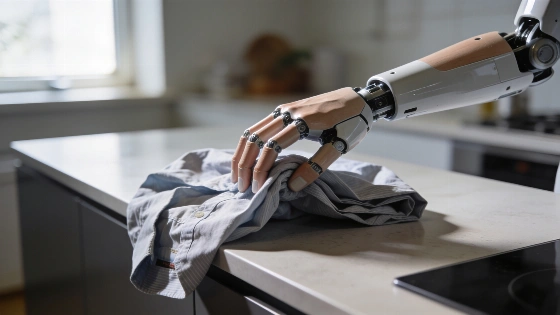
Humanoid robots can now perform acrobatics and dance routines but still fail at reliably folding laundry or handling fragile objects. New research highlights why tactile sensing and unpredictable environments remain unsolved barriers.
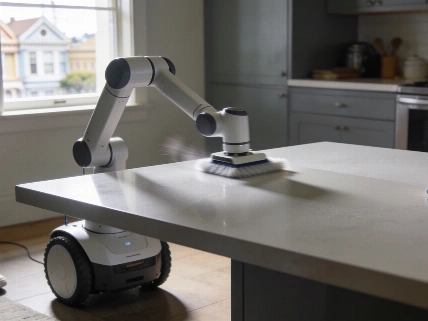
A robot can pull off a standing backflip on cue. But ask the same machine to fold a shirt or pick up a wet sponge, and it often fails. This isn't a design oversight-it's a direct result of what robotics has managed to solve so far. Athletic stunts like backflips are carefully choreographed and happen in predictable settings. Handling household objects, on the other hand, throws the robot into a world of uncertainty, soft materials, and breakable items that don't follow a script.
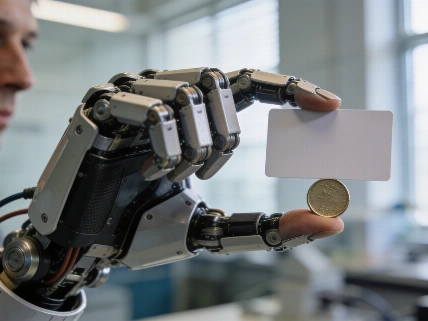
Robotic hands are now the main obstacle for making humanoid robots useful at home. Engineers can build strong, balanced arms and legs, but the hand is a different challenge. It needs to be nimble, sense touch, and react instantly, all in a small package. Human hands make constant, unconscious adjustments to grip and pressure. For robots, every tweak depends on sensors and software that still lag behind. Even with advanced joints and motors, a robot hand can't match the flexibility of a human one unless it knows exactly where its fingers are, how much force it's using, and whether something is slipping or about to break.
Despite steady progress, there's still no confirmed breakthrough in building a truly human-like robotic hand as of late 2026. The latest independent benchmarks, like those from RoboTwin and SOTA2, show high success rates-usually between 85% and 93.7%-but only in controlled lab conditions. These numbers don't hold up in real homes, especially with soft or slippery objects. Most of these results are proof-of-concept demos, not robust, unsupervised performance. Leading research groups at MIT and Stanford have pointed out that moving from lab success to reliable household use is still an unsolved problem.
Recent research has shifted toward better tactile sensing and generalization. In 2026, much of the engineering focus was on improving accuracy in "tabletop manipulation"-robots working with objects on flat surfaces in controlled settings. The UnifoLM-WLA-1.0 project, for example, tested manipulation across 64 real-world tasks, with 54 of them set up as tabletop scenarios. This shows the scale of lab testing, but not universal reliability at home. There's also no official, peer-reviewed confirmation from Zhejiang University for the widely cited 85% success rate, so these numbers should be treated with caution.
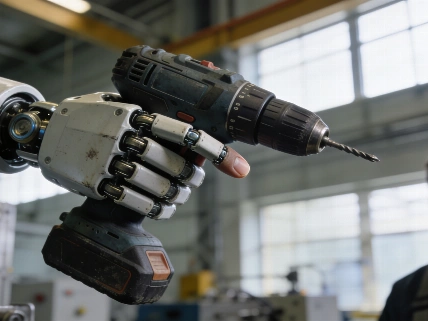
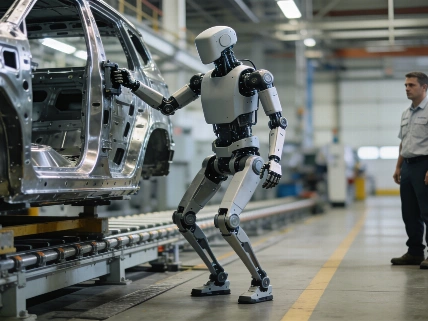
Physical contact with soft, fragile, or oddly shaped objects is still a major hurdle. Researchers at Ohio State University have found that real-world manipulation depends on bimanual coordination, stable movement, and enough reach. In practice, the hand can't be separated from the rest of the robot or its environment. The whole system has to sense, plan, and adapt together. That's why even advanced humanoids like Unitree's G1 or Apptronik's Apollo, which can do athletic moves, still struggle with basic chores. Chinese companies like X Square Robot are testing robots on tasks like picking up trash and arranging flowers, but these demos are still limited and not fully reliable.
Data is another big obstacle. Training a robot to handle objects needs synchronized data from joints, cameras, force sensors, and touch sensors. Unlike image datasets for AI, there's no massive online collection of human hand manipulation data with full sensory feedback. IEEE has called out the lack of large tactile datasets as a key bottleneck. Vision-language-action models have improved at tasks like laundry and tidying, but fine manipulation is still unreliable. To get around this, researchers are trying teleoperation, wearable sensors, imitation learning, reinforcement learning, and simulation to generate enough training experience for robots to handle new situations. The need for large, varied datasets for touch and force feedback was highlighted in recent Nature research on robotic generalization.
Industry groups are taking different approaches. Unitree's G1 can use a force-controlled three-fingered hand with optional tactile sensors. Apptronik's Apollo has gone through more than 35 actuator versions to improve its grip. Tesla's Optimus and 1X's NEO are both aiming for general-purpose domestic work. But showing a single successful task in a controlled setting isn't the same as reliable, unsupervised use in a real home. The gap between lab demos and practical deployment is still wide. As reported earlier, even robots built for lifelike movement have trouble applying their skills outside the test environment.
Years of progress in walking and athletic control haven't solved the problem of the robotic hand. The field's attention has shifted from flashy stunts to the everyday realities of household work, where the limits of current sensing, data, and control become obvious. Until robots can reliably sense, predict, and adjust their grip in real time, a truly useful household robot will remain out of reach. Backflips may grab headlines, but the real test is whether a robot can pick up a towel-and so far, that challenge is still open.
Robotic manipulation depends on combining different types of sensors. Touch sensors give information about force, slip, and texture, while cameras provide visual feedback about where objects are and what shape they have. Sensor fusion brings these data streams together to estimate the state of the hand and object, but it's computationally demanding and sensitive to noise. Effective manipulation needs not just accurate sensing, but also real-time control algorithms that can adapt to surprises. The lack of large, varied datasets for touch and force feedback is still a central barrier, making it hard for robots to generalize their skills to new objects and settings. Research from the Max Planck Society and ongoing studies in Science have pointed out that overcoming these barriers is essential for the next generation of humanoid robots.