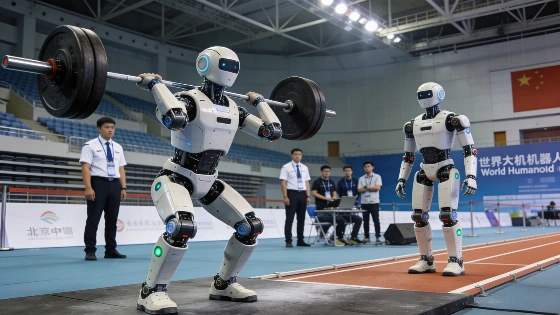
Beijing will host the second World Humanoid Robot Games from August 22-26, bringing together over 2,000 robots from 16 countries to compete in 51 events, with stricter rules and expanded real-world challenge scenarios.
The second World Humanoid Robot Games will open in Beijing on August 22, marking a significant increase in both scale and technical ambition compared to the inaugural event. Organizers report that 2,056 humanoid robots from 666 teams representing 16 countries across six continents are registered to compete. The event, co-hosted by the Beijing Municipal Government and China Media Group, will run for five days and feature 51 events and 1,301 matches, including new competitions in long jump, weightlifting, tug-of-war, and table tennis. This expansion reflects a 138% increase in team participation and a fourfold rise in robot entries compared to the previous year.
Participating teams include established robotics programs from the United States, Germany, and Japan, as well as a five-member Brazilian squad with previous Robot World Cup experience. China is fielding 157 enterprises, 641 teams, and 1,975 robots, with representation from 27 universities and 30 provinces, autonomous regions, and municipalities. The games are structured to test both competitive and scenario-based capabilities, with 30 events focused on direct competition and 21 designed to simulate real-world environments such as households, hotels, industrial facilities, emergency rescue, logistics, libraries, retail, office services, and vehicle charging.
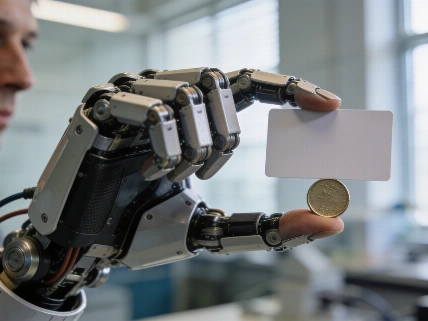
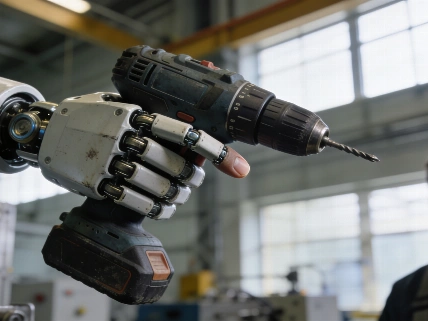
Among the scenario-based events, the Dexterous Hand Challenge stands out for its emphasis on fine manipulation tasks, including tool assembly, powder weighing, block stacking, nail driving, bottle opening, unboxing, tweezer pick-up, and cable connection. These tasks are intended to evaluate micro-distance vision, motion planning, force control, and operational accuracy. The Integrated Five Challenge requires robots to combine dexterous manipulation, stable object transfer, and heavy lifting while completing a 100-meter run, pushing the limits of current humanoid robot design and control.
Competition rules have been tightened to encourage greater autonomy and technical rigor. Time limits for the 100-meter, 400-meter, and 1,500-meter races have been reduced to one minute, five minutes, and fifteen minutes, respectively. Most track and competitive events must now be completed autonomously, with remote control permitted only for the 100-meter and 400-meter obstacle races. In scenario-based events, fully autonomous completion is weighted more heavily in scoring, while remote operation is penalized. In robot soccer, a goal is valid only if at least two teammates have touched the ball, incentivizing coordinated multi-robot behavior. The event will be overseen by 223 referees, including 28 international-level officials, and an expanded arbitration committee will address disputes.
Gold medals will be awarded across nine sessions, with twelve medal events scheduled for August 23. The opening evening will feature a 7v7 soccer exhibition and preliminary heats in the 100-meter and 400-meter races. Freestyle combat finals and the 5v5 soccer final are set for the closing day, with combat events divided into 40-kilogram, 58-kilogram, and 80-kilogram weight classes. Weightlifting, introduced this year, will award lightweight and heavyweight titles on August 24. Dance competitions have also expanded, with participation rising from 29 to 108 teams and events in street dance, ballroom, and cheerleading. The scale and diversity of events highlight the growing technical complexity and public interest in humanoid robotics competitions.
While the World Humanoid Robot Games focus on competitive and scenario-based evaluation, recent demonstrations such as DOBOT's LUMO robot have showcased advances in all-terrain mobility and adaptive interaction, illustrating the broader trend toward more capable and versatile humanoid platforms. For example, a recent field demonstration of LUMO highlighted the integration of computer vision, voice interaction, and motion control in real-world environments, underscoring the technical challenges that remain for widespread deployment.
Humanoid robot competitions serve as public benchmarks for progress in robotics, but they also reveal the persistent gap between laboratory demonstrations and reliable real-world performance. Most robots in these events operate under controlled conditions, and while autonomy is increasingly required, human oversight and intervention remain necessary for safety and reliability. The tightening of competition rules reflects ongoing efforts to standardize evaluation and encourage the development of systems capable of robust, autonomous operation outside the laboratory.
Understanding the distinction between automation and autonomy is central to interpreting results from humanoid robot competitions. Automation refers to the execution of predefined tasks with minimal variation, often under human supervision or remote control. Autonomy, by contrast, requires a robot to perceive its environment, make decisions, and adapt its actions without direct human input. Achieving reliable autonomy in unstructured, real-world settings remains a major engineering challenge, and current competitions provide a structured environment to measure incremental progress toward this goal.