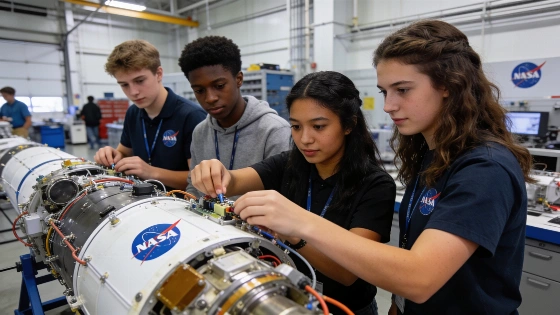
NASA is opening new opportunities for students to participate in authentic mission experiences, technical career exploration, and citizen science, as the agency prepares for major launches and ongoing lunar and space station operations
As the 2026-2027 academic year begins, NASA is broadening its outreach to students interested in space science, engineering, and technical careers. The agency is offering a range of programs that allow students to engage directly with mission data, participate in hands-on challenges, and explore career pathways in aerospace and related fields. These initiatives are designed to build practical skills and foster a deeper understanding of the scientific and technical work behind current and upcoming missions.
Hands-On Mission Experience
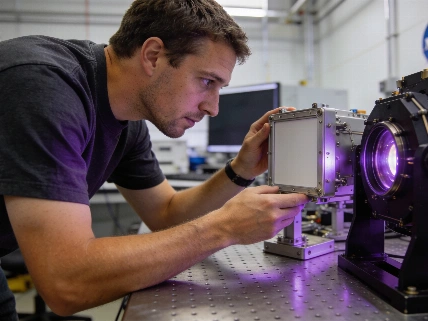
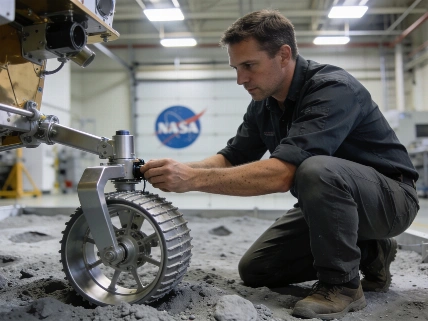
NASA's internship programs and student competitions provide opportunities for students to contribute to real agency projects under the guidance of experienced mentors. Interns work on mission-critical tasks, gaining exposure to the technical and operational demands of space exploration. Student teams participating in NASA challenges address engineering and scientific problems relevant to ongoing and future missions, developing and testing their own solutions in collaboration with agency experts. In April 2025, more than 500 students from 75 teams worldwide took part in the Human Exploration Rover Challenge near NASA's Marshall Space Flight Center, navigating a half-mile obstacle course and completing design reviews with NASA engineers. The event included a new remote-control division and expanded participation to middle school students, reflecting the agency's commitment to early STEM engagement.
For those interested in the operational side of space research, NASA's citizen science projects offer a way to analyze authentic mission data from anywhere. Volunteers can help identify comets, asteroids, and binary star systems, contributing to ongoing scientific investigations. These projects are open to participants with varying levels of experience and can be accessed through NASA's Science Mission Directorate.
Exploring Technical Careers
NASA is emphasizing the importance of skilled technical workers in sustaining its mission portfolio. High school, community college, and career technical education students are invited to participate in both in-person and virtual events that highlight the range of technical roles supporting spaceflight and research. Career Technical Education Days bring students to NASA centers to meet technicians and specialists, while the Next Gen STEM Virtual Career Connections program enables live interaction with agency experts. These events provide insight into the training, certifications, and skills required for technical positions in aerospace, from welding spacecraft components to supporting mission operations.
NASA's approach reflects a broader trend in the space sector, where technical expertise is increasingly vital for mission success. The agency's outreach is designed to demystify the pathways into these careers and to clarify the practical requirements for entry and advancement. For students and educators seeking additional context on how automation is changing crew involvement in space research, a recent overview of mini-laboratories aboard the International Space Station is available at this Science Report feature.
Upcoming Missions and Student Engagement
The 2026-2027 school year coincides with several major NASA mission milestones. The Nancy Grace Roman Space Telescope is scheduled for launch no earlier than 7:20 a.m. EDT on August 30, 2026. This observatory will offer a field of view at least 100 times larger than the Hubble Space Telescope, enabling wide-area surveys of the cosmos. NASA is providing virtual guest access for the launch and has released educational activities to support classroom engagement with the mission's science objectives.
In addition, the SpaceX Crew-13 mission to the International Space Station is set for launch in September, continuing the agency's reliance on commercial crew vehicles for orbital operations. Preparations for Artemis III, targeting Earth orbit in 2027, are ongoing, with a focus on testing rendezvous and docking with commercial human landing systems. These missions represent both operational and technical challenges, and NASA is encouraging students to follow mission updates and participate in related educational programs.
Connecting Classrooms and Communities
NASA is also expanding its outreach to schools and community groups through programs such as In-Flight STEM Downlinks, which allow students to submit questions to astronauts aboard the International Space Station. The NASA Engages initiative connects agency experts with student audiences, providing mission updates and insights into the scientific process. These efforts are intended to make the agency's work accessible and to illustrate the range of roles involved in space exploration.
Students and educators can access a comprehensive set of resources, including career exploration tools and information on current opportunities, through NASA's Learning Resources website. The agency also offers a weekly email newsletter, NASA EXPRESS, with updates on STEM activities and mission developments.
Understanding the technical and scientific work behind space missions requires familiarity with the instruments and methods used to collect and interpret data. For example, space telescopes such as the Nancy Grace Roman Space Telescope rely on wide-field imaging and advanced detectors to survey large regions of the sky, capturing data across multiple wavelengths. The design and calibration of these instruments determine the quality and scope of the observations, while mission operations teams ensure that data are transmitted, processed, and made available for analysis. Participation in NASA's educational and citizen science programs offers students a practical introduction to these processes, bridging the gap between classroom learning and real-world scientific investigation.