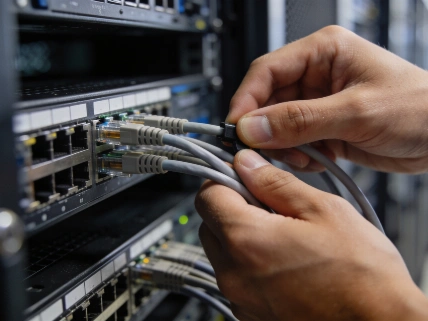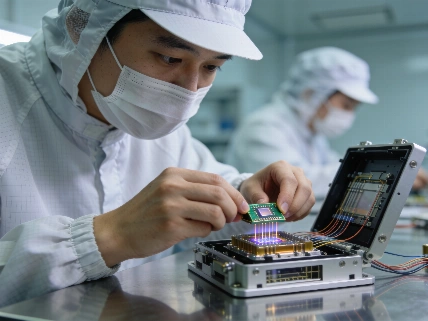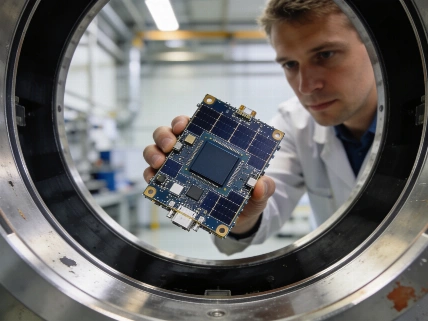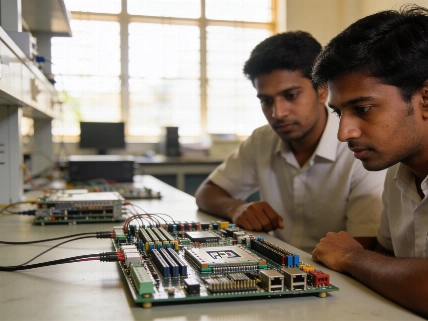

Molex has invested in CAEPlus to develop BoundaryCool, an active liquid cooling system designed to manage the rising heat loads from advanced processors in AI and high-performance computing data centers
Molex, a global supplier of electronics and connectivity solutions, has announced a strategic investment in CAEPlus, a startup focused on thermal management technologies for data centers. The partnership centers on the development of BoundaryCool, an active liquid cooling platform intended to address the escalating heat generated by high-density processors used in artificial intelligence (AI) and high-performance computing (HPC) environments. The companies say the system is designed to extract heat directly from graphics processing units (GPUs), central processing units (CPUs), and tensor processing units (TPUs), which are increasingly pushing the limits of conventional cooling infrastructure.
BoundaryCool distinguishes itself from traditional passive cold plate solutions by employing an active cooling architecture. Instead of relying solely on passive heat transfer, the system actively circulates coolant to remove heat from the chip surface, aiming to achieve higher heat-transfer rates and lower processor temperatures. According to Molex, the technology is being engineered to remain compatible with existing data center infrastructure, potentially allowing operators to retrofit current facilities without major structural changes. However, the system remains under development, and no independent performance data or peer-reviewed evaluation has been released to date.
Technical Claims and Compatibility
The companies report that BoundaryCool is intended to deliver significantly improved thermal performance compared to passive cold plates, particularly under the high computational loads typical of modern AI and HPC workloads. The system is being designed to support legacy data center architectures, which could reduce the need for costly facility overhauls. Molex has stated that its engineering teams will contribute expertise in scaling hardware technologies, while CAEPlus will focus on further development and validation of the cooling platform. The financial terms of the investment have not been disclosed, and the timeline for commercial deployment remains unspecified.
As part of the agreement, Molex has secured exclusive licensing rights to integrate CAEPlus technology into its portfolio of pluggable input/output (I/O) solutions. This move is positioned as a way to expand Molex's thermal management offerings for high-density computing environments, where efficient heat removal is increasingly critical to maintaining system reliability and performance. For CAEPlus, the investment provides both funding and access to Molex's engineering resources as it works toward commercialization.
Evidence and Limitations
At present, the claims regarding BoundaryCool's performance are based on company statements rather than independent technical documentation or published benchmarks. No quantitative data on heat-transfer rates, processor temperature reductions, or energy efficiency improvements have been made publicly available. The system's compatibility with a range of existing data center configurations is described as a design goal, but has not yet been demonstrated in operational deployments. The companies have not disclosed whether the technology has undergone third-party testing or regulatory review.
Thermal management is a growing concern in AI and HPC data centers, where the power density of modern processors can exceed the capabilities of legacy air and passive liquid cooling systems. While active liquid cooling has been explored in research and some commercial settings, widespread adoption has been limited by cost, complexity, and integration challenges. The extent to which BoundaryCool addresses these barriers will depend on its real-world performance, reliability, and ease of integration-factors that remain to be independently evaluated.
Numerical Context
Modern AI and HPC data centers routinely deploy racks with power densities exceeding 30 kilowatts per rack, with some advanced installations approaching or surpassing 50 kilowatts per rack. Conventional air cooling systems typically struggle to manage such loads, leading to increased interest in liquid cooling solutions. However, the specific heat-transfer capacity, flow rates, and energy consumption of the BoundaryCool system have not been disclosed by Molex or CAEPlus. Without published figures or third-party validation, the claimed performance improvements remain unverified.
BoundaryCool's development reflects a broader industry trend toward more aggressive thermal management strategies as AI and HPC workloads continue to drive up processor power and heat density. The partnership between Molex and CAEPlus is positioned as a response to these technical pressures, but the absence of independent data means that the system's effectiveness and operational impact remain open questions.
Active liquid cooling refers to systems that use pumps or other mechanisms to circulate coolant directly over or near heat-generating components, such as processors, to remove thermal energy more efficiently than passive methods. Unlike passive cold plates, which rely on natural convection or conduction, active systems can dynamically adjust flow rates and target specific hotspots. However, active cooling introduces additional complexity, including the need for pumps, sensors, and control systems, as well as potential maintenance and reliability challenges. The effectiveness of such systems depends on careful integration with existing data center infrastructure and robust engineering to prevent leaks, failures, or unintended downtime.