Japan's H3 launch vehicle has successfully placed the 10,800-pound Michibiki 7 navigation satellite into geosynchronous orbit, marking a key step in expanding the nation's Quasi-Zenith Satellite System
Japan's H3 rocket has completed its ninth launch, successfully deploying the Michibiki 7 navigation satellite into high Earth orbit. The mission, conducted by the Japan Aerospace Exploration Agency (JAXA), advances the country's efforts to build a robust regional navigation network and demonstrates renewed confidence in the H3 launch system following earlier setbacks.
Mission Overview and Launch Details
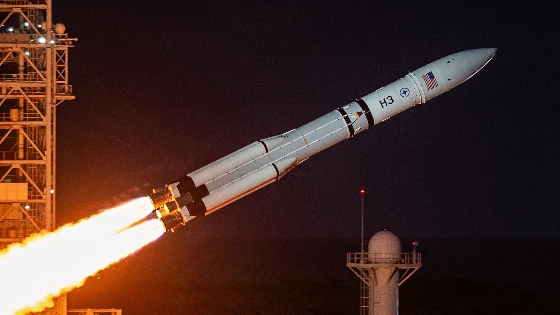
The H3 rocket lifted off from Tanegashima Space Center at 3:23 p.m. EDT (19:23 UTC) on August 10, carrying the 4,900-kilogram Michibiki 7 satellite. The two-stage vehicle reached its planned trajectory, and the upper stage released the payload into geosynchronous transfer orbit approximately 29 minutes after launch. Confirmation of successful deployment was met with visible relief in mission control, as the H3 continues to establish its reliability after two failures in its first eight flights.
The H3 is designed as the successor to Japan's H-2A rocket, which retired in 2025 after 50 launches. Depending on its payload fairing, the H3 stands between 57 and 63 meters tall. Since its debut in March 2023, the vehicle has experienced both setbacks and recoveries, including a failed inaugural flight and a subsequent anomaly during the Michibiki 5 mission in December 2025. However, the rocket returned to flight in June 2026, successfully delivering six satellites to orbit.
Expanding the Quasi-Zenith Satellite System
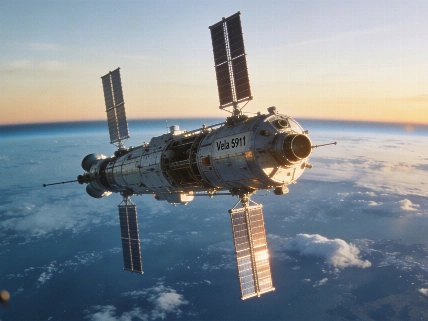
Michibiki 7 is the latest addition to Japan's Quasi-Zenith Satellite System (QZSS), a regional navigation constellation designed to enhance positioning accuracy over Japan and neighboring regions. The QZSS operates in geosynchronous orbits, allowing its satellites to maintain high elevation angles over the Japanese archipelago. This configuration improves signal reliability in urban and mountainous environments where conventional GPS coverage can be limited.
The QZSS is intended to be interoperable with the U.S. Global Positioning System (GPS), providing integrated navigation services across the Asia-Oceania region. As of August 2026, five QZSS satellites are operational, with plans to expand the constellation to 11 by the early 2030s. The addition of Michibiki 7 supports both civilian and governmental applications, including disaster response, transportation, and infrastructure monitoring.
International Collaboration and Payloads
In addition to its primary navigation mission, Michibiki 7 carries the Situational Awareness Camera Hosted Instrument (SACHI), developed by MIT Lincoln Laboratory for the U.S. Space Force. SACHI is designed to monitor satellite activity within the geosynchronous belt, providing data on the behavior of nearby spacecraft. This marks the second SACHI instrument to fly aboard a QZSS satellite, following its deployment on Michibiki 6 in February 2025.
The integration of U.S. payloads on Japanese satellites reflects growing international cooperation in space situational awareness and navigation infrastructure. Such partnerships are increasingly important as geosynchronous orbit becomes more congested and as nations seek to ensure the security and resilience of critical space-based services. For context, the evolution of international space missions can be seen in earlier efforts such as NASA's Juno spacecraft, which transformed Jupiter science after its 2011 launch and arrival in 2016, as discussed in this analysis of Juno's impact on planetary exploration.
Technical Milestones and Remaining Challenges
The successful launch and deployment of Michibiki 7 represent a technical milestone for the H3 program, which aims to provide Japan with a cost-effective and reliable launch capability for both domestic and international payloads. The mission's outcome is particularly significant given the vehicle's recent history of launch failures and the competitive landscape of global launch providers.
Despite the progress, the H3's operational record remains under scrutiny. Achieving consistent reliability will be essential for JAXA to secure future commercial and governmental contracts. The ongoing expansion of the QZSS constellation will also require sustained launch cadence and careful management of satellite health and orbital slots. As the system grows, maintaining interoperability with other global navigation satellite systems will be critical for maximizing its scientific and practical value.
Understanding the process of orbital insertion is central to interpreting the significance of this mission. After launch, a rocket's upper stage must place its payload into a precise transfer orbit, from which the satellite uses its own propulsion to reach its final geosynchronous position. This maneuver requires accurate timing, velocity, and trajectory control. Any deviation can affect the satellite's operational lifespan and coverage area. Successful orbital insertion is a prerequisite for commissioning the satellite's instruments and beginning routine navigation services.