
India's first dedicated Quantum and Artificial Intelligence University campus has been approved for Amaravati, with a ₹730.70 crore grant supporting advanced research infrastructure and workforce training in quantum computing, photonics, and semiconductor technology
The Andhra Pradesh State government has authorized the creation of India's first university campus dedicated to quantum technologies and artificial intelligence, to be established in Amaravati. The project, led by the National Institute of Electronics and Information Technology (NIELIT) under the Union Ministry of Electronics and Information Technology (MeitY), is supported by a ₹730.70 crore (approximately $76.5 million USD) grant-in-aid from MeitY, allocated over five years. The initiative aims to address the growing demand for technical expertise in quantum computing, photonics, and semiconductor engineering, while providing a platform for research, innovation, and workforce development.
Quantum Research Infrastructure
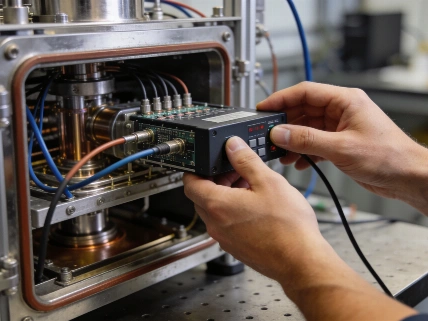
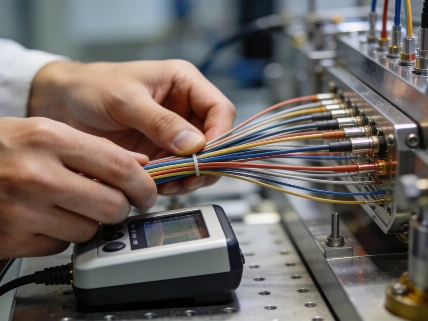
The permanent campus will occupy an 8.5-acre site designed to operate as a net-zero energy facility. Central to the campus is the Quantum Research, Innovation, and Incubation Block (QRIIB), a 1.25 lakh square foot facility equipped with cleanroom nanofabrication tools, cryogenic laboratories, quantum photonics labs, and high-performance computing (HPC) data centers. The infrastructure is intended to support both fundamental research and the development of quantum devices, including quantum computing and communication systems, as well as semiconductor fabrication and testing capabilities.
Academic Programs and Technical Training
The university's academic structure is aligned with national deep-tech initiatives such as the National Quantum Mission, IndiaAI Mission, and India Semiconductor Mission. Formal degree programs will include undergraduate, postgraduate, doctoral, and executive diploma tracks, with specialized coursework in quantum computing, quantum communication and security, artificial intelligence, machine learning, data science, VLSI, chip design, semiconductor fabrication, assembly, testing, packaging (ATMP), embedded systems, and HPC. Over a five-year period, the university targets a total of 8,250 learners, including 1,650 formal degree candidates and 6,600 certification or skill trainees. NIELIT plans to collaborate with regional academic and engineering institutions, including IIT Tirupati, IIIT Sri City, Andhra University, and JNTU, to strengthen inter-institutional research and training networks.
Phased Launch and Engineering Constraints
To avoid delays while the permanent campus is under construction, initial academic and technical training activities are scheduled to begin in September 2026 at a temporary facility within Acharya Nagarjuna University in Guntur. The permanent Amaravati campus, once operational, will feature a solar-powered net-zero design, a 500-bed residential complex, electric vehicle charging infrastructure, smart classrooms, and scientific waste management systems. The university projects an annual intake approaching 4,000 learners by its fifth year, but the actual pace of research output and workforce development will depend on the timely completion of specialized laboratories and the recruitment of qualified faculty and technical staff. For context on international quantum infrastructure, Japan's Institute for Molecular Science recently launched a neutral-atom quantum computer platform, as described in this report on Japan's neutral-atom quantum computing deployment.
Policy and Scalability Considerations
The Amaravati campus represents a significant public investment in quantum and semiconductor research infrastructure, but the transition from laboratory demonstration to scalable, fault-tolerant quantum computing remains a global challenge. The campus's cleanroom and cryogenic facilities are designed to support device fabrication and low-temperature measurement, but reproducible high-fidelity qubit operation, error correction, and integration with classical control systems will require sustained engineering effort. The university's role in workforce development is likely to be shaped by the evolving requirements of India's national quantum and semiconductor strategies, as well as by international advances in quantum hardware and software platforms.
Understanding the distinction between physical and logical qubits is essential for evaluating progress in quantum computing. A physical qubit is a controllable quantum system, such as a superconducting circuit or trapped atom, that can be manipulated and measured. However, physical qubits are prone to errors from environmental noise, control imperfections, and decoherence. Logical qubits encode information across multiple physical qubits using error-correcting codes, allowing for the detection and correction of certain errors. Achieving fault-tolerant quantum computation requires not only high-fidelity physical qubits but also robust error correction and scalable device architectures. The development of research infrastructure and technical training at the Amaravati campus is intended to address these foundational challenges, but the realization of practical quantum computers will depend on advances in both hardware and engineering integration.