The Illinois Quantum and Microelectronics Park and Japan's Q-STAR consortium have signed an agreement to coordinate quantum technology commercialization, joint research, and supply chain development between Illinois and Japan
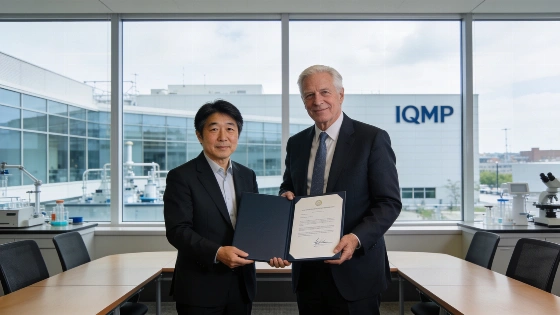
The Illinois Quantum and Microelectronics Park (IQMP) and Japan's Quantum STrategic industry Alliance for Revolution (Q-STAR) have signed a Memorandum of Understanding (MoU) to establish formal channels for quantum technology commercialization, research collaboration, and supply chain integration between Illinois and Japan. The agreement, signed at the Global Quantum Forum in Chicago by IQMP CEO Harley Johnson and Q-STAR Global Consortium Alliances Working Group Chair Hirofumi Mori, is intended to support the development of quantum startups, facilitate cross-border investment, and connect industrial supply chains across both regions.
Q-STAR, founded in 2021, represents over 160 Japanese corporations and institutions, including major industrial players such as Toshiba, NEC, NTT, and Hitachi, as well as early-stage ventures and academic centers. The partnership is structured around four operational tracks: enabling capital and market access for startups, co-developing supply chains for critical quantum hardware and components, supporting joint research and enterprise pilot projects, and building workforce and technology transfer pipelines between Japanese industry and Chicago-area research institutions.
Operational Focus and Measurable Goals
The MoU outlines specific areas for collaboration. On the commercialization side, the agreement aims to connect startups in both countries with venture capital, incubator networks, and non-dilutive government funding. For supply chain development, the focus is on identifying and co-developing hardware, cryogenic, optical, and fabrication components essential for quantum devices. Joint research and enterprise pilots will involve universities, national laboratories, and industrial end-users, targeting quantum computing, sensing, and networking applications. Workforce development initiatives will include technical exchanges and talent pipelines to address the growing demand for quantum engineering and fabrication skills.
While the agreement does not specify device counts, error rates, or hardware benchmarks, it is positioned as an institutional framework rather than a technical demonstration. The IQMP campus, located on Chicago's South Side, spans 128 acres and is designed to support quantum and microelectronics research, prototyping, and early-stage manufacturing. Q-STAR's membership base provides access to a broad spectrum of Japanese industrial and academic expertise, but the practical impact of the MoU will depend on the execution of joint projects and the ability to overcome engineering and supply chain bottlenecks that have historically limited quantum hardware scaling.
Context and Policy Environment
The MoU builds on recent diplomatic and trade activity between Illinois and Japan, including executive trade missions and reciprocal visits by government and industry delegations. The initiative is facilitated by the Illinois Economic Development Corporation (ILEDC) and the Illinois Department of Commerce and Economic Opportunity (DCEO), reflecting a policy emphasis on accelerating the transition from quantum research to commercial deployment. The agreement is not a direct technical milestone but rather a policy and infrastructure step intended to lower barriers for quantum startups and research groups seeking to move from laboratory results to scalable products.
Efforts to integrate quantum supply chains and research pipelines are not unique to Illinois and Japan. Similar cross-border initiatives have emerged in other regions, often motivated by the need to secure access to specialized fabrication, cryogenic, and photonic components. For example, Japan's RIKEN Center for Computational Science recently launched the ROQUO hybrid quantum-classical supercomputer, which integrates trapped-ion and GPU hardware to benchmark quantum circuit synthesis and chemistry workloads (see our coverage of the ROQUO system). These efforts highlight the complexity of building quantum systems that require both advanced materials and robust international supply chains.
Engineering and Commercialization Challenges
Despite the policy momentum, significant engineering challenges remain before quantum hardware can be manufactured and deployed at scale. Quantum processors-whether based on superconducting circuits, semiconductor spin qubits, trapped ions, or photonic systems-require precise fabrication, low-defect materials, and reliable cryogenic or optical infrastructure. Supply chain vulnerabilities, such as limited access to high-purity substrates, dilution refrigerators, or single-photon detectors, can delay or constrain device development. The MoU's focus on co-developing supply chains and facilitating technology transfer is intended to address these bottlenecks, but measurable progress will depend on the ability to translate institutional agreements into reproducible hardware advances and commercial products.
At present, the agreement does not commit either party to specific hardware targets, device yields, or error-correction milestones. Instead, it establishes a framework for future collaboration, with the expectation that joint projects will generate measurable outcomes in device fabrication, system integration, and workforce training. The effectiveness of such frameworks will ultimately be judged by their ability to deliver reproducible, scalable quantum devices that meet the fidelity, coherence, and error-correction requirements for practical applications.
Quantum technology development is constrained by the interplay between device physics, fabrication reproducibility, and supply chain reliability. For example, scaling up from a laboratory prototype to a manufacturable quantum processor requires not only high-fidelity qubits and gates but also consistent device yield, stable cryogenic operation, and access to specialized materials and components. Supply chain integration-across fabrication, packaging, and measurement infrastructure-remains a critical bottleneck for both academic and industrial efforts. Institutional agreements such as the IQMP-Q-STAR MoU are designed to address these challenges by coordinating resources, expertise, and investment, but their impact will depend on the execution of concrete technical projects and the ability to overcome persistent engineering limitations.