IBM has announced plans to acquire HRL Laboratories, aiming to integrate silicon-spin qubit expertise with its superconducting quantum hardware program and expand its approach to scalable, fault-tolerant quantum computing
IBM has signed a definitive agreement to acquire HRL Laboratories, a research institution based in Malibu and jointly owned by Boeing and General Motors. The move is intended to broaden IBM's quantum hardware strategy by incorporating HRL's experience in silicon-spin qubits, a technology that offers a distinct path toward scalable quantum computing alongside IBM's established superconducting qubit systems. Following the acquisition, Boeing and General Motors are expected to continue collaborating with IBM on quantum applications and industrial research, but the core hardware development will be consolidated under IBM's direction.
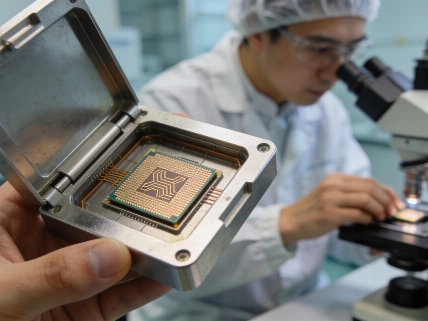
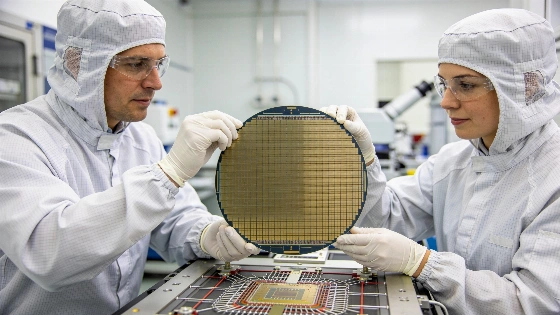
Silicon-spin qubits are engineered using quantum dots in semiconductor materials, typically fabricated with processes compatible with standard CMOS technology. This approach leverages decades of semiconductor manufacturing expertise and offers potential advantages in device density and integration. HRL has demonstrated digitally controlled silicon quantum dot devices, showing that spin-based qubits can be fabricated using industry-standard techniques. The integration of HRL's technology is expected to enable shared development cycles across device fabrication, cryogenic control electronics, and quantum measurement infrastructure.
IBM's acquisition also opens the possibility for HRL to collaborate with Anderon, the quantum wafer foundry established by IBM in May 2026 with support from the U.S. Department of Commerce. This foundry is designed to provide dedicated manufacturing capacity for quantum devices, addressing a key bottleneck in scaling up quantum hardware. HRL's portfolio includes not only quantum computing devices but also quantum sensors for precision measurement in defense, navigation, and life sciences, as well as research into advanced quantum materials for detectors and integrated chips.
IBM's long-term quantum roadmap remains focused on achieving fault-tolerant quantum computing, with milestones including the planned deployment of the Starling system by 2029, targeting 100 million quantum operations, and the Blue Jay system in the mid-2030s, projected to reach 1 billion operations. The addition of silicon-spin qubit technology provides a parallel development track, potentially allowing IBM to compare and combine different qubit modalities as systems scale toward millions of physical qubits. However, the company has not disclosed financial terms of the deal, and the transaction is subject to regulatory approval, with closure expected by the end of the third quarter of 2026.
While the integration of silicon-spin qubits is a significant step, the engineering challenges remain substantial. Achieving high-fidelity control, long coherence times, and reliable error correction in large arrays of spin qubits is an active area of research. Device variability, charge noise, and the complexity of cryogenic control electronics are persistent obstacles. The practical utility of silicon-spin qubits will depend on progress in fabrication yield, calibration stability, and the ability to implement scalable error-correction codes. As with superconducting qubits, the transition from laboratory demonstration to a robust, manufacturable quantum processor is not guaranteed by a single acquisition or technology platform.
For context, the quantum technology sector continues to see rapid development across multiple hardware platforms. Recent advances in quantum sensing and measurement, such as the activation of a space-qualified optical frequency comb in orbit, have demonstrated the importance of precision engineering and robust device performance in real-world environments. Readers interested in the challenges of deploying quantum hardware outside the laboratory may find further detail in our coverage of space-based optical frequency comb experiments, which highlight the interplay between device design, environmental noise, and measurement reliability.
Understanding the distinction between physical and logical qubits is essential for evaluating progress in quantum computing. A physical qubit is a single controllable quantum system, such as a spin in a quantum dot or a superconducting circuit, that can be manipulated and measured. However, physical qubits are prone to errors from environmental noise, control imperfections, and device variability. Logical qubits encode information across multiple physical qubits using error-correcting codes, allowing errors to be detected and corrected if the physical error rate is below a certain threshold. Achieving fault tolerance-where logical error rates can be reduced arbitrarily by increasing resources-remains a central challenge. The scalability of any quantum hardware platform depends not only on the number of physical qubits but also on their quality, connectivity, and the effectiveness of error correction in realistic operating conditions.