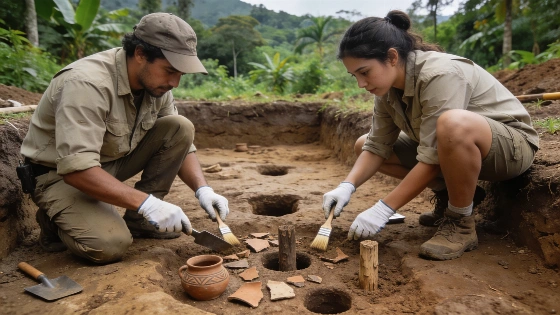
Archaeologists have completed a rescue excavation in the Diquís Delta, documenting residential areas and daily life from AD 800-1500, while confirming that Costa Rica's new airport will not disturb the region's monumental stone sphere sites
Archaeological fieldwork ahead of Costa Rica's planned Southern International Airport has provided new evidence for the daily lives of pre-Columbian communities in the Diquís Delta, one of Central America's most significant archaeological landscapes. The rescue excavation, conducted by the National Museum of Costa Rica and the Ministry of Culture and Youth, focused on areas identified as having high potential for buried remains, aiming to document and protect cultural heritage before construction begins.
Settlement Evidence in the Diquís Delta
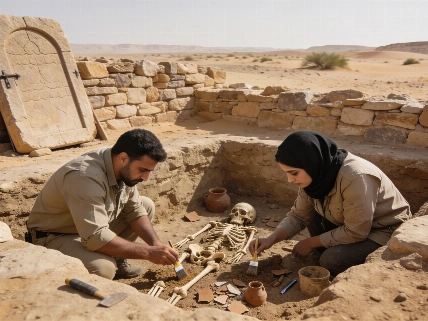
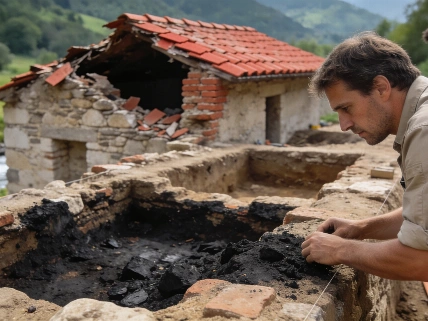
Researchers excavated twelve targeted zones between March and June 2026, uncovering traces of residential activity dating to two main periods: approximately 800-1200 CE and 1300-1500 CE. The team identified hearths, combustion features, pottery fragments, and postholes, indicating the presence of houses built from perishable materials. These findings provide direct evidence for domestic life and settlement organization in a region better known for its monumental stone spheres.
Stratigraphic analysis revealed that natural sedimentation in the delta preserved distinct occupation layers, allowing archaeologists to distinguish between successive phases of habitation. The absence of monumental features-such as stone spheres, causeways, or ceremonial platforms-was confirmed through systematic excavation and documentation. No evidence was found for the large-scale ceremonial architecture preserved at sites like Finca 6, Grijalba, or Batambal.
Chronology and Preservation
The archaeological materials recovered span a period of roughly 700 years, with occupation phases separated by layers of sediment. Pottery typology and stratigraphic context were used to establish the chronological framework, as no direct radiocarbon dates have yet been reported. The preservation of domestic features was aided by the delta's sedimentary environment, which protected fragile remains from later disturbance.
In total, the fieldwork documented multiple domestic structures and associated artifacts, but no evidence of monumental stone spheres or related ceremonial constructions within the airport construction zone. This outcome ensures that the planned infrastructure project will not impact the region's most iconic archaeological heritage, while providing a detailed record of the area's pre-Columbian inhabitants.
Heritage Protection and Future Research
All recovered artifacts are undergoing laboratory analysis and will be curated at the José Fabio Góngora facility of the National Museum of Costa Rica. A final technical report is scheduled for submission to the National Archaeological Commission in October 2026. The project was carried out in collaboration with the Ministry of Public Works and Transport and the General Directorate of Civil Aviation, reflecting a coordinated approach to heritage management during major infrastructure development.
Officials emphasize that the rescue excavation demonstrates how archaeological documentation can proceed alongside national development, ensuring that significant heritage assets are identified, recorded, and protected. The new data will support future research into settlement patterns, domestic architecture, and social organization in the Diquís Delta, complementing previous studies of monumental sites in the region. Comparable approaches to balancing development and heritage protection have been reported elsewhere, such as in the discovery of ritual artifacts beneath Roman barracks at Vindolanda, described in recent archaeological reporting.
Understanding Stratigraphy in Archaeology
Stratigraphy is a fundamental method in archaeology for interpreting the sequence of human activity at a site. By analyzing the order and composition of soil layers, archaeologists can distinguish between different periods of occupation, identify episodes of construction or abandonment, and establish relative chronologies for artifacts and features. In sediment-rich environments like the Diquís Delta, stratigraphic separation of occupation phases allows researchers to reconstruct changes in settlement over time, even when organic materials have decayed. Accurate stratigraphic recording is essential for understanding the context and significance of archaeological finds.