EPFL has integrated cloud-based access to Quantinuum's trapped-ion quantum processors into its SCITAS supercomputing platform, enabling researchers and students to run quantum algorithms and simulations directly from established high-performance computing workflows
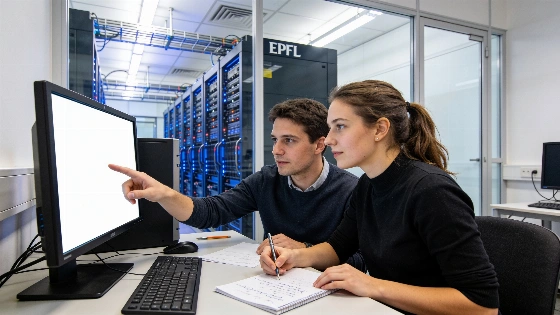
EPFL has become the first Swiss academic institution to provide direct, native access to commercial trapped-ion quantum processors within its institutional supercomputing infrastructure. Through a partnership between the EPFL Center for Quantum Science and Engineering (QSE), the SCITAS high-performance computing (HPC) platform, and Quantinuum, researchers can now submit quantum computing jobs to Quantinuum's hardware via the same batch interfaces used for classical computation. This integration is designed to streamline hybrid quantum-classical workflows and lower the technical barriers for experimental quantum algorithm development.
Trapped-Ion Hardware Integration
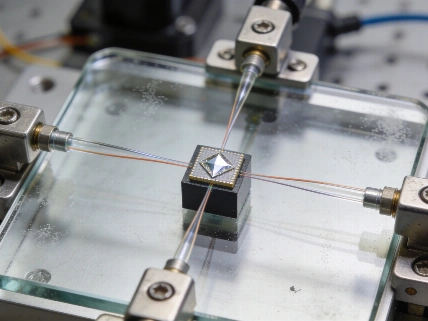
The integration centers on Quantinuum's trapped-ion quantum processors, which are accessed remotely through a secure cloud interface. Trapped-ion systems are valued for their long coherence times and high-fidelity gate operations, making them a leading platform for quantum simulation and algorithm benchmarking. By embedding access within SCITAS, EPFL enables users to combine classical and quantum resources in a single workflow, without the need to manage separate authentication or data-transfer processes. This approach is intended to support both research and education, with hardware access extended to students in EPFL's Master's program in Quantum Science and Engineering for hands-on circuit design and execution.
Research Applications and Technical Scope
Initial research efforts focus on digital quantum simulation and many-body physics, led by groups such as the Computational Quantum Science Laboratory and the Quantum Information and Computing Group. These teams are using the trapped-ion hardware to explore the limits of practical quantum algorithms and to benchmark quantum simulation tasks that are challenging for classical computers. The integration was developed in collaboration with SCITAS operational leadership to ensure compatibility with existing HPC scheduling and resource management systems. According to available information, the system allows users to submit hybrid jobs that combine classical pre- and post-processing with quantum circuit execution, all within the established SCITAS environment.
Numerical Context and Engineering Constraints
Quantinuum's trapped-ion processors typically operate with tens of physical qubits, with reported single- and two-qubit gate fidelities above 99%. The exact number of accessible qubits and the supported circuit depth depend on the specific hardware generation and calibration status at the time of access. While trapped-ion systems offer high-fidelity operations, circuit depth and runtime are still limited by decoherence, gate duration, and cumulative error. The SCITAS integration does not alter the underlying hardware constraints but aims to make quantum resources more accessible for algorithm development, benchmarking, and educational use. Users must still account for queue times, hardware calibration cycles, and the cost of repeated measurements when designing experiments.
Comparison with Other Quantum Integration Efforts
EPFL's approach reflects a broader trend toward integrating quantum hardware with established high-performance computing infrastructure. Similar efforts have been reported internationally, including the deployment of Quantinuum's Helios processor within Oracle Cloud Infrastructure, as described in a recent Science Report article on hybrid quantum-AI workloads. However, EPFL's direct integration within a university supercomputing platform is notable for its focus on academic research and workforce development, rather than enterprise or commercial applications. The effectiveness of such integrations will depend on the stability of cloud access, the reliability of hardware calibration, and the ability to coordinate classical and quantum resources efficiently.
Understanding the distinction between physical and logical qubits is essential for interpreting the capabilities of current quantum processors. A physical qubit is a single controllable quantum system, such as an ion or superconducting circuit, that can be manipulated and measured. However, physical qubits are prone to errors from decoherence, control imperfections, and environmental noise. Logical qubits encode information redundantly across multiple physical qubits using error-correcting codes, allowing for the detection and correction of certain errors. Most current quantum processors, including trapped-ion systems, operate at the level of physical qubits, with logical qubit demonstrations remaining limited and resource-intensive. As a result, the practical utility of quantum hardware is constrained by the fidelity and stability of physical qubits, the effectiveness of error mitigation, and the engineering challenges of scaling to larger, fault-tolerant systems.