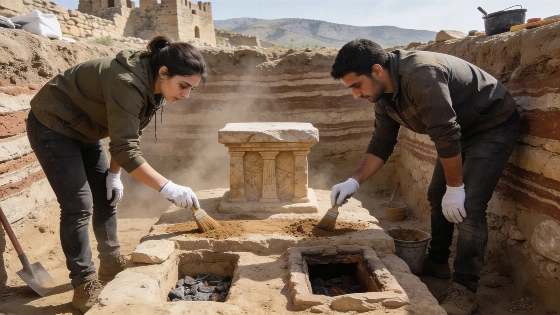
Archaeologists have identified a 5,000-year-old temple complex with ritual altars and hearths at Tadım Castle in eastern Türkiye, providing new evidence for religious practices and long-term occupation during the Early Bronze Age
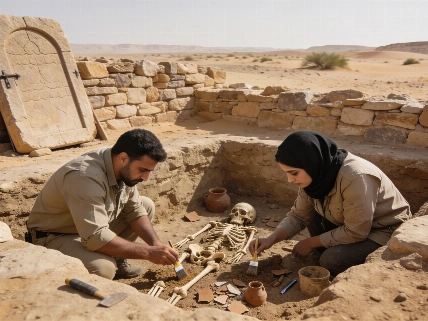
Archaeological excavations at Tadım Castle and Mound, located near Elazığ in eastern Türkiye, have revealed a temple complex dating to the Early Bronze Age, estimated at around 3000 BCE. The discovery includes two stone altars and three hearths interpreted as sacred, offering rare insight into ritual activity in the region during this period. The site forms part of a broader initiative led by the Ministry of Culture and Tourism, with fieldwork directed by the Elazığ Museum Directorate and support from local authorities.
Excavation Context and Material Evidence
The newly identified temple area was uncovered during the third season of systematic excavation at Tadım Castle. Archaeologists documented the structure within a stratified mound that preserves evidence of occupation spanning several millennia. The temple complex, with its stone-built features, was found in a layer associated with Early Bronze Age material culture. In total, two temples and six sacred hearths have now been identified at the site, with the most recent discovery adding to an earlier temple thought to date back approximately 6,000 years.
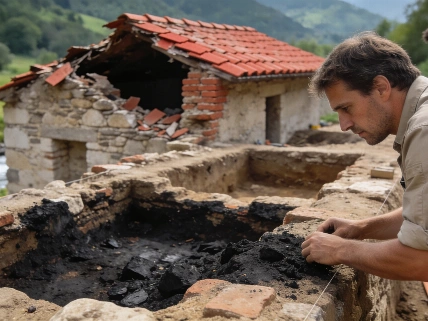
Excavators recorded the presence of two stone altars and three hearths within the temple area, all interpreted as components of ritual practice. The spatial arrangement and construction techniques suggest deliberate planning for ceremonial use, though the specific nature of the rituals remains uncertain. The site's stratigraphy also preserves later occupation layers, including remains from the Ottoman, Seljuk, Eastern Roman, Iron Age, Chalcolithic, Bronze, and Neolithic periods, reflecting a long sequence of settlement and reuse.
Chronology and Interpretation
The dating of the temple complex relies on stratigraphic association and typological analysis of associated artifacts, situating the structure around 3000 BCE. No direct radiocarbon dates for the temple itself have been reported, but the broader sequence at Tadım Castle is supported by comparative material from securely dated contexts in the region. The identification of multiple sacred hearths and altars within a single complex is consistent with other Early Bronze Age ritual sites in Anatolia, though the specific religious practices remain a subject of ongoing research.
Archaeologists emphasize that the evidence for repeated ritual construction at Tadım Castle points to the site's significance as a center of ceremonial activity over thousands of years. The presence of earlier and later temples within the same mound highlights the continuity and transformation of religious practices across different periods. The current phase of excavation is focused on the Bronze Age deposits, with further work expected to clarify the relationship between ritual and domestic activity at the site.
Regional Significance and Ongoing Research
The Tadım Castle excavations contribute to a growing body of evidence for complex ritual landscapes in eastern Anatolia during the Early Bronze Age. The discovery of multiple temples and sacred features at a single site provides a valuable comparative case for understanding the diversity of religious architecture and practice in the region. Ongoing excavations at other sites in Elazığ province, including Harput Castle and Palu Castle, are part of a coordinated effort to document the region's archaeological heritage.
In the current season, the number of sacred hearths identified at Tadım Castle has reached six, with two distinct temple areas now documented. The stratified deposits at the mound offer a rare opportunity to study long-term patterns of occupation, ritual, and settlement continuity. Archaeologists anticipate that further excavation will reveal additional structures and artifacts, expanding the picture of social and religious life in Early Bronze Age Anatolia. Comparable discoveries elsewhere, such as the identification of monumental Bronze Age enclosures at Haughey's Fort in Ireland, have similarly challenged assumptions about the scale and complexity of prehistoric ritual centers, as discussed in recent research on large-scale ceremonial sites.
Understanding Stratigraphy in Archaeology
Stratigraphy is a fundamental method in archaeology for establishing the relative sequence of occupation and activity at a site. By analyzing the superimposed layers of soil, architecture, and artifacts, archaeologists can reconstruct the order in which structures were built, used, and abandoned. Stratigraphic relationships help determine the relative age of features when direct dating methods are unavailable or impractical. At Tadım Castle, the identification of Early Bronze Age temple features within a well-defined stratigraphic context allows researchers to situate the discovery within the broader occupational history of the mound, even as further work is needed to refine the absolute chronology and interpret the function of ritual spaces.