Edinburgh-based Danu Robotics is developing H.E.R.O., a camera-guided robot intended to sort recyclable waste. The company is pursuing a $5 million seed round and reports customer interest, but independent performance data and facility-level results have not been published.
A robot priced at about $160,000 could help a recycling facility increase revenue by at least $485,000, according to its developer. That is the commercial case behind H.E.R.O., a waste-sorting system from Edinburgh-based Danu Robotics, founded by Amy Ma. The company is seeking $5 million in a late seed round; the financing had not yet been completed in the latest available account. The figures are company claims, not independently reported performance results, as TechCrunch reported.
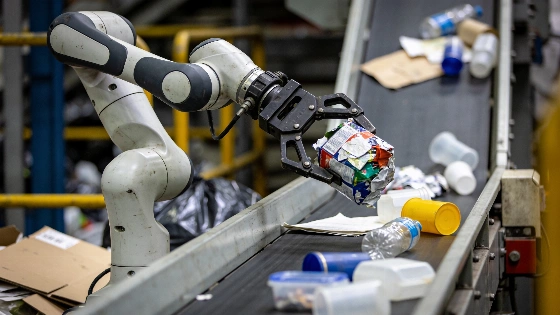
H.E.R.O. is designed to identify materials moving along a conveyor and pick selected items from the stream. Danu says cameras feed visual information to onboard AI, which classifies objects by their recycling value; robotic grippers then remove chosen items for processing. The company favors grippers over suction cups because they can handle heavier and more awkward objects. Danu has worked on the system for about six years and is now moving from development toward market introduction.
The system addresses a real operational bottleneck: recyclable material can be mixed with food waste, paper, plastics and other items, while sorting by hand takes time and may be inconsistent. But the available account does not specify how accurately H.E.R.O. identifies materials, how quickly it sorts them, which waste types have been tested or how it performs when objects overlap or are contaminated.
Those omissions matter because classification accuracy alone does not show whether a facility can recover material reliably or profitably. A rigorous evaluation would report the number and composition of items tested, sorting speed, missed picks and incorrect picks, contamination levels in the recovered stream, uptime, and how often staff must intervene. It would also compare results with an appropriate baseline, such as existing manual or automated sorting. Sample sizes and confidence intervals would help show how stable the measured rates are; without those details, readers cannot assess uncertainty or generalize from a demonstration to routine operations. No independent accuracy assessment or published error rates for H.E.R.O. were identified in the available coverage.
Danu estimates that a facility using the robot could raise revenue by at least $485,000. The stated purchase price is about $160,000, with around $24,000 in ongoing maintenance costs; the time period for that maintenance figure is not specified. Without disclosed assumptions about throughput, material prices, operating hours, downtime and other costs, the revenue estimate cannot establish a facility's actual return. A correctly identified item may still have little economic value if it is contaminated, costly to handle or not marketable.
The company reports approximately $500,000 in signed contracts and letters of intent from two large customers. These figures indicate commercial interest, but they do not establish that robots have been delivered, operated over an extended period or generated the projected savings. The company has also described a pipeline of potential customers; a sales pipeline is not the same as completed sales or verified use in a working facility.
Danu's next development goal is a more robust, compact and versatile H.E.R.O., with possible uses closer to where waste is produced, including shopping centers and airports. These are prospective applications, not confirmed deployments, and the available account provides no test results for those settings. Different locations can produce different mixes of waste, so a system's performance would need to be assessed against each setting's materials and operating conditions. The distinction between trials and routine use also matters in factory robotics, where a proposed task does not by itself establish regular deployment.
Peer-reviewed robotics research associated with institutions such as MIT and Stanford illustrates the importance of describing methods and test conditions, while journals such as Nature and PNAS provide venues for scrutinized research findings. Those names do not imply that H.E.R.O. has been evaluated by these institutions or published in those journals. For this system, the publicly available evidence remains largely company-reported; the available coverage identifies no independent testing, published statistical analysis or official regulatory decision concerning H.E.R.O.
For now, H.E.R.O. is best judged as a commercial proposition with a clear industrial target and a limited public evidence record. Danu's reported contracts and customer interest show that it is pursuing the market, while the $5 million round remains in progress and the revenue case remains a forecast rather than a demonstrated outcome. The project's value will depend on independently verifiable sorting performance and facility-level economics, not the robot's AI label.
In recycling, material's value depends not only on whether a machine can separate it, but also on whether the recovered stream is clean and economical to process. A sorting system can pick an item correctly yet fail to improve a facility's finances if contamination, handling costs or weak demand erode its value. That is why H.E.R.O.'s classification and grasping capabilities need to be assessed alongside measured operating costs, recovery rates and the market value of the materials it separates.