Classiq Technologies has signed agreements with Scientek Corporation and Kensho to distribute its quantum software in Taiwan, aiming to bridge quantum hardware and application development across the semiconductor and research sectors
Classiq Technologies has moved to embed its quantum software platform directly into Taiwan's semiconductor and research infrastructure, announcing simultaneous market development agreements with Scientek Corporation and Kensho. The timing is calculated: both partnerships are set to be showcased at SEMICON Taiwan 2026, where the intersection of quantum computing and semiconductor manufacturing is under intense scrutiny.
Hardware-Software Integration
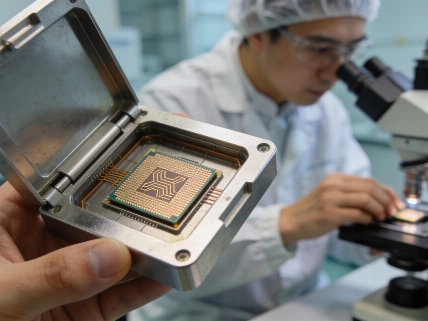
At the core of these agreements is a technical challenge that has slowed quantum adoption worldwide: translating domain-specific problems into executable quantum circuits that run efficiently on available hardware. Taiwan's research and manufacturing sectors have expanded access to quantum processing units (QPUs) based on superconducting, neutral-atom, trapped-ion, and photonic architectures. However, the bottleneck remains at the software layer, where domain expertise must be mapped onto hardware with limited qubit counts, short coherence times, and nontrivial error rates.
Classiq's platform is designed to address this gap. It offers a hardware-agnostic synthesis engine, using its Qmod programming language and AI-driven circuit optimization to convert high-level models into circuits tailored for specific quantum processors. This approach is intended to reduce the manual overhead of quantum algorithm design and enable more rapid prototyping across diverse hardware platforms.
Distribution and Application Channels
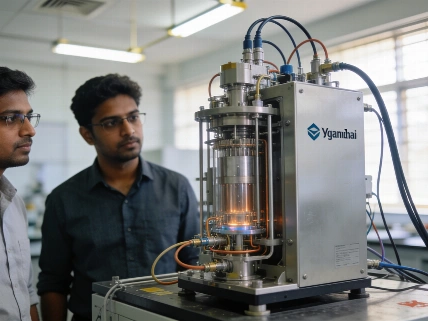
Scientek Corporation, already established as a distributor of dilution refrigerators (Bluefors), quantum control electronics (Qblox), and superconducting systems (IQM), will now add Classiq's software stack to its offering. The focus is on semiconductor process optimization, yield analysis, and advanced material simulation-areas where quantum algorithms could, in principle, offer computational advantages over classical high-performance computing, provided the hardware and software integration is robust enough to handle real-world workloads.
Kensho, with a background in factory automation and silicon photonics inspection, is targeting defense, government, and chemical sectors. Its collaboration with the Institute for Information Industry (III) and co-organization of the Q2T Taiwan Quantum Computing Forum position it to introduce quantum optimization workflows to organizations evaluating quantum computing for logistics, materials, and security applications. Both distributors are expected to provide technical demonstrations at SEMICON Taiwan 2026, including hybrid quantum-classical execution and cost benchmarking.
Technical and Policy Context
The agreements are not limited to commercial distribution. Both Scientek and Kensho are expected to participate in joint application R&D, leveraging Taiwan's Ministry of Economic Affairs and the III network to support cross-platform software enablement. The strategy is to create a feedback loop between hardware deployment and software development, accelerating the identification of use cases where quantum computing can deliver measurable value. This mirrors efforts in other regions, such as the state-federal grant expansion reported earlier in New Mexico, where public and private actors are aligning to attract quantum projects and infrastructure.
Concrete technical details remain limited. No specific qubit counts, gate fidelities, or error rates have been disclosed for the hardware platforms targeted by these agreements. The effectiveness of Classiq's synthesis engine in producing circuits that outperform classical methods for semiconductor or materials simulation tasks will depend on the underlying hardware's stability, calibration, and error mitigation capabilities. Demonstrations at SEMICON Taiwan 2026 are expected to provide the first public benchmarks of these integrated workflows.
Engineering and Scalability Challenges
Despite the promise of streamlined quantum application development, significant engineering hurdles remain. Quantum processors available in Taiwan, as elsewhere, are constrained by limited physical qubit numbers, coherence times typically in the microsecond to millisecond range for superconducting devices, and gate fidelities that, while improving, still fall short of the thresholds required for large-scale error correction. Integration with existing high-performance computing and AI infrastructure introduces further complexity, as hybrid workflows must manage data transfer, synchronization, and error propagation between quantum and classical systems.
Without transparent reporting of device yield, calibration stability, and reproducibility across multiple hardware platforms, it is premature to claim that these partnerships will deliver practical quantum advantage for semiconductor or defense applications. The real test will be whether the joint R&D efforts can move beyond proof-of-concept demonstrations to reproducible, independently verified results that outperform classical alternatives on tasks of industrial relevance.
Classiq's dual agreements in Taiwan represent a tactical move to position its software as the default interface between quantum hardware and application developers in a region with deep semiconductor expertise and growing quantum infrastructure. The outcome will depend not on partnership announcements, but on the ability to deliver measurable, reproducible performance gains in real-world workflows-something that remains unproven for most quantum applications to date.
Quantum circuit synthesis is the process of converting a high-level algorithm or domain-specific model into a sequence of quantum gates that can be executed on a physical quantum processor. The challenge lies in optimizing these circuits to fit within the constraints of available hardware-such as limited qubit counts, short coherence times, and non-negligible error rates-while preserving the computational advantage that quantum algorithms can, in principle, provide. Effective synthesis must account for hardware-specific connectivity, gate set, and noise characteristics, making cross-platform compatibility a nontrivial engineering problem. As quantum hardware matures, the quality of synthesis tools will play a decisive role in determining which applications become practically accessible and which remain theoretical possibilities.