Monumental has begun deploying autonomous robots to build brick walls on commercial construction sites, aiming to address labor shortages and rising costs. The company's approach highlights the technical and operational hurdles of moving robotics from controlled labs to unpredictable real-world environments
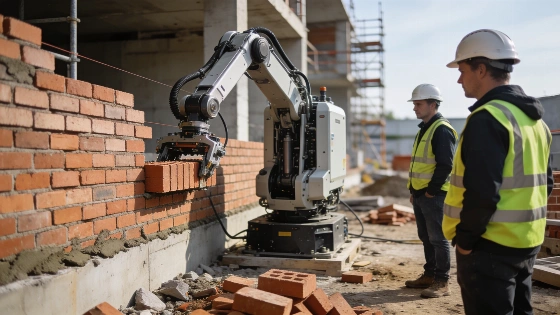
Monumental's autonomous robots are now laying bricks on active construction sites, but the transition from laboratory prototype to real-world deployment has exposed a series of technical and operational challenges that most robotics companies never encounter. The company's founder, Salar al Khafaji, argues that the construction sector's scale and complexity have long been underestimated by technology developers, despite its central role in the global economy and its chronic productivity stagnation.
Unlike controlled factory floors, construction sites are defined by unpredictability-shifting weather, variable lighting, uneven surfaces, and inconsistent materials. Monumental's robots must localize themselves precisely, interpret architectural plans, and adapt to the unique geometry of each site. Even before a single brick is placed, the system must reconcile digital blueprints with the physical environment, a process that exposes the limits of current computer vision and sensor fusion techniques.
Physical Materials and Machine Adaptation
Bricklaying is not a uniform task. Mortar behaves as a non-Newtonian fluid, changing its properties with humidity, temperature, and pressure. Individual bricks vary in size, shape, and surface quality, with some arriving chipped or curved. Monumental's robots use 3D cameras to photograph every brick before and after placement, building a dataset that now includes hundreds of thousands of unique samples. Load sensors monitor the pressure applied during placement, allowing the system to adjust for mortar viscosity and brick irregularities in real time.
To encode the tacit knowledge of experienced masons, Monumental's software incorporates rules for rotating or repositioning misshapen bricks-known internally as "banana bricks"-to maintain the visual quality of finished walls. The company reports that a single robot can match the daily output of a human mason, but emphasizes that speed is not the primary metric. The real test is whether robots can handle the full range of site variability without constant human intervention.
Deployment Model and Digital Records
Rather than selling robots as products, Monumental positions itself as a construction contractor, delivering finished walls to client specifications regardless of whether the work is performed by machines or humans. This approach mirrors existing industry practices and shifts the risk of technological failure onto the company itself. During early deployments, Monumental guaranteed project delivery by promising to hire human masons at its own expense if the robots failed to perform as required.
The use of robotics also generates a detailed digital record of every brick laid, enabling the company to simulate projects in advance, estimate material needs, and compare as-built models to architectural plans. If a wall opening deviates from the blueprint by several millimeters, the system can adjust joint sizes or select alternative bricks to correct the error. This level of traceability is rare in traditional construction and could support new forms of quality assurance and regulatory compliance.
Labor Shortages and Human Roles
Concerns about robots displacing human bricklayers are, for now, largely theoretical. Construction firms already struggle to recruit enough skilled workers, and many experienced masons are nearing retirement. Monumental's founder estimates that thousands of robots would be needed just to fill existing labor gaps in bricklaying alone. The company's stated goal is to automate the most repetitive and physically demanding tasks, such as working on scaffolding, while leaving more complex or judgment-based work to humans.
Robot operators remain involved in the construction process, but their roles shift from manual labor to technical oversight and problem-solving. This transition could make construction more attractive to younger workers, who may be less willing to perform physically punishing tasks. The company claims that its approach does not eliminate jobs, but rather changes the nature of work on site-a claim that will require independent verification as deployment scales.
Scaling Beyond Bricklaying
Monumental plans to expand its technology to other building components, including blockwork and insulation panels. The company estimates that between 50% and 60% of the building shell phase could eventually be automated, though this figure remains speculative pending further engineering development. Coordinated fleets of specialized robots could, in principle, accelerate construction timelines dramatically, but the technical and logistical barriers remain substantial.
Unlike prefabricated housing, which often sacrifices architectural variety for speed, Monumental's robots are designed to handle non-uniform designs. The company argues that automation need not result in rows of identical buildings, and that flexible robotics could help recover the quality and ambition lost in much of today's construction. For context, recent advances in adaptive robotics, such as those described in reported earlier, highlight the importance of real-world learning and adaptation for reliable deployment outside the lab.
Measured by output, a Monumental robot can lay as many bricks per shift as a skilled human, but the company's focus is on reliability and integration rather than raw speed. The robots' ability to collect and act on site-specific data is a step toward more accountable and transparent construction, but the technology remains in its early stages. The company's willingness to absorb the risk of failure and guarantee project delivery is notable, but the long-term impact on cost, quality, and employment will depend on how well these systems perform at scale and under less forgiving conditions.
Robot deployment in construction exposes the persistent gap between laboratory demonstration and operational reliability. While Monumental's approach is more cautious and accountable than most robotics launches, the evidence so far supports only limited claims: robots can match human output under supervision, adapt to some material variability, and generate detailed digital records. The real test will come as these systems are exposed to the full spectrum of site conditions, regulatory scrutiny, and economic pressures. For now, the promise of affordable, high-quality, robot-built housing remains a technical and institutional challenge rather than a solved problem.
Robot perception in construction relies on a combination of computer vision, sensor fusion, and real-time data processing to interpret complex, changing environments. Unlike factory robots, which operate in tightly controlled settings, construction robots must handle unpredictable lighting, weather, and material inconsistencies. Accurate localization and mapping are essential for aligning digital plans with physical reality, but sensor noise, occlusion, and environmental variation can degrade performance. Continuous data collection and adaptation are necessary to bridge the gap between simulation and real-world deployment, but these systems remain highly dependent on robust engineering and human oversight to ensure safety and reliability.