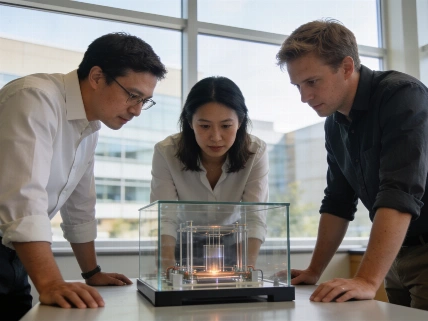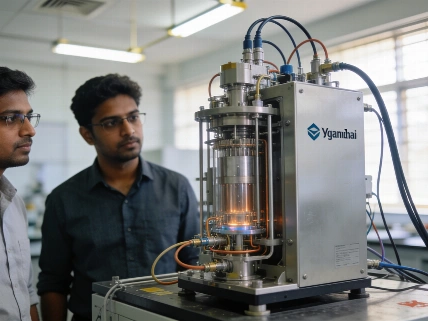

D-Wave Quantum Inc. and Nasdaq Verafin have launched a proof-of-concept to assess quantum-hybrid algorithms for detecting complex financial crime patterns, using quantum annealing hardware to analyze multi-entity banking data
D-Wave Quantum Inc. and Nasdaq Verafin have announced a technical collaboration to evaluate quantum-hybrid computing for financial crime detection. The project centers on a proof-of-concept (PoC) that applies D-Wave's quantum annealing hardware and hybrid machine learning workflows to analyze complex, non-linear relationships in banking and capital markets data. The aim is to determine whether quantum-enhanced models can identify subtle behavioral patterns and anomalous signals associated with anti-money laundering (AML), fraud, and scam activity that may be missed by conventional monitoring tools.
Quantum Annealing for Data Analysis
The PoC leverages D-Wave's quantum annealing systems, accessed via the Leap quantum cloud service, to process hundreds of data signals simultaneously. Nasdaq Verafin's infrastructure will use these resources to examine account activity, transaction histories, and multi-entity counterparty networks. By mapping these high-dimensional features into combinatorial optimization and quantum machine learning (QML) models, the team seeks to uncover hidden correlations and outlier behaviors that are difficult to detect with classical algorithms alone.
Technical Scope and Measurable Parameters
While the companies have not disclosed specific device parameters or qubit counts for this deployment, D-Wave's commercial quantum annealers typically operate with thousands of physical qubits at cryogenic temperatures below 20 millikelvin. The PoC is designed to test the ability of quantum-hybrid algorithms to analyze large, multi-dimensional datasets in parallel, with the goal of improving detection rates for complex financial crime scenarios. Nasdaq Verafin's existing software suite serves over 2,800 financial institutions, representing approximately $13 trillion in assets, providing a substantial real-world context for evaluating the practical impact of quantum-enhanced analytics.
Integration and Commercial Context
If the PoC demonstrates measurable improvement over classical baselines, the companies plan to explore pilot applications integrated into Nasdaq Verafin's commercial anti-financial crime platform. This approach reflects a broader industry trend of testing quantum hardware in operational environments before the arrival of fully fault-tolerant quantum computers. D-Wave's dual-platform strategy, which includes both quantum annealing and gate-based systems, has previously been applied in network optimization projects, such as its recent collaboration with AT&T. For example, D-Wave's quantum annealing hardware was recently deployed to optimize network management tasks in partnership with AT&T, as described in this earlier Science Report coverage.
Limitations and Open Questions
The current PoC does not claim quantum advantage or fault tolerance. Quantum annealing is a specialized approach suited to certain optimization and sampling problems, but its performance relative to advanced classical algorithms remains an open question for many real-world tasks. The effectiveness of quantum-hybrid models in detecting financial crime will depend on the quality of data encoding, the structure of the optimization problem, and the ability to mitigate noise and calibration drift in the quantum hardware. Independent benchmarking and peer-reviewed results will be necessary to establish whether quantum-enhanced detection offers a reproducible and scalable improvement over classical methods.
Quantum annealing is a form of quantum computing that uses a network of physical qubits to solve optimization problems by evolving the system toward a low-energy state. Unlike universal gate-based quantum computers, which can in principle implement any quantum algorithm, quantum annealers are designed for specific classes of problems, such as combinatorial optimization and sampling. In hybrid workflows, classical preprocessing and postprocessing are combined with quantum subroutines to tackle tasks that are computationally intensive for classical systems alone. The practical utility of quantum annealing depends on the problem structure, the quality of the quantum hardware, and the fairness of the comparison with state-of-the-art classical algorithms.