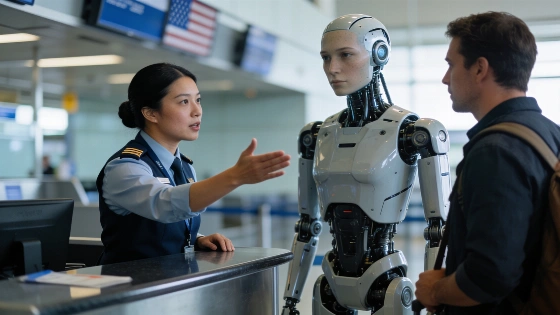
United Airlines and Delta Air Lines have introduced new restrictions prohibiting passengers from transporting humanoid robots in both carry-on and checked baggage, citing unresolved safety and operational challenges
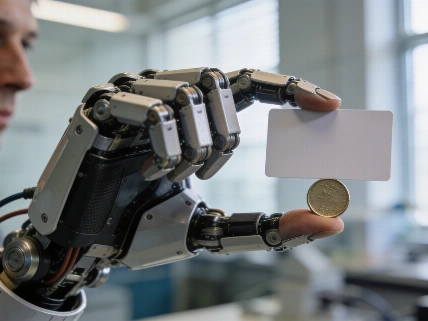
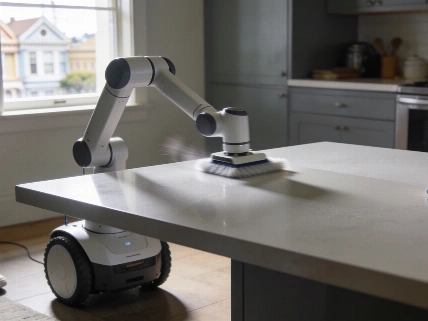
United Airlines and Delta Air Lines have implemented new policies that prohibit passengers from bringing humanoid robots onto commercial flights, either as cabin baggage or checked luggage. The restrictions, which apply to robots designed to resemble or imitate humans or animals in appearance, movement, or behavior, reflect growing concern among U.S. carriers about the practical and regulatory challenges posed by increasingly sophisticated machines. These bans do not extend to conventional consumer electronics or smaller robotic devices, such as robotic vacuum cleaners or toy robots, which remain subject to existing battery and baggage rules.
The new policies follow a widely publicized incident earlier this year in which a humanoid robot was transported on a Southwest Airlines flight, drawing attention to the lack of clear procedures for handling such devices. In response, Southwest moved to ban humanoid and animal-like robots from its flights, setting a precedent now followed by United and Delta. According to United's published guidance, humanoid robots are now classified as prohibited items for carry-on, checked, and cargo transport. Delta's policy, described as temporary, similarly bars robots that imitate humans or animals, regardless of their size or intended use.
Operational and Safety Challenges
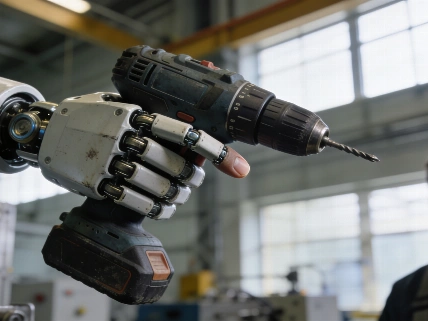
Airlines cite several unresolved risks as the basis for these restrictions. Humanoid robots often feature articulated limbs, nonstandard dimensions, and heavy components, making them difficult to screen, secure, and stow safely within aircraft cabins or cargo holds. Their construction may include multiple large lithium-ion batteries, which are already subject to strict aviation regulations due to fire risk. The complexity of these machines can make it difficult for airline staff to determine safe handling procedures, especially when battery systems are distributed throughout the robot's body or are not easily accessible for inspection.
During boarding and emergencies, the weight, mobility, and unconventional shapes of humanoid robots could complicate storage in overhead bins or cargo compartments, and may interfere with evacuation or emergency-response protocols. Airlines have not reported a pattern of in-flight failures involving humanoid robots, but the absence of clear regulatory standards and handling procedures has led carriers to err on the side of caution. The policies do not target robotics in general, but specifically address the unique risks associated with human-like and animal-like machines.
Regulatory Uncertainty and Industry Response
Experts in aviation safety and robotics note that existing airline regulations were not designed with advanced humanoid robots in mind. The machines' size, weight, and battery configuration often fall outside the parameters covered by current baggage and hazardous materials rules. As a result, airlines face uncertainty about how to screen, load, and secure these devices, and about their potential impact on safety-critical procedures. The lack of standardized guidance has prompted carriers to introduce categorical bans while regulators and industry groups consider whether new rules are needed.
The issue has gained urgency as humanoid robots become more capable and visible in public settings. Recent advances in machine learning and robot locomotion have enabled robots to navigate complex environments and perform tasks that were previously limited to research laboratories. For example, research teams have demonstrated humanoid robots walking across unpredictable terrain with reduced training time, as described in a recent Science Report article on real-world robot locomotion. However, the transition from laboratory demonstration to routine public transport raises new questions about safety, liability, and operational integration.
Numbers and Policy Scope
While airlines have not disclosed the number of incidents involving humanoid robots, the recent Southwest Airlines case was widely reported and appears to have triggered the current wave of policy changes. United's policy explicitly lists humanoid robots as prohibited items, while Delta's temporary ban applies to all robots designed to resemble or imitate humans or animals, regardless of their dimensions or intended function. Conventional consumer electronics, including robotic vacuum cleaners and toy robots, remain permitted under existing battery and baggage regulations. The new restrictions apply to both domestic and international flights operated by these carriers, but do not affect cargo shipments of industrial robots that do not resemble humans or animals.
As airlines, regulators, and manufacturers assess the risks and requirements associated with transporting advanced robots, further policy changes are possible. For now, passengers planning to travel with humanoid or animal-like robots should expect these devices to be refused at check-in, regardless of their purpose or technical specifications.
Understanding the distinction between automation and autonomy is essential in the context of humanoid robots. Automation refers to machines performing predefined tasks without human intervention, while autonomy involves the ability to make decisions and adapt to changing environments. Most humanoid robots remain highly dependent on human supervision, especially during transport and deployment. The lack of standardized procedures for screening, securing, and handling these machines in aviation settings highlights the gap between laboratory demonstrations and real-world operational safety. As the technology evolves, regulatory frameworks will need to address not only the technical capabilities of robots but also the institutional systems that govern their movement and use in public spaces.