A new long-term asset fund has directed its first capital to Oxford Quantum Circuits and Quantum Motion, connecting UK defined-contribution pension assets with domestic quantum hardware firms and other growth-stage companies
UK hardware spin-outs seeking Series B and follow-on growth capital have historically relied on overseas investment or listings. A new fund structure is intended to give domestic retirement assets a route into companies at this stage.
The Capital Route
On 2 November 2026, Scottish Widows, Aberdeen Investments and IP Group announced initial investments through the CG Scottish Widows Growth Long-Term Asset Fund (LTAF). Scottish Widows provides the workplace-pension platform, Aberdeen Investments manages the fund's growth sub-fund, and IP Group was appointed to manage its UK venture-growth portfolio. The Scottish Widows announcement described the initiative as connecting workplace pension savings with high-growth UK science and technology companies.
The fund's initial investments are expected to include Oxford Quantum Circuits (OQC), Quantum Motion, battery developer Nyobolt and Genomics Limited. Together, the four companies represent quantum computing, advanced battery technology and AI-enabled healthcare. The fund is structured to provide workplace-pension access to less-liquid private-market investments; its mandate is part of an effort to help bridge the funding gap between scientific breakthroughs and commercial scale.
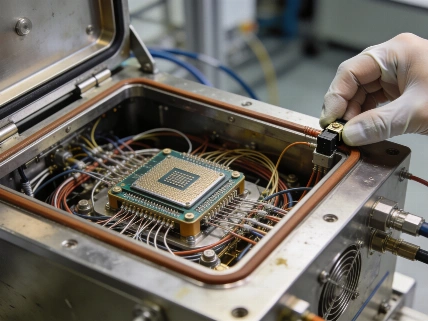
OQC is developing commercially available quantum-computing systems and uses its Coaxmon superconducting-processor architecture. Quantum Motion is pursuing scalable silicon-based quantum computers using a CMOS-compatible approach that draws on established semiconductor-manufacturing processes. Nyobolt develops ultra-fast-charging battery technology, while Genomics Limited applies AI, machine learning and large genetic datasets to preventative healthcare and drug discovery.
Different Hardware
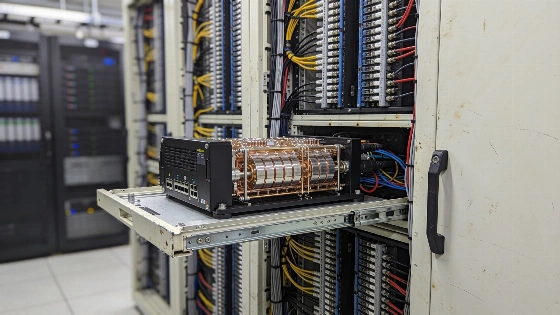
The quantum companies use distinct approaches. Oxford Quantum Circuits routes control lines vertically in colocation data center racks to isolate its qubit plane from parasitic cross-talk. Its Coaxmon is a superconducting-processor approach designed with scalability and high-fidelity operation in mind.
Quantum Motion uses commercial silicon manufacturing processes to make high-density qubit arrays on standard semiconductor fabrication lines. Its CMOS-compatible approach is intended to leverage established semiconductor manufacturing. The announcement describes the companies' technologies and commercial direction, but does not report processor qubit counts, benchmark scores or hardware-performance measurements.
Investment Not a Demo
The announcement concerns the allocation of pension capital, not a new quantum-computing experiment. The first investments were described as expected to include the four named companies; the announcement gives no transaction-level investment amounts. The appointment of IP Group to manage the venture-growth portfolio sits within the wider fund structure, while Aberdeen Investments manages the growth sub-fund. IP Group's mandate announcement described the arrangement as a potential route for increasing long-term pension investment in British high-growth companies.
The deployments connect workplace retirement assets with growth-stage firms; they do not establish that either quantum company has reached a particular level of computing capability. The initiative's portfolio extends beyond quantum hardware to batteries and AI-enabled healthcare, positioning it as a broader venture-growth investment rather than a quantum-only fund.