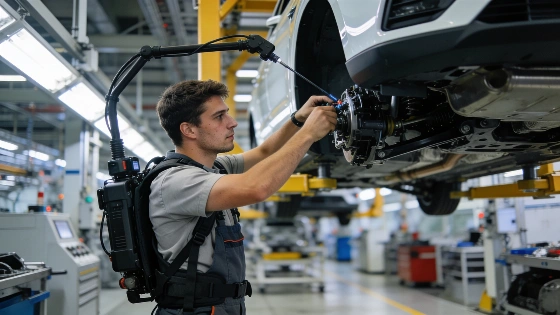
Tesla is collecting video data of employee assembly tasks at its Grünheide Gigafactory to train the Optimus humanoid robot for autonomous industrial work, raising questions about workplace monitoring and regulatory oversight
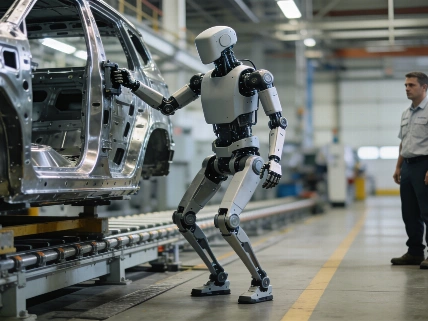
Tesla has begun recording the movements of selected employees at its Gigafactory in Grünheide, Germany, as part of a program to train its Optimus humanoid robot for industrial tasks. Workers participating in the initiative wear backpack-mounted cameras while assembling vehicles, capturing detailed footage of how they grip tools, manipulate components, and execute specific manufacturing steps. The company intends to use this real-world data to develop machine-learning models that enable Optimus to perform similar actions autonomously on the factory floor.
This approach extends Tesla's existing data collection practices in the United States, where dedicated operators perform scripted movement sequences to generate training data for Optimus. In Germany, the process involves ordinary assembly workers, raising new questions about employee consent and workplace surveillance. According to reporting from Handelsblatt, the initiative has not yet been formally discussed with the plant's works council, a step that may be required under German labor law when technical systems capable of monitoring employee behavior are introduced. The legal framework in Germany typically mandates consultation with employee representatives before deploying such monitoring technologies.
Robot Training and Manufacturing
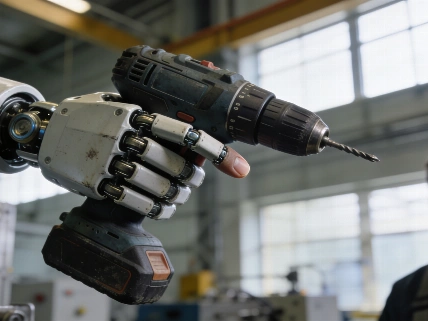
The data collected at Grünheide is intended to support Optimus's ability to replicate human assembly tasks without direct teleoperation. Tesla's stated goal is to accelerate the development and eventual large-scale production of the humanoid robot. In parallel, the company is expanding its robotics operations in Reutlingen, Germany, where it is developing sensors, actuators, gearboxes, and production equipment for Optimus. The two sites are expected to play complementary roles: Grünheide as a source of training data from real manufacturing environments, and Reutlingen as a hub for hardware development and robot assembly.
Despite these efforts, the specific role that Optimus could play at the Grünheide factory remains undefined. Tesla has not disclosed which assembly tasks, if any, the robot is expected to perform autonomously in the near term. The company did not respond to requests for comment regarding the scope of the data collection or the management of employee participation. The absence of clear communication with the works council and the lack of public detail about data governance have prompted scrutiny from labor and privacy advocates.
Scaling and Technical Challenges
Elon Musk, Tesla's CEO, has described the scaling of Optimus production as the company's most complex manufacturing challenge to date. Unlike Tesla's electric vehicles, which benefit from established supplier networks, nearly every component of the humanoid robot must be developed from scratch or sourced from new suppliers. The company has reported shortages of AI chips and constraints in memory, logic, and semiconductor packaging, though suppliers such as Samsung, TSMC, and Micron are reportedly expanding capacity to address these gaps.
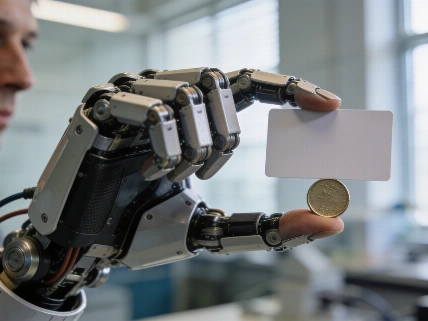
In December 2025, Tesla released a video demonstration of the latest Optimus prototype, highlighting improvements in speed, balance, and mobility. The robot, which stands 180 centimeters tall and weighs approximately 73 kilograms, features more than 40 degrees of freedom and hands with 11 degrees of freedom for dexterous manipulation. The demonstration showed Optimus navigating a laboratory environment with improved gait and coordination compared to earlier prototypes, but did not include evidence of unsupervised industrial task performance or sustained operation in a production setting.
Workplace Monitoring and Data Use
The use of wearable cameras to collect training data for industrial robots is not unique to Tesla. Other technology companies have explored similar approaches to improve robot learning from human demonstrations. However, the integration of such systems into active workplaces introduces complex questions about privacy, consent, and the boundaries of employee monitoring. Under German law, the deployment of technical systems that can monitor employee behavior or performance typically requires negotiation with employee representatives and may be subject to additional regulatory scrutiny.
As the use of real-world data becomes central to the development of advanced robotics, the balance between technical progress and workplace rights is increasingly contested. The situation at Grünheide highlights the need for transparent data governance, clear communication with affected workers, and robust oversight mechanisms. For context, the challenge of evaluating robot learning in real-world environments has also been addressed by simulation platforms such as NVIDIA's RoboLab, which aims to benchmark robot policy performance before physical deployment. For more on simulation-based evaluation, see this analysis of NVIDIA's open-source RoboLab platform.
Optimus remains in the prototype stage, with no independently verified evidence of reliable, unsupervised operation in complex industrial settings. The effectiveness of the current data collection approach, the extent of human oversight required, and the long-term impact on factory labor remain open questions.
Imitation learning is a machine-learning technique in which robots or software agents are trained to replicate human actions by observing demonstrations. In the context of industrial robotics, this often involves collecting video or sensor data of skilled workers performing specific tasks, then using that data to train models that predict and reproduce similar movements. While imitation learning can accelerate robot training for complex manipulation tasks, its effectiveness depends on the quality and diversity of the collected demonstrations, the accuracy of the sensing equipment, and the ability of the robot hardware to execute the learned behaviors. The transition from controlled demonstrations to reliable autonomous operation in real-world environments remains a significant technical and organizational challenge.