Stratolaunch has completed more than 10 successful flights of its reusable Talon-A test vehicle, giving researchers a repeatable platform for examining materials, sensors and other technologies at speeds above Mach 5
Stratolaunch's reusable Talon-A has completed more than 10 successful hypersonic flights, marking a shift from occasional demonstrations toward repeated atmospheric testing. The California company describes the autonomous vehicle as a testbed rather than a weapon: its value lies in carrying instruments and experimental hardware through an environment where air heats rapidly and aerodynamic forces become severe.
A repeatable test vehicle
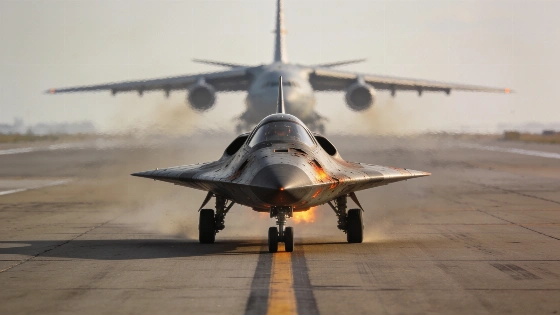
Talon-A is an air-launched, rocket-powered craft designed to fly faster than five times the speed of sound. At those speeds, the surrounding air can generate intense thermal and mechanical loads, making hypersonic flight useful for evaluating heat-resistant materials, guidance systems, sensors and other components intended for future aerospace vehicles.
Stratolaunch operates two Talon-A vehicles. Each is approximately 8.5 meters long and has a wingspan of about 3.4 meters. The vehicle is autonomous, so it can execute its test profile without a pilot onboard, then return to a runway landing in California after the high-speed portion of the mission.
The milestone is a flight-count result, not a newly reported scientific measurement. Stratolaunch has not publicly detailed every payload or the full performance data from each mission. That limits outside assessment of how much the vehicles have improved between flights, which experiments produced the most useful results, and whether all objectives were met under comparable conditions.
How Talon-A reaches speed
Each mission begins with a carrier aircraft. The carrier lifts Talon-A to altitude and releases it over the Pacific Ocean, allowing the smaller vehicle to ignite its rocket engine and accelerate through the hypersonic regime. After its test run, Talon-A glides or powers its way back toward California for a conventional runway recovery.
Stratolaunch has two different carrier options. Spirit of Mojave is a modified Boeing 747, while Roc is a purpose-built aircraft with a wingspan of roughly 117 meters. Roc remains the largest aircraft by wingspan, and its twin-fuselage layout allows an experimental vehicle to be carried beneath the central section before release.
Launching from an aircraft avoids the need for Talon-A to climb from the ground under its own power. That arrangement also gives operators flexibility over the release point and flight path. In practice, however, every test still depends on weather, range safety, recovery conditions and the ability to protect the vehicle's payloads from vibration, heating and rapid changes in pressure.
The approach differs from conventional laboratory testing because the hardware experiences a complete, short-duration flight environment rather than an isolated temperature or pressure condition. Repeated flights can expose defects that a single demonstration would miss, although the number of flights alone does not establish reliability without detailed failure, maintenance and payload-performance data.
Why the milestone matters
Hypersonic test opportunities are limited because they require specialized vehicles, restricted flight corridors and instrumentation capable of recording rapidly changing conditions. A reusable platform can reduce the time between experiments compared with systems that are discarded after one flight, potentially allowing customers to compare designs across multiple missions.
Military organizations, including the U.S. Missile Defense Agency, have shown interest in this type of testing because maneuverable hypersonic vehicles are difficult to track and intercept. That interest explains why some payload details remain undisclosed. It does not mean Talon-A itself is a weapon or a weapon-delivery system; the vehicle is intended to provide flight data for technologies that may later be used in other systems.
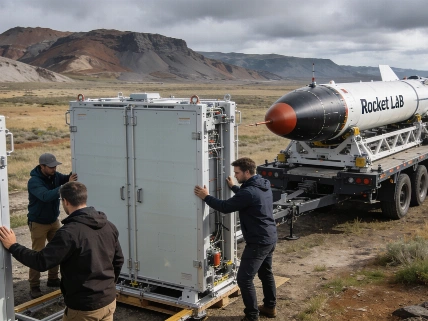
The milestone also belongs in the wider commercial test-flight market. Rocket Lab's HASTE uses a suborbital version of its Electron rocket to provide hypersonic and other high-speed test opportunities. HASTE first flew in June 2023 and has recorded nine flights, while a $190 million agreement announced in March calls for 20 missions for the U.S. military.
That comparison highlights both the demand for test capacity and the limits of using flight totals as a measure of scientific progress. The meaningful result from any mission is the quality of the calibrated data returned from the vehicle and its payloads. In that context, the milestone sits alongside other examples of hardware being deliberately placed into demanding environments, including the planned lunar impact examined in researchers' analysis of an artificial Moon impact, where the scientific value depends on observations of the event rather than the event alone.
Stratolaunch's achievement therefore supports a cautious conclusion: Talon-A is becoming a more frequently used platform for hypersonic experiments. It does not, by itself, prove that the tested technologies are ready for operational deployment, nor does it reveal how each payload performed. Those judgments require mission-specific measurements, independent analysis and evidence that results can be reproduced under relevant conditions.
Mach 5 is a speed threshold, not a single flight condition. It corresponds to at least five times the local speed of sound, which changes with altitude and atmospheric temperature. A vehicle's heating, drag and controllability depend on more than its Mach number: altitude, trajectory, density, angle of attack and vehicle shape all matter. Engineers therefore use onboard sensors and ground systems to reconstruct the flight environment, turning a brief autonomous flight into data about how materials and instruments behave under extreme aerodynamic loads.