China's largest contract chipmaker, SMIC, reports near-maximum factory utilization as demand for mature-node chips supporting AI infrastructure outpaces supply, prompting price increases and plans for further capacity expansion
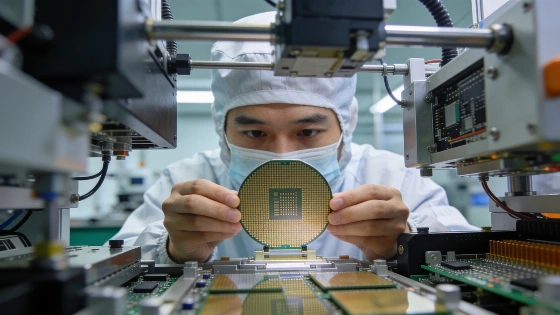
China's Semiconductor Manufacturing International Corporation (SMIC), the country's largest contract chipmaker and the world's third largest by output, is facing sustained pressure on its production lines as demand for mature-node chips used in artificial intelligence (AI) infrastructure continues to surge. According to recent company disclosures, SMIC's factories operated at 93.7 percent capacity in the second quarter of 2026, a marginal increase from the previous quarter, reflecting a market environment where supply is unable to keep pace with orders for AI-related components.
Unlike the advanced-node chips that dominate high-end smartphones and graphics processors, mature-node chips-manufactured using older, well-established process technologies-are essential for power management, logic control, and optical modules in servers, data centers, and Internet of Things (IoT) devices. The current spike in demand is driven less by consumer electronics and more by the rapid buildout of global AI infrastructure, which relies on these supporting chips for reliable operation and energy efficiency. SMIC's management has acknowledged that wafer starts, or the number of new chip batches entering production, have exceeded previous forecasts, with strong customer orders extending through at least 2027.
Production Limits and Expansion Plans
SMIC's reported wafer shipments rose 14.4 percent quarter-on-quarter, with monthly production capacity reaching the equivalent of approximately 1.1 million 8-inch wafers. Despite this growth, the company has indicated that it is operating near its practical limits and cannot fully satisfy the sudden increase in demand. To address the shortfall, SMIC is considering the installation of additional manufacturing equipment at its existing sites, though it has not yet disclosed specific details regarding the timing or location of these expansions. The company has also stated that it will continue to invest in research and development rather than pushing its facilities to unsustainable operational extremes.
In response to the ongoing supply-demand imbalance, SMIC has begun raising prices for certain categories of chips, particularly those used in consumer electronics. However, prices for smartphone chips and display-driver integrated circuits have so far remained unchanged. The company has signaled that further price adjustments may be forthcoming if market volatility persists. These pricing decisions reflect both the scarcity of manufacturing capacity and the strategic importance of mature-node chips in the AI supply chain.
Financial Performance and Market Dynamics
For the quarter ending June 30, 2026, SMIC reported revenue of $3.01 billion, representing a 20 percent sequential increase and a 36.1 percent rise year-on-year. Gross margins improved to 25.3 percent from 20.1 percent in the previous quarter, according to the company's earnings report. The revenue growth was observed across all regions served by SMIC, with China leading due to strong domestic demand, increased overseas orders, and ongoing efforts to localize supply chains. Despite persistent weakness in the smartphone and consumer electronics segments, the company's financial results underscore the strength of AI-driven demand for mature-node chips.
SMIC's current position highlights a broader industry challenge: the global semiconductor sector's capacity to adapt to rapid shifts in demand driven by emerging technologies. While the company is benefiting from its role as a key supplier of AI infrastructure components, its near-maximum utilization rates and the need for further investment in capacity expansion illustrate the limits of existing manufacturing ecosystems. The situation also raises questions about long-term supply chain resilience, pricing power, and the potential for further market disruptions if capacity constraints persist.
Mature-node chips, often overlooked in discussions of cutting-edge semiconductor technology, are foundational to the operation of AI systems at scale. These chips handle essential functions such as power regulation, signal processing, and data transfer within servers and data centers. Unlike advanced-node chips, which require the latest fabrication techniques, mature-node chips are produced using established processes that offer reliability and cost-effectiveness. However, as AI infrastructure expands globally, the demand for these components can quickly outstrip available manufacturing resources, leading to shortages, price volatility, and strategic shifts in supply chain management.