NVIDIA says its GR00T 2 model lifted success across 50 unfamiliar robot tasks from 40% to 95% after five demonstrations per task and a 30-minute fine-tune; the trials also tested human-to-robot skill transfer
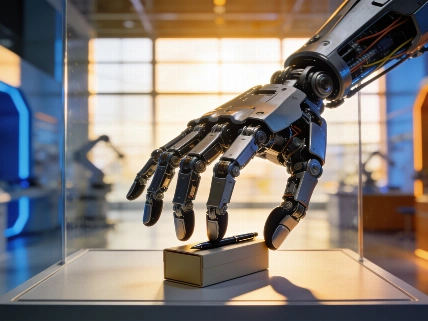
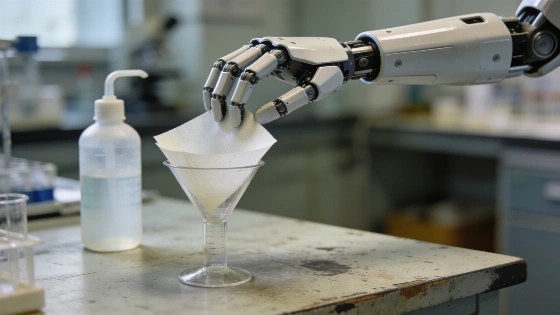
In one test, a five-fingered robot lined a laboratory funnel with filter paper and wetted it using a wash bottle after seeing a human perform the task. The target robot had not been teleoperated for the demonstration. NVIDIA reports that it succeeded in 65% of trials, illustrating the model's stated ability to transfer skills from human demonstrations to a different robot body.
Across 50 tasks not demonstrated on the target robot, GR00T 2 achieved 40% average success without task-specific training. After five demonstrations per task, a 30-minute fine-tuning session on one NVIDIA RTX 5090 raised the average to 95%. The robot data for each task took less than three minutes to collect.
NVIDIA also reported a separate 50-task evaluation at the Conference on Robot Learning (CoRL) in Austin, Texas, on November 9, 2026. In that benchmark, the 2-billion-parameter vision-language-action model completed 40 of the 50 tasks at least once without task-specific demonstrations. Average success was 71% after one demonstration per task and 95% after five; the 95% figure is an average across the tasks, not a result achieved on every task. NVIDIA describes GR00T 2 as an open world-action model built on its Cosmos platform, connecting visual observations with robot actions and future-state prediction. The company's CoRL announcement presents human-to-robot transfer as a central capability.
NVIDIA describes the method as cross-adaptation, or X-Adapt. The model predicts future video alongside robot movements, using demonstrations from one body or device to guide another. Its training includes 402,730 hours of first-person human video and 10,184 hours of handheld-gripper demonstrations. Robot teleoperation contributes a further 23,500 hours; NVIDIA says 100,000 hours of its Human-1M dataset are openly available.
Transfer also worked between different machines in a toy assembly test: a handheld Universal Manipulation Interface (UMI) gripper demonstrated how to assemble a dump truck, and a separate robot arm called YAM completed the task in 60% of trials without task-specific demonstrations. A G1 robot report likewise distinguished test results from evidence of field reliability; GR00T 2's reported scores measure performance on the tasks tested, rather than broader reliability. NVIDIA's benchmark results come from controlled tests, and the tasks were selected from those the model could learn effectively.
Reasoning models can break complex tasks into steps and direct the robot through an application programming interface. In tests with three toy assemblies, the system completed at least 97 of 100 trials for each toy and could recover from errors or interruptions. A visual-steering feature raised YAM's success on short tasks from 40% to 92% by marking where to move objects.
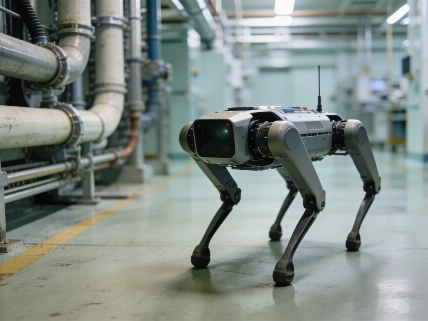
A smaller version, GR00T 2 Turbo, runs on the Unitree G1 with an onboard Jetson Thor processor. Each prediction takes 124 milliseconds. Using a whole-body controller, the humanoid served popcorn in all 48 trials and cleared a table of different objects in 93% of trials.
NVIDIA introduced GR00T 2 alongside Isaac Lab 3.0 at CoRL 2026, placing the model within its broader robotics-development and simulation ecosystem. The results describe benchmark performance and a research and developer release, rather than a certified product for autonomous operation in industrial or public settings.