
New York State will fund up to four regional hubs to accelerate the commercialization of quantum computing, sensing, and secure communications, aiming to connect academic labs, startups, and industry partners across the state
New York State has launched a $60 million initiative to establish up to four Regional Quantum Technology Commercialization Hubs, aiming to bridge the gap between laboratory research and practical quantum technologies. The program, funded through the FY 2027 state budget and managed by Empire State Development's Division of Science, Technology and Innovation (NYSTAR), will allocate up to $15 million to each selected regional anchor. The goal is to accelerate the transition of quantum computing, quantum sensing, and quantum communication research into deployable technologies and commercial applications.
Program Structure and Funding
Each hub will be led by a nonprofit or academic institution within one of New York's Regional Economic Development Council regions. The funding is intended for facility construction, laboratory expansion, and acquisition of specialized equipment, including prototyping platforms, high-performance computing (HPC) simulation environments, cleanroom fabrication tools, and dedicated testbeds. The hubs are required to maintain a primary technical focus-such as quantum processing, quantum sensing, or quantum networking-while providing open access to regional startups and unaffiliated researchers. This approach is designed to foster collaboration and lower barriers to entry for early-stage quantum ventures.
Technical Scope and Infrastructure
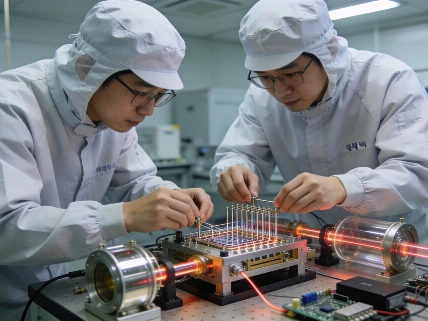
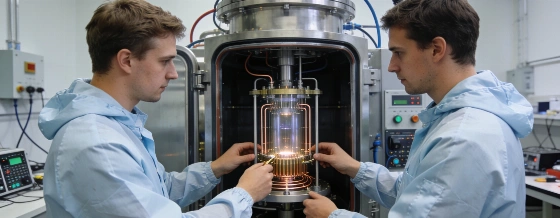
The RFP mandates that each hub offer advanced infrastructure to support quantum device development and testing. Facilities must be equipped to handle the fabrication and characterization of quantum hardware, including superconducting, photonic, or semiconductor-based devices, as well as the integration of quantum and classical control systems. Access to HPC resources is expected to support quantum algorithm development and simulation, while cleanroom environments will enable the production of high-quality quantum materials and devices. The open-access model is intended to maximize the impact of public investment by supporting a broad range of users beyond the host institution.
Timeline and Selection Process
Empire State Development will hold an applicant information session on August 21, 2026, with RSVPs due by August 18. Written questions from potential applicants will be accepted until August 28, and formal proposals must be submitted by October 14, 2026. The selection process will evaluate proposals based on technical merit, infrastructure readiness, regional impact, and plans for industry and academic collaboration. The program builds on New York's previous $300 million investment in the Quantum Research and Innovation Hub at SUNY Stony Brook, aiming to create a more integrated statewide quantum ecosystem.
National and International Context
New York's investment reflects a broader trend among governments seeking to accelerate quantum technology commercialization through regional infrastructure and public-private partnerships. Similar initiatives have emerged internationally, including Canada's recent launch of a Quantum Defence Innovation Secure Hub in Calgary, which aims to convert domestic quantum research into deployable prototypes for security applications within a short timeframe. For context on parallel efforts, see this report on Canada's quantum defense hub funding.
Quantum technology commercialization remains constrained by several engineering and scientific challenges. These include the need for reproducible device fabrication, scalable error correction, robust cryogenic and control infrastructure, and reliable benchmarking against classical systems. While public investment in regional hubs can accelerate the development of enabling infrastructure and workforce skills, the transition from laboratory demonstration to practical, scalable quantum systems will depend on sustained technical progress and transparent evaluation of performance claims.
Quantum computing and related technologies rely on the precise control and measurement of quantum states in physical systems such as superconducting circuits, trapped ions, or photonic devices. Achieving practical utility requires not only high-fidelity quantum operations but also scalable error correction, stable device fabrication, and integration with classical electronics. The distinction between physical qubits-individual quantum systems manipulated in hardware-and logical qubits-error-protected encodings across multiple physical qubits-is central to evaluating progress. Most current demonstrations remain at the prototype stage, with significant engineering required before quantum systems can outperform classical technologies on useful tasks.