New York has set out priorities for $360 million in quantum infrastructure funding, including a planned Stony Brook facility and up to four regional commercialization hubs. The plans do not report new processor results
A 150,000-square-foot quantum facility and a university-hosted hybrid quantum data center are planned for SUNY Stony Brook, with the data center targeted for 2029. The state has outlined how its $360 million quantum allocation will support that project and regional efforts to move quantum technology toward commercial use.
State funding plan
The FY 2027 state budget provides $300 million for the flagship Quantum Research and New idea Hub at Stony Brook. The remaining $60 million is allocated to establish up to four Regional Quantum Technology Commercialization Hubs. These funding commitments support planned facilities; the announcement describes projects that are not yet operational.
Empire State Development's Division of Science, Technology and New idea, known as NYSTAR, will administer the regional selection process. Its stated priorities include open-access test facilities and startup incubation. NYSTAR also intends the hubs to provide shared technical resources that connect regional hardware clusters with commercial users.
Federal commitments
The state program sits alongside federal awards finalized in September 2026 under the CHIPS and Science Act. New York's package totals $360 million, including $300 million for Stony Brook and $60 million for regional hubs. The federal commitments include a $1 billion award for Anderon, matched by $1 billion from IBM, for an open 300mm superconducting quantum foundry at NY Creates' Albany NanoTech Complex. GlobalFoundries' Quantum Technology Solutions in Malta received a separate $375 million award.
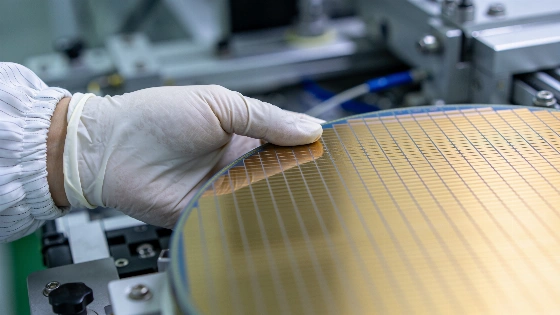
The announcement gives the project aims and funding amounts. The Stony Brook facility is planned to cover 150,000 square feet, while the foundry is described as using a 300mm wafer format. That diameter identifies the wafer size, not the number of quantum devices produced or their operating reliability. The article reports no device yields, measured error rates, processor performance results, or completed quantum computing system.
IBM's matching commitment is an industrial contribution to the foundry project, not a processor benchmark. In a separate context, Japan challenge results describe teams using IBM quantum hardware in competition workloads. That use does not establish the performance of the planned New York facility, whose technical output has not yet been reported.
From facilities to users
The state says the combined investments are intended to connect New York's hardware and semiconductor capabilities with demand in financial services. Defense and healthcare are also stated areas of interest. These are target sectors; the announcement does not identify an organization that has adopted a quantum system or a commercial application that is ready for deployment.
Regional hubs are intended to give startups and other users access to shared facilities. NYSTAR's planned approach links open-access testing and startup incubation with the state's regional hardware clusters and commercial users. The selection and operation of the centers will determine how those shared resources are made available to applicants and users.
What funding shows
The commitments establish the scale and direction of public investment. They do not establish that a quantum computer has become more capable, that a particular workload can outperform classical computing, or that the proposed infrastructure will resolve manufacturing and control challenges. Those questions require technical results from devices and facilities, not funding totals alone.
A foundry is manufacturing infrastructure. For quantum hardware, its practical value depends on whether fabrication can repeatedly produce devices with the properties a chosen architecture requires. The announcement provides no production data or device measurements. The Stony Brook data center is likewise a planned hybrid facility; its equipment and intended workloads have not been detailed.
In quantum computing, a physical qubit is a device used to encode quantum information, while a useful computation also depends on reliable control and measurement. Funding a facility can support the work needed to develop that infrastructure, but it is not itself a measurement of qubit quality or computational advantage. The reported state and federal awards so describe commitments and plans, not a demonstrated technical outcome.