A new analysis of NASA's Spirit rover data has identified crystalline hematite and altered magnetite in Martian soil, supporting the view that liquid water once shaped large regions of Mars
Archival data from NASA's Spirit rover, which operated on Mars from 2004 to 2010, has yielded new evidence that water-driven processes were more extensive on the Red Planet than previously recognized. By re-examining hundreds of soil measurements collected during Spirit's mission in Gusev Crater, researchers have identified mineral signatures that point to ancient interactions between water and Martian rock.
Reprocessing Spirit's Soil Measurements
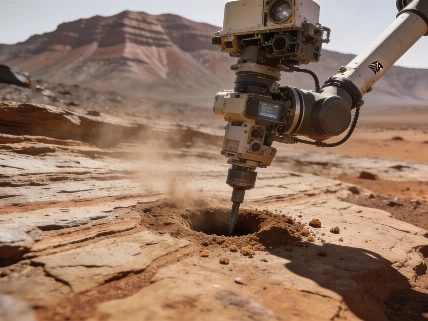
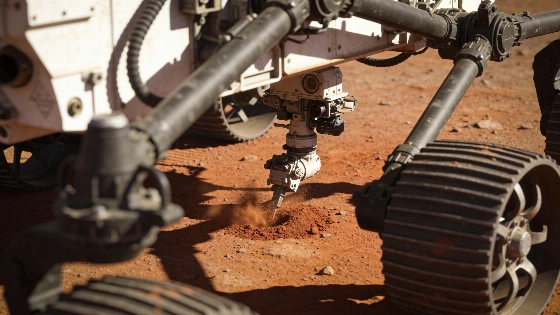
The new study focused on 32 undisturbed soil sites within Gusev Crater, where Spirit landed in January 2004. Scientists combined hundreds of individual spectra from the rover's Mössbauer spectrometer, a device designed to detect iron-bearing minerals by measuring their characteristic gamma-ray absorption. This approach allowed the team to build a detailed mineralogical profile of typical Martian soil, revealing faint signals that had previously been lost in instrument noise.
Among the most significant findings was the detection of crystalline hematite-a mineral that, on Earth, often forms when iron-rich rocks interact with liquid water. Earlier analyses of Spirit's data had concluded that crystalline hematite was largely absent from the landing site, but the new method of aggregating spectra enabled researchers to extract its subtle signature. The presence of altered magnetite, another iron oxide mineral, further supports the case for ancient chemical alteration by water.
Implications for Mars' Watery Past
The widespread occurrence of crystalline hematite in ordinary Martian soil suggests that water-related processes were not limited to isolated locations but may have affected broad regions of the planet. While hematite can also form through volcanic or hydrothermal activity, its association with altered magnetite and the chemical context of the findings are consistent with aqueous alteration. These results add to a growing body of evidence from multiple Mars missions indicating that the planet's surface was once shaped by persistent liquid water.
Spirit's earlier discoveries of water-altered rocks in the Columbia Hills, along with subsequent findings by the Curiosity and Perseverance rovers in Gale and Jezero craters, have gradually shifted the scientific consensus toward a wetter Martian past. The new analysis extends this view to the more typical, dust-covered soils that blanket much of Mars, implying that water-driven mineral transformations may have been planet-wide rather than confined to ancient lakebeds or river deltas.
Methodological Advances and Remaining Questions
The ability to detect faint mineral signatures by aggregating large datasets highlights the value of re-examining archival mission data with improved analytical techniques. The Mössbauer spectrometer aboard Spirit was limited by signal-to-noise constraints, especially in low-concentration minerals, but the new approach demonstrates that important discoveries can emerge from existing measurements. This strategy mirrors advances in other areas of astronomy, such as the use of stacked observations to reveal faint features, as seen in research on stellar companions using ground-based telescopes. For example, astronomers have used similar data-combining methods to clarify the presence of a companion star near Betelgeuse, as discussed in recent work with the Very Large Telescope.
Despite the new findings, key uncertainties remain. The precise environmental conditions that led to the formation of crystalline hematite and altered magnetite in Martian soil are still under investigation. While the mineralogy is consistent with aqueous alteration, distinguishing between water-driven and volcanic or hydrothermal origins requires further geochemical context. Additionally, the timing and duration of water activity in Gusev Crater and across Mars remain open questions, as does the potential for past habitability in these environments.
The study was published in the peer-reviewed journal Interactions on June 26, 2026, and underscores the enduring scientific value of mission data long after a rover's operations have ended.
Understanding how scientists identify minerals on Mars relies on the technique of Mössbauer spectroscopy, which measures the absorption of gamma rays by iron atoms in different chemical environments. Each iron-bearing mineral produces a unique spectral signature, allowing researchers to distinguish between forms such as hematite, magnetite, and olivine. However, the sensitivity of the instrument and the abundance of the mineral both affect detectability. By combining many spectra from similar soil samples, scientists can enhance weak signals and reveal minerals that would otherwise remain hidden. This method is especially valuable for interpreting the complex, dust-rich soils that dominate the Martian surface.