Bear Robotics says NVIDIA tools cut Isaac GR00T inference time on its KR1 humanoid from 500 to 60 milliseconds. A separate result for Bear's model also improved, but neither figure measures task completion
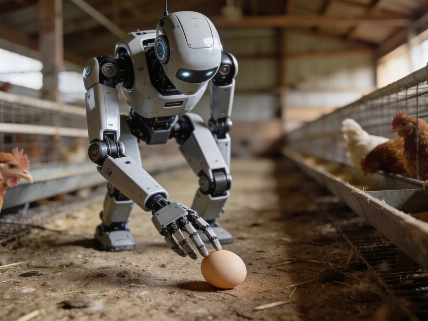
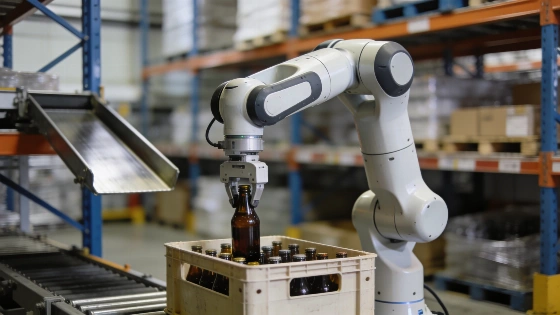
At NVIDIA GTC Berlin, KR1 is shown picking bottles, placing them in a crate and carrying it to a warehouse drop-off point. The demonstration puts the robot's handling skills into a defined process; it does not establish how quickly or reliably KR1 could perform broader work without intervention.
Bear Robotics reports a large reduction in model processing time behind the demonstration. Its internal measurements put NVIDIA Isaac GR00T inference on KR1 at about 60 milliseconds, down from an initially unoptimized 500 milliseconds. Bear says its own model's inference time fell from 72.3 milliseconds to 17.2 milliseconds.
These are latency measurements, not measures of robot speed. Inference is the time a trained model takes to generate an output. The figures do not show that KR1 moves eight times faster, completes a warehouse task sooner, or handles objects more accurately. Bear has not provided comparative results for complete task times, manipulation accuracy or long-term reliability, and the reported measurements have not been independently verified.
The software platform behind the work is KINO-2. Bear uses demonstrations of object-handling tasks to train and refine models, then evaluates the resulting behavior on KR1 before testing it in customer operations. The platform supports Bear's own models as well as external foundation models, which are trained on broad data and can be adapted to different tasks. The company's description does not specify how many demonstrations or evaluation trials were used.
Bear integrated NVIDIA Isaac OS into KR1's perception system, which processes information about the robot's surroundings. The setup runs on NVIDIA Jetson AGX Thor hardware and incorporates NVIDIA Holoscan SDK 5.0. Bear also used NVIDIA TensorRT and quantization. Quantization represents model values at lower numerical precision, reducing computational demands; the source does not give details of the precision setting or a breakdown of how much each change contributed to the measured reduction.
That distinction matters in physical work. A faster model output may reduce one delay between sensing and a decision, but it cannot by itself establish that a robot will grasp an unfamiliar object, recover from a slip or finish a complete process safely. The GTC warehouse demonstration combines KINO-2's learned handling skills with Bear's existing navigation and process software. The company has not reported how often the task was repeated or whether human intervention was needed.
Bear says it is developing manipulation through customer pilots involving supermarket returns and warehouse crate handling. It plans to pair specialized mobile robots that transport goods with KR1 humanoids that handle objects, using shared fleet-management and process systems. These are development plans; the announcement supplies no reliability results for those broader workflows.
The scale of Bear's existing business also needs context: the company says it has deployed more than 16,000 robots at over 5,000 customer locations, but most are service robots rather than humanoids. A separate report on Atlas's four-finger hand similarly describes manipulation through the hardware and task requirements, rather than treating a humanoid form as evidence of general capability.
For KINO-2, the concrete evidence presented so far is a warehouse process demonstration and company-reported inference measurements. Neither establishes dependable operation across varied customer settings.
Inference latency measures only one part of a robot's response cycle. The machine must also gather sensor data, interpret its surroundings and translate a model's output into physical control. Delays elsewhere in that chain can limit the effect of a faster model. A shorter inference time is so evidence about processing speed under the reported setup, not a complete measure of task performance or safety.