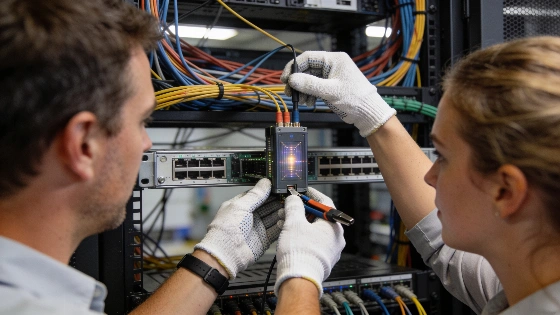
IonQ and EPB are establishing a research center in Chattanooga to test commercial quantum memory hardware on a live fiber optic network, aiming to advance quantum communication infrastructure and evaluate real-world integration challenges
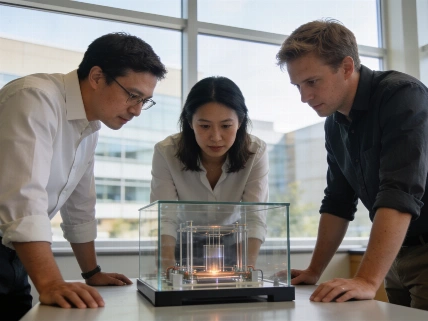
IonQ and EPB have announced the creation of the Tennessee Quantum Communications Research Center, a facility in Chattanooga designed to test the integration of commercial quantum memory units with operational fiber optic telecommunications infrastructure. The center will serve as a research and development testbed, directly connected to EPB's live fiber network, with the goal of evaluating how quantum memory hardware performs under real-world network conditions and what engineering challenges remain for scalable quantum communication.
Quantum Memory on Live Networks
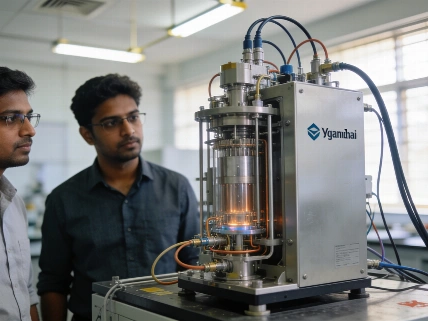
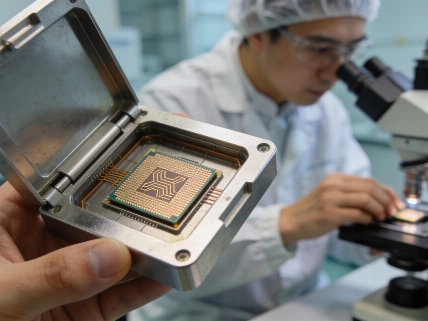
The core technical focus of the new center is the deployment of quantum memory devices-hardware capable of storing and retrieving quantum states-directly onto an active fiber optic network. Quantum memories are essential for synchronizing and routing quantum information over long distances, enabling the development of quantum repeaters and distributed quantum computing architectures. Unlike laboratory demonstrations on isolated links, this initiative aims to test commercial-grade quantum memory units in a setting that reflects the complexity and variability of operational telecommunications infrastructure.
Experimental Setup and Economic Context
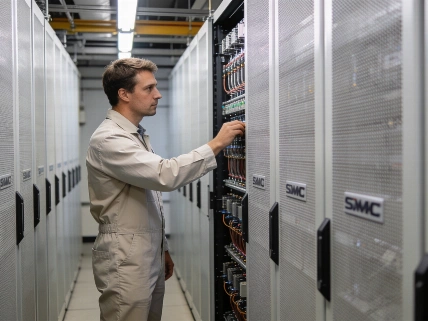
The project is supported by a $15 million, five-year investment from IonQ, with research staff provided by the company. EPB will supply the live fiber optic testbed and act as the primary commercialization partner, translating laboratory results into potential public and private sector applications across the Tennessee Valley. The center is expected to support approximately two dozen direct and indirect jobs, with projected regional economic impact estimated at two to three times the initial investment. The facility builds on existing collaborations at the EPB Quantum Center, which already houses the EPB Quantum Network-a fiber-based quantum key distribution environment-and an IonQ Forte Enterprise trapped-ion quantum computer currently being prepared for commercial deployment.
Integration Challenges and Research Goals
Integrating quantum memory hardware into live telecommunications networks presents significant engineering challenges. Quantum states are highly sensitive to loss, noise, and environmental fluctuations, and maintaining coherence over metropolitan-scale fiber links requires careful control of timing, synchronization, and error sources. The research center will focus on developing and validating protocols for quantum state storage and retrieval, characterizing loss and error rates, and assessing the stability of quantum memory performance under realistic network loads. These efforts are intended to accelerate progress toward practical quantum repeaters and scalable quantum networking, but the transition from laboratory prototypes to robust field-deployable systems remains a substantial technical hurdle.
Regional Collaboration and Future Plans
The initiative is designed to connect ongoing quantum research across universities, national laboratories, and commercial facilities in Tennessee. Future development plans include linking external quantum research nodes, educational centers, and enterprise facilities to EPB's quantum networking infrastructure. The center's approach reflects a broader trend toward deploying quantum hardware in operational environments, as seen in other regional testbeds such as the entanglement-based network in Albuquerque, where multiple companies are evaluating secure communication and network protocols under real-world fiber conditions (see our coverage of the Albuquerque quantum network deployment).
Quantum memories are devices that can store and later retrieve quantum states, such as single photons or entangled qubits, without destroying the encoded information. They are a critical component for building quantum repeaters, which are needed to extend the range of quantum communication beyond the limits imposed by optical loss in fiber. Unlike classical memory, quantum memories must preserve delicate quantum coherence and entanglement, making them highly sensitive to noise and loss. Demonstrating reliable quantum memory operation on live networks is a key step toward realizing scalable quantum communication and distributed quantum computing architectures.