In a Physics World Weekly podcast, Ignacio Cirac discusses his 1990s work with Peter Zoller on trapped-ion systems and today's qubit approaches, while weighing quantum hype against Europe's need for sustained research investment.
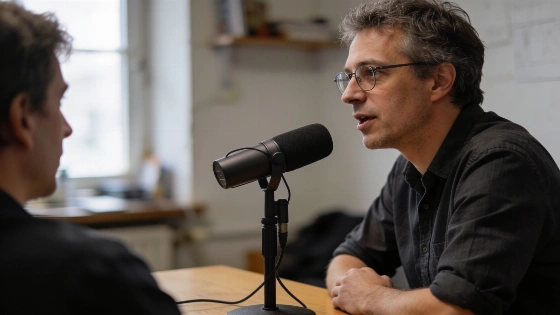
Ignacio Cirac says the practical uses of quantum technology remain uncertain and cautions against treating potential applications as established outcomes. In a Physics World Weekly conversation, the Spanish physicist discusses his 1990s work with Peter Zoller on trapped-ion systems, current qubit approaches and Europe's need for sustained research investment.
Cirac, director of the theory division at the Max Planck Institute of Quantum Optics in Garching, Germany, received the 2026 Isaac Newton Medal and Prize. The Institute of Physics credited his pioneering contributions with founding modern quantum information science. His work combined theoretical understanding with experimental vision, alongside scientific leadership. In conversation with Physics World's Michael Banks, Cirac discusses the field's promise and the risk of treating potential applications as established outcomes.
From trapped ions
Cirac describes an early attraction to mathematics and science fiction, as well as the prospect that quantum information could lead to new technologies. In the 1990s, he collaborated with Peter Zoller on designs for quantum simulators and computers based on trapped-ion qubits. The work forms part of the theoretical foundations of quantum information science. The field still distinguishes a proposed architecture from a component demonstrated in the laboratory, and both from a system that performs useful tasks.
A separate platform shows how researchers are pursuing those ideas today. Neutral-atom systems can use brief excitations to Rydberg states to create strong, controllable interactions between atoms. The atoms' qubits are typically stored in longer-lived ground states, with Rydberg states used temporarily during operations. As QuEra explains, Rydberg blockade enables conditional interactions that can create entanglement and implement quantum operations.
Comparing qubits
Cirac weighs the advantages and drawbacks of qubit technologies now under development and identifies benefits in systems based on Rydberg atoms. In 2023, Evered and colleagues reported a two-qubit gate fidelity of 99.5% in a neutral-atom array. That figure measures an individual operation in an experiment; it does not, by itself, measure a complete fault-tolerant computer or prove commercial utility. Rydberg states also have lifetimes measured in tens or hundreds of microseconds, making precise laser control of the short-lived operating state an engineering challenge.
A qubit count alone says little about a machine's capability. A processor's capability depends on its architecture and how reliably its operations are controlled, while comparisons depend on the task and conditions being tested. A separate Science Report analysis of quantum computing limits examines why architecture and error control matter alongside raw qubit numbers. These considerations frame comparisons between platforms without suggesting that any one approach has solved the challenges of scaling.
Guarding against hype
Cirac cautions against exaggerated expectations and says it is still unclear how quantum technologies will be used in the future. That reflects uncertainty, not a rejection of the field's potential. A proposed use or laboratory result is different from a system shown to perform a useful task reliably.
The timeline spans foundational theoretical work and recent experimental progress. Cirac and Zoller worked together on trapped-ion designs in the 1990s; Cirac received the Isaac Newton Medal and Prize in 2026. The 99.5% two-qubit gate fidelity reported for neutral atoms in 2023 is one specific experimental measure, not a benchmark for an entire computer. A quantum system's performance depends on how reliably its components work together and on the task being evaluated.
Europe's research base
Cirac argues that European academics should maintain scientific excellence and calls for greater investment in the continent's quantum industries. The European Commission presented its Quantum Europe Strategy on 2 July 2025, setting out a lead to strengthen Europe's capacity in quantum design and manufacturing, while securing supply chains. The strategy comes as Europe seeks to turn research strength into industrial capability.
Figures cited by Aalto University describe more than 140 quantum companies in Europe and over €11 billion in investments by the EU and its member states. Europe is also building shared computing infrastructure, with ten quantum computing systems planned for different parts of the EU, as Aalto University reports. These investments and systems are part of a developing research and computing base; they do not, on their own, establish that a universal commercial quantum computer is ready for deployment.
For readers assessing claims about quantum technology, a qubit is a quantum system used to encode information, not a guarantee of computing power. The physical system must be prepared and controlled well enough for its outputs to be measured reliably. Performance depends on how well those steps work for a defined task. Cirac's call for sustained research investment sits alongside that technical challenge: turning fundamental understanding into devices whose performance can be demonstrated for specific applications.