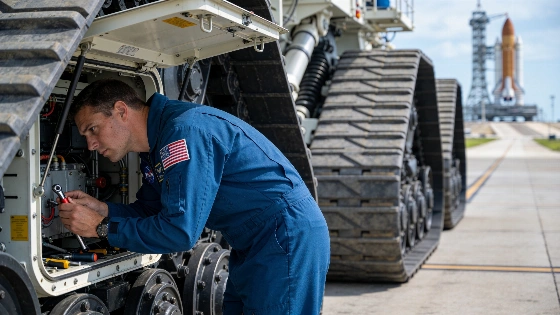
NASA relies on highly trained mechanics to keep spacecraft, launch vehicles, and support equipment operational. Their work spans aircraft, rockets, and heavy transporters, requiring specialized skills and rigorous certification.
Behind every successful space mission lies a network of technical specialists who ensure that complex machinery operates reliably under demanding conditions. Among these are mechanics, whose expertise is essential for maintaining the vehicles and equipment that enable NASA's scientific and exploratory objectives. Their work is not limited to cars or trucks, but extends to aircraft, rocket transporters, and specialized marine vessels critical to mission logistics.
Roles Across NASA Facilities
Mechanics at NASA serve in diverse roles depending on the facility and mission requirements. At Armstrong Flight Research Center in California, aerospace mechanics are responsible for maintaining research aircraft used in atmospheric studies and experimental flight tests. These aircraft often operate at the edge of engineering limits, requiring precise maintenance to ensure safety and data integrity.
At Kennedy Space Center in Florida, mechanics maintain crawler-transporters-massive tracked vehicles that move rockets from assembly buildings to launch pads. These machines, weighing over 2,700 metric tons, must function flawlessly to transport launch vehicles such as the Space Launch System. Meanwhile, at the Michoud Assembly Facility in Louisiana, mechanics oversee the readiness of barges that carry large rocket components between NASA centers, supporting the assembly and testing of launch vehicles for missions including Artemis.
Training and Certification Pathways
Becoming a NASA mechanic requires a combination of formal education, hands-on training, and certification. Automotive mechanics typically begin with a high school diploma or equivalent, followed by technical school programs that provide foundational skills. For heavy equipment mechanics, a two-year degree or apprenticeship is common, with several years of supervised experience before certification exams.
Aircraft mechanics must complete programs approved by the Federal Aviation Administration (FAA), which include both classroom instruction and practical training. These programs prepare candidates for rigorous certification tests covering airframe and powerplant systems. In some cases, military service offers additional pathways to technical training and certification relevant to NASA's needs.
Skills and Technological Demands
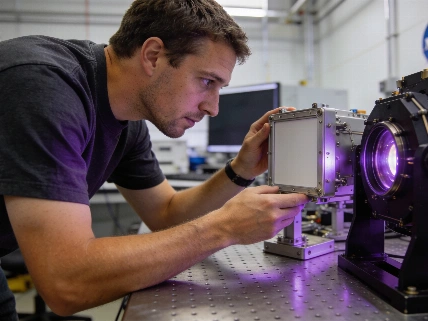
Modern mechanics must be adept at diagnosing and repairing increasingly complex systems. This includes proficiency with electronic diagnostics, computer-controlled components, and emerging technologies such as electric propulsion and advanced materials. Attention to detail, logical problem-solving, and a commitment to safety are essential, as errors can have significant consequences for mission success and personnel safety.
NASA mechanics routinely update their skills to keep pace with technological advances. For example, maintaining spacecraft and support vehicles often involves interpreting technical manuals, using specialized diagnostic equipment, and adhering to strict safety protocols. The ability to adapt to new systems and collaborate with engineers and mission planners is a key part of the role.
Preparing for a Technical Career
Students interested in pursuing a career as a mechanic in the space sector can begin by focusing on mathematics, physics, and industrial technology during secondary education. Participation in technical education programs, internships, or part-time work in repair shops provides valuable practical experience. Early exposure to mechanical systems and problem-solving builds a foundation for more advanced training.
Prospective mechanics are encouraged to research accredited training programs and certification requirements relevant to their area of interest, whether automotive, heavy equipment, or aerospace. Comparing program curricula and understanding the demands of each specialization helps candidates make informed decisions about their career path.
Mechanics play a vital role in the reliability and safety of NASA's missions, supporting everything from aircraft research to rocket launches. Their technical expertise and adaptability are essential for the continued success of space exploration and scientific discovery.
Understanding the role of a mechanic in space operations requires familiarity with the principles of mechanical systems, diagnostics, and certification standards. Mechanics rely on a combination of theoretical knowledge and practical skills to maintain equipment that must perform under extreme conditions. Certification processes, such as those mandated by the FAA for aircraft mechanics, ensure that individuals meet rigorous safety and technical standards. As space missions become more complex, the demand for highly skilled mechanics with specialized training continues to grow, underscoring the importance of technical education and ongoing professional development in this field.