Figure AI says Figure 03 covered 560 kilometers on a treadmill over nine consecutive days. The report gives a distance and step count but leaves unanswered whether one robot completed the run and how it was powered
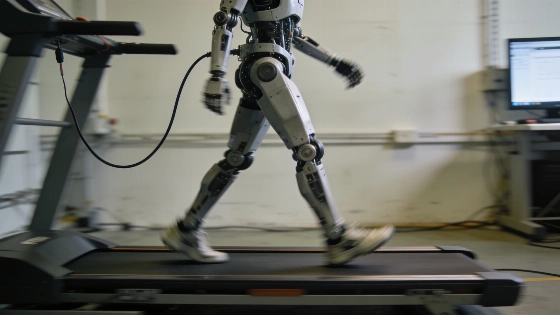
A cable remained attached to Figure 03 as the humanoid walked on a treadmill inside a testing facility. On Oct. 19, 2026, Figure AI CEO Brett Adcock reported that the robot had walked for nine consecutive days, covering 348 miles (about 560 kilometers) and taking 1.2 million steps. He said the test began as a side project to stress the machine and look for failures, describing it as an effort to see how long it could keep going.
The reported totals are substantial for a treadmill endurance test. They describe accumulated walking distance and steps, rather than time on a single battery charge or performance across a full work shift. The footage shows the attached cable, but the report does not explain its purpose or the test's power arrangements. Figure's published specifications describe wireless inductive charging through coils in the robot's feet and a compatible 2-kilowatt charging stand; the treadmill report does not say whether that system was used.
Figure 03 is the company's third-generation humanoid platform, introduced in October 2025. Figure says its cameras deliver twice the frame rate and one-quarter the latency of the previous model, with a 60% wider field of view. Its hands have palm cameras and tactile sensors able to detect forces as small as three grams. A technical comparison lists the robot at 61 kilograms, 5 feet 8 inches tall, with a maximum speed of 1.2 meters per second, a payload of up to 20 kilograms and up to five hours of runtime.
Longer operation is also being tested in other humanoid projects. A separate factory-logistics trial involving UBTECH and FAW-Volkswagen concerns development and testing, rather than confirmed routine deployment. The distinction matters: a robot performing a task in a demonstration does not establish that it can do so independently or safely across ordinary working conditions.
Figure's earlier package-sorting livestream offers a different measure of endurance. In May 2026, the company's Figure 03 robots worked for approximately 200 hours and collectively processed 249,560 packages, according to reports. The event grew from an eight-hour demonstration into a nine-day run, but several machines rotated through the task. Each typically worked for three to four hours before another took over, leaving time for recharging.
The treadmill test follows that package-sorting run but measures a different activity: sustained locomotion. A treadmill provides a controlled setting for repeating a walking cycle, while the package demonstration involved alternating work and charging. In the sorting event, Figure reported no hardware failures; the two demonstrations nevertheless involved different tasks and operating arrangements.
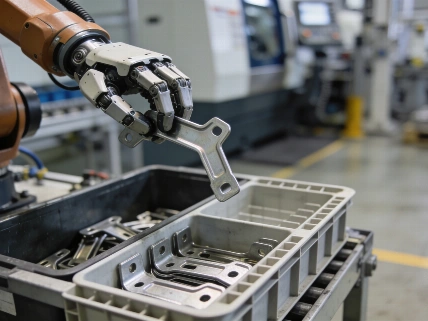
Figure is also retiring its older Figure 02 fleet as production of Figure 03 expands. The company announced the decommissioning on Sept. 30. Figure 02 had been used at BMW's Spartanburg plant in South Carolina to handle sheet-metal components during vehicle production; the company said the deployment contributed to the manufacture of more than 30,000 BMW X3 vehicles. Figure said custom-built parts made dismantling the older machines time-consuming, and that most of the fleet was melted at a foundry in Finland.
Adcock's treadmill update, reported by Humanoids Daily, gives a distance and step count for the nine-day test. The report does not establish whether one robot completed the entire run or describe operator interventions and maintenance during it. The reported treadmill distance is a specific endurance milestone; the package-sorting demonstration, by contrast, involved multiple robots sharing the workload.