NASA's Curiosity rover has imaged a vast field of honeycomb-like polygonal fractures in Mars' Valle Grande, raising new questions about the planet's surface processes and past water activity
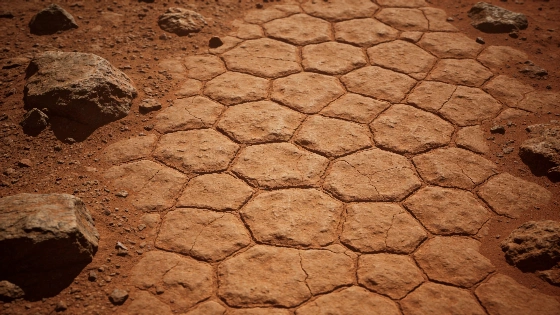
NASA's Curiosity rover has recorded a striking new landscape feature on Mars: a broad expanse of polygonal, honeycomb-like patterns etched into the surface of Valle Grande. The discovery, made during the rover's ongoing exploration of Gale Crater, highlights the complexity of Martian surface processes and the persistent role of water and temperature in shaping the Red Planet's geology.
Imaging the Martian Surface
The Curiosity rover captured high-resolution images of these polygonal fractures on June 19 and 20, 2026, corresponding to mission sols 4,930 and 4,931. The patterns, which appear as slightly raised hexagonal lines, cover large areas of reddish-brown soil and rock. Individual polygons measure approximately 4 to 8 centimeters (1.5 to 3 inches) across, and the field extends as far as the rover's cameras can resolve, including around the base of a prominent butte known as Miraflores.
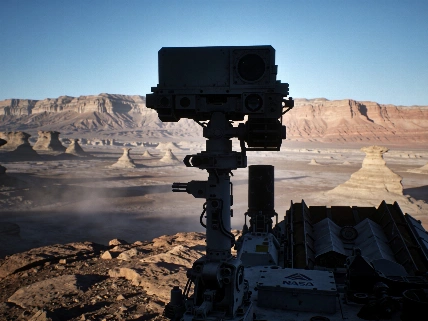
Curiosity's Mastcam and other imaging instruments provided detailed views of the surface, allowing mission scientists to map the distribution and morphology of the polygons. The rover's onboard analytical tools also enabled preliminary chemical analysis of the fractured material, though full compositional results are still pending.
Possible Formation Mechanisms
Polygonal fracture patterns are not unique to Mars; similar features are observed in terrestrial permafrost regions and ancient sedimentary deposits. On Earth, such polygons often form when wet sediments dry and contract, or when repeated freeze-thaw cycles cause cracking. On Mars, the prevailing hypothesis is that temperature fluctuations and the movement of water or brines through sediment layers could have produced the observed structures.
However, the scale and preservation of the Valle Grande polygons present a challenge for existing models. The field's extent and the uniformity of the patterns suggest a sustained or repeated process, but the precise environmental conditions required remain uncertain. Mission scientists are analyzing the geometry and chemistry of the fractures to constrain their origin and to assess whether liquid water was involved in their formation.
Scientific Implications and Open Questions
The discovery of these polygons adds to a growing body of evidence that Mars has experienced complex surface processes involving water, temperature change, and sediment dynamics. While Curiosity has previously documented geometric patterns in Martian rocks and soils, the scale of the Valle Grande field is unusual. The finding invites comparison with earlier results from other Mars missions, such as the detection of mineralogical evidence for ancient water activity by the Spirit rover, as discussed in this analysis of Spirit's hematite and magnetite findings.
Despite the detailed imaging, the origin of the Valle Grande polygons remains unresolved. The current data do not establish whether the fractures formed in the presence of liquid water, through freeze-thaw cycles, or by other mechanisms unique to Mars. Further analysis of Curiosity's chemical and mineralogical measurements will be required to clarify the environmental history recorded in these patterns.
Next Steps for Curiosity
Curiosity's science team is planning additional observations and in situ analyses to better characterize the polygonal field. This includes targeted imaging, compositional studies, and comparisons with similar features elsewhere in Gale Crater. The rover's findings may help refine models of Martian surface evolution and contribute to broader questions about the planet's climate history and the persistence of water-related processes.
As Curiosity continues its traverse, the mission's ability to combine high-resolution imaging with direct chemical analysis remains central to unraveling the geological record of Mars. The ongoing investigation of Valle Grande's polygons will inform future exploration strategies and the search for habitable environments on the Red Planet.
Polygonal fracture patterns are a key indicator of past environmental conditions on planetary surfaces. On Mars, their presence can signal processes such as desiccation, freeze-thaw cycling, or the movement of subsurface fluids. Interpreting these features requires careful analysis of their geometry, spatial distribution, and chemical context. By comparing Martian polygons with terrestrial analogs and integrating multiple lines of evidence, scientists aim to reconstruct the climatic and geological history that produced these distinctive surface textures.