Casper College has secured a $444,059 National Science Foundation grant to build a statewide quantum workforce pipeline, distributing experimental kits and launching new educational programs across Wyoming
Casper College has received a $444,059 grant from the National Science Foundation to start a statewide program in quantum information science and engineering (QISE). This is the first time since 1995 that Casper College faculty have been awarded an NSF principal investigator grant. The funding will support new efforts to build quantum skills across Wyoming.
Portable quantum kits
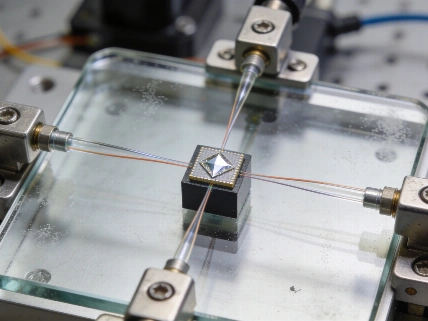
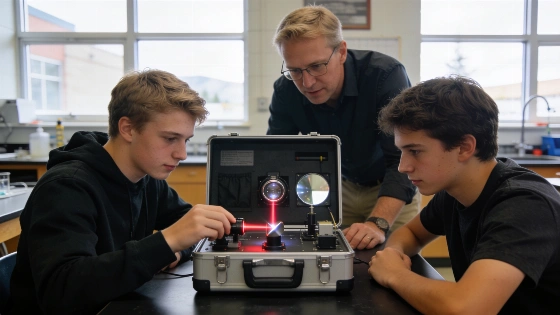
The Quantum Pipeline project will send 130 portable Quantum Trunks-kits for hands-on experiments in quantum science-to every county in Wyoming. These kits are meant for K-12 classrooms, giving students and teachers a chance to work with quantum optics experiments that are usually only found in university labs. The goal is to make quantum science more accessible, especially for younger students and teachers outside major research centers.
Each kit is built for repeated classroom use and allows practical demonstrations of quantum ideas like superposition and interference. By distributing 130 kits across the state, the project aims to reach rural and underserved communities, not just larger towns or flagship schools. Casper College says this approach is meant to give all districts, including those in remote areas, a chance to learn about quantum science. This focus on inclusion matches the National Quantum Initiative's push to broaden access.
Summer camp and new course
In addition to the classroom kits, Casper College will run an annual Quantum Science Camp. The camp brings together high school students and K-12 teachers to work directly with quantum optics researchers. Participants will get hands-on experience with experimental setups and measurement techniques used in modern quantum research. The camp is organized with Texas A&M University's Institute for Quantum Science and Engineering, connecting Casper College to a wider academic network and giving participants access to research faculty.
At the college level, Casper College is starting a new undergraduate course called Quantum Topics and Experiments. The course will cover basic quantum concepts and lab skills relevant for students planning to transfer to four-year programs or enter fields like quantum sensing and computing. The curriculum is being developed with Texas A&M University to match current research standards and transfer requirements. This partnership is intended to keep the program academically rigorous and connected to industry needs.
Integration with national efforts
The Quantum Pipeline is led by Dr. Andrew Young at Casper College, with co-investigators from Texas A&M and the University of Wyoming. Dr. Young said the grant will help teachers make "invisible" quantum concepts more concrete for students, which is a common challenge in quantum education. The project is funded through the NSF's Innovation in Two-Year College STEM Education program, which supports new and geographically diverse talent pipelines for the quantum field. By linking two-year college courses with research faculty, the program fits into the National Quantum Initiative's goal of expanding quantum education beyond established research centers. Recent commentary in Nature has pointed to the need for scalable quantum workforce development.
While the project is focused on Wyoming, its structure is similar to other national efforts to address the quantum skills gap. Other regions have launched related programs, as seen in recent reports on quantum hardware initiatives. Casper College's program stands out for its early-stage, hands-on approach and its focus on reaching rural and underserved communities. This could offer a model for other states looking to make quantum education more widely available.
Evidence and limitations
The $444,059 NSF grant (Award #2609718) will fund three main parts of the Quantum Pipeline: distributing 130 Quantum Trunks, running annual Quantum Science Camps, and launching the new undergraduate course. The program's success will depend on how well these parts work together and whether they can keep students and teachers engaged across different settings. There is not yet data on learning outcomes or workforce placement, and the long-term impact on quantum skills in Wyoming will need to be evaluated as the program develops. Studies in journals like Science have shown that long-term assessment is important for STEM pipeline programs, so careful evaluation will be needed to measure results.
Casper College's NSF grant is a concrete step toward making quantum science education more accessible in the U.S. By focusing on hands-on learning and reaching students outside major research universities, the program addresses a gap in the quantum workforce pipeline: the lack of practical training in less-served areas. The key question is whether this approach will lead to real gains in student skills and readiness, or if it will remain a promising but isolated effort in a field still centered on elite institutions.
Quantum information science and engineering (QISE) involves studying and applying quantum effects-like superposition, entanglement, and quantum measurement-to develop new technologies for computing, communication, and sensing. Quantum devices use the probabilistic nature of quantum states, which allows for new ways of processing information. Turning these ideas into practical skills requires both understanding the concepts and working with real equipment. Programs like the Quantum Pipeline try to close this gap by making quantum science more accessible, but their success will depend on continued support, strong evaluation, and keeping up with industry needs.