Blue Origin is rebuilding its Cape Canaveral launch complex after a New Glenn rocket explosion, while also constructing a second pad and new facilities to support the larger New Glenn 9x4 variant still in development
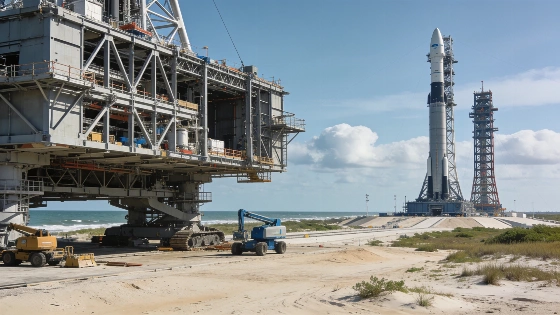
Blue Origin is moving forward with a significant expansion of its launch infrastructure at Cape Canaveral Space Force Station, even as repairs continue following a destructive New Glenn rocket test in May. The company has confirmed plans to construct a second launch pad and new support facilities at Launch Complex 36, aiming to accommodate the upcoming New Glenn 9x4 vehicle-a larger, more powerful variant still under development.
Infrastructure Recovery and Expansion
In May 2026, a static fire test of a New Glenn 7x2 rocket resulted in an explosion that caused extensive damage to the existing LC-36A pad. Blue Origin has since prioritized repairs to restore launch capability for the 7x2 configuration by the end of the year. Simultaneously, the company has announced the development of a second pad, LC-36B, which will serve as the operational base for the New Glenn 9x4. The expansion also includes a Vertical Integration Facility (VIF) and a Payload Processing Facility (PPF) on adjacent land, designed to streamline vehicle assembly and payload integration for future missions.
According to Blue Origin, the new pad will require up to 2,500 metric tons of steel, much of it dedicated to a planned 213-meter (700-foot) launch tower. The company has not provided a specific timeline for the completion of LC-36B or the first flight of the 9x4 variant, but has indicated that work on the new infrastructure is proceeding in parallel with ongoing repairs.
New Glenn Variants and Technical Details
The New Glenn family is distinguished by its engine configurations, with the 7x2 and 9x4 designations referring to the number of BE-4 engines on the first stage and BE-3U engines on the second stage, respectively. The 7x2 variant, which has already flown several missions, uses seven BE-4 engines and two BE-3Us. The 9x4, still in development, will feature nine BE-4 engines on its first stage and four BE-3Us on its second, enabling it to carry heavier payloads to orbit.
Both configurations are designed for reusability, with the first stage intended to land after launch. The increased thrust and payload capacity of the 9x4 are expected to expand Blue Origin's ability to compete for larger commercial and government contracts, though the company has not yet announced a target date for its inaugural flight.
Historical Context and Launch Cadence
Launch Complex 36 has a long history in American spaceflight, previously supporting Atlas-Centaur and Atlas I, II, and III rockets from the 1960s until its decommissioning in the mid-2000s. Blue Origin took over the site in 2015 and began constructing its own facilities the following year. The first New Glenn 7x2 launch from LC-36 occurred in 2025, with two additional missions completed before the May 2026 incident. Prior to the explosion, Blue Origin had projected up to a dozen launches for 2026, but now expects a single mission if repairs proceed as planned.
The fourth New Glenn rocket, designated NG-4, was destroyed during the May test, along with a payload of Amazon Leo satellites. In the aftermath, Blue Origin leadership outlined a series of upgrades to the launch complex, including a new vertical operational concept for transporting rockets to the pad. The company has emphasized its commitment to restoring and expanding LC-36, stating that the site will continue to play a central role in its launch operations.
Implications for Commercial Launch
The expansion of Blue Origin's Cape Canaveral facilities comes at a time of increasing competition in the commercial launch sector. The addition of LC-36B and the development of the New Glenn 9x4 are intended to position the company for a broader range of missions, including heavier payloads and more frequent launches. However, the timeline for full operational capability remains uncertain, as the company balances recovery from the recent explosion with the demands of new construction.
For context, the challenges of launch site recovery and infrastructure upgrades are not unique to Blue Origin. Other providers, such as those involved in NASA's Juno mission to Jupiter, have also relied on robust ground facilities and careful mission planning to support complex launches and spacecraft operations. For example, the Atlas V rocket that launched Juno in 2011 was supported by a similarly extensive ground infrastructure, as described in this overview of Juno's mission architecture.
As Blue Origin works to bring both LC-36A and LC-36B online, the company's ability to deliver on its launch schedule will depend on the pace of repairs, the integration of new systems, and the successful development of the New Glenn 9x4. The outcome will have implications for commercial satellite deployment, national security launches, and the broader evolution of the U.S. launch industry.
Understanding the technical and operational challenges of launch pad construction is essential for interpreting the pace and reliability of commercial spaceflight. Building and maintaining a launch complex involves not only the physical assembly of structures such as towers and integration facilities, but also the installation of fueling systems, safety infrastructure, and control systems. Each element must be rigorously tested and certified before a rocket can safely launch. Delays in any part of this process can affect mission schedules and the availability of launch services, underscoring the complexity of expanding access to space.