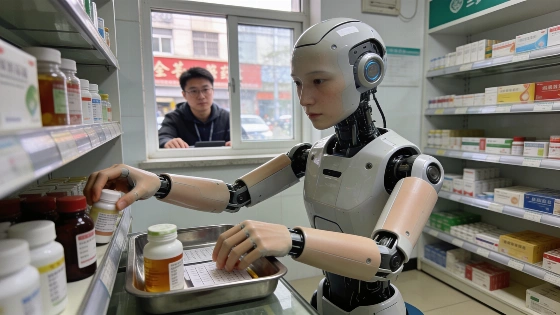
RealMan Robotics plans to deploy nearly 1,000 RealBOT robots in 2026, using remote human control and real-world data to improve performance in unpredictable environments such as pharmacies, factories, and kitchens
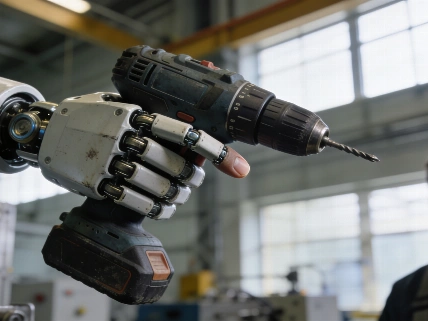
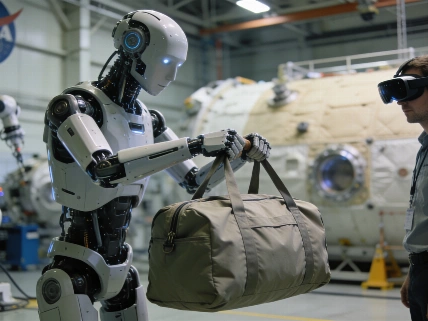
China-based RealMan Robotics has announced plans to deploy close to 1,000 RealBOT robots across a range of operational environments in 2026, aiming to collect large-scale real-world data to improve robotic task performance and reliability. The company presented its deployment strategy at the 2026 World Robot Conference (WRC) in Beijing, where RealBOT robots were demonstrated performing tasks such as medicine handling in smart pharmacies, power-room inspections, food preparation, and remote equipment commissioning. These demonstrations were conducted using RealMan's Global Link Network (GLN), a remote-operation system that allows human operators to control robots over long distances while capturing detailed operational data.
Global Link Network Brings Remote Operation Into Real-World Settings
The GLN system is designed to enable low-latency teleoperation, with the company reporting millisecond-level response times even across thousands of kilometers. This approach allows specialized human skills to be delivered remotely through robotic platforms, while simultaneously generating data on perception, manipulation, and decision-making in uncontrolled physical environments. RealMan Robotics positions this initiative as a move beyond laboratory demonstrations, seeking to test robots in settings where tasks and conditions are less predictable and more variable than in controlled research environments.
RealBOT Demonstrations Span Pharmacies, Industry, and Food Preparation
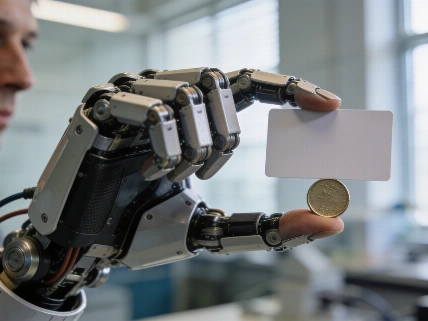
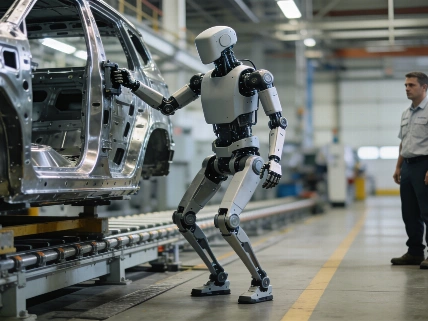
At WRC 2026, RealBOT robots were shown retrieving and restocking medicines in a pharmacy, conducting inspections in a power distribution room, preparing pastries alongside human chefs, and operating remotely at the company's factory in Changzhou. The company claims that each deployment will contribute to a feedback loop, using operational data to refine robot performance and reliability. RealMan also highlighted its partnership with tactile-sensing specialist PaXini, integrating multidimensional force and tactile sensors into its RM75 robotic arm. This technology is intended to improve the robot's ability to detect contact forces and handle objects with greater precision, which could reduce collisions and improve assembly quality in industrial settings.
Reliability Becomes Critical as Deployment Scales
Reliability is a central concern for large-scale deployment. RealMan reports that its lightweight humanoid robotic arms have achieved a mean time between failures (MTBF) of 50,000 hours, a figure certified at the CR L3 level by the Shanghai Robot Industry Technology Research Institute. While this suggests potential for long-duration commercial operation, independent verification of these reliability claims has not yet been published. The company's focus on remote operation and data collection reflects a broader trend in robotics, where real-world deployment is increasingly seen as essential for advancing both hardware and software capabilities.
Real-World Data Could Help Robots Move Beyond Laboratory Training
If RealMan Robotics achieves its target of nearly 1,000 RealBOT deployments in 2026, the resulting operational data could provide valuable insight into the challenges of scaling robotic systems outside the laboratory. This approach is consistent with recent efforts in the field to move from controlled demonstrations to continuous, practical deployment. For example, other projects have explored the transfer of task knowledge across different robot morphologies, as seen in recent research on cross-body robot task transfer. However, the effectiveness of large-scale teleoperated deployment in improving autonomous capabilities remains to be demonstrated through systematic evaluation and independent review.
Teleoperation Offers a Bridge Between Human Control and Autonomy
Teleoperation, as implemented in the GLN system, relies on continuous human oversight and intervention, distinguishing it from fully autonomous robotics. While remote human control can extend the reach of skilled labor and provide a safety net for complex or unpredictable tasks, it also introduces new challenges in latency, situational awareness, and operator workload. The long-term impact of this model on labor, safety, and system reliability will depend on how effectively real-world data can be used to reduce the need for human intervention and improve autonomous performance over time.
What Is Teleoperation in Robotics?
Teleoperation is a method in robotics where a human operator controls a robot from a distance, often using a network connection to transmit commands and receive sensor feedback in real time. Unlike autonomous systems, which make decisions independently based on programmed algorithms and sensor input, teleoperated robots depend on continuous or intermittent human input for task execution. This approach can be valuable in environments that are hazardous, unpredictable, or require specialized skills not yet reliably automated. However, teleoperation introduces its own technical challenges, including communication latency, limited situational awareness, and the risk of operator fatigue. The effectiveness of teleoperation as a bridge to greater autonomy depends on the quality of data collected during real-world operation and the ability to use that data to improve robotic perception, manipulation, and decision-making.