An H4 molecule test paired 1,000 Urchin quantum samples with OCTOPUS calculations and matched a classical CASCI reference; formal operation is scheduled for December 2026
A 1,000-shot test on the four-hydrogen molecule H4 produced a ground-state energy of -2.1147334880 Hartree on Urchin, matching a classical CASCI reference. The result is a proof of concept for sharing a chemistry calculation across quantum and conventional computing hardware.
The system architecture
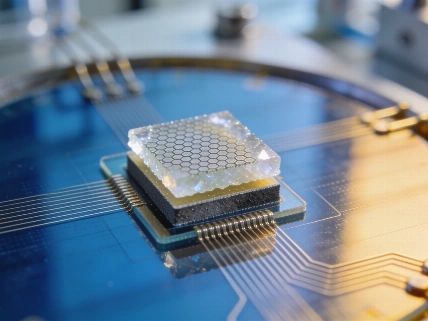
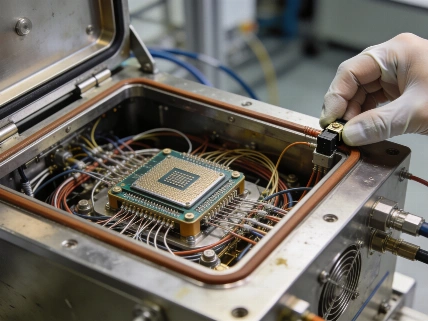
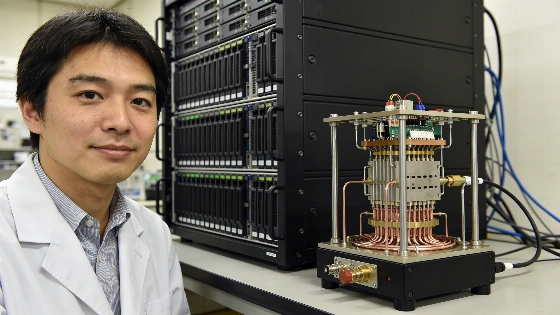
Researchers at The University of Osaka's D3 Center and Center for Quantum Information and Quantum Biology (QIQB) built SEAFOOD, short for Supercomputing Entangled by Ambitious Fusion of OQTOPUS and OCTOPUS at D3C. It links OCTOPUS with domestically built superconducting quantum processors. The university announced SEAFOOD on November 9, 2026, describing it as a quantum-HPC hybrid platform and stating that formal operation is scheduled to begin in December 2026. The university describes the integration as the first reported connection of a domestically developed quantum computer installed on a Japanese university campus with a supercomputer in the same university system. Its official announcement identifies the D3 Center and QIQB as the joint developers.
OCTOPUS supplies the classical high-performance computing layer, rated at 2.293 PFLOPS across 140 nodes, each with 768 GB of RAM. It runs batch jobs using Qiskit and QURI Parts; oqtopus-client is also used. QIQB operates the superconducting quantum processors at the university's Toyonaka Campus, including Urchin. The D3 Center operates OCTOPUS. The project is led by Professor Susumu Date at the D3 Center and Associate Professor Hiroshi Ueda at QIQB.
The OQTOPUS open-source quantum cloud stack provides the middleware and API, routing circuit jobs and returned bitstrings between the processors. It was co-developed with Fujitsu and SEC, with TISI also involved. The D3 Center's announcement describes OQTOPUS as the connection layer between OCTOPUS and the domestically developed quantum computers.
Dividing the calculation
SEAFOOD assigns work according to the hardware involved. In the Quantum-Selected Configuration Interaction (QSCI) demonstration, Urchin sampled dominant electron configurations. OCTOPUS then used its high-memory nodes to construct and diagonalize the resulting subspace Hamiltonian.
That division addresses a practical constraint: strongly correlated electronic structures can be costly to simulate on classical clusters, while near-term quantum processors remain limited by qubit counts and noise. A previous Japanese hybrid-computing report described Fugaku coordinating a workflow across two QPU types; that earlier account offers a contrast with SEAFOOD's supercomputer-to-processor integration.
What the test shows
The reported H4 energy matched the classical CASCI reference in this proof of concept. That result demonstrates the calculation's division between Urchin and OCTOPUS; it does not establish a speed advantage or show that the hybrid setup outperforms classical computing for chemistry workloads.
The demonstration is a specific test of an integrated workflow using the quantum processor for configuration sampling and the supercomputer for classical processing. The platform is intended to combine quantum and conventional high-performance computing rather than use the quantum processor as a standalone system.
Access plans
In fiscal year 2027, up to 10 research teams at The University of Osaka are scheduled to receive trial access through the D3 Center's proposal-based program. The trials are intended to refine hybrid job scheduling ahead of broader external access through Japan's nationwide JHPC-quantum initiative.
Support came from Japan's JST Moonshot Goal 6, MEXT Q-LEAP, JST COI-NEXT, CSTI SIP, and NEDO's Post-5G quantum-supercomputer hybrid platform program.