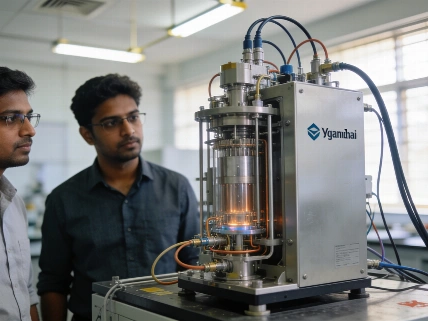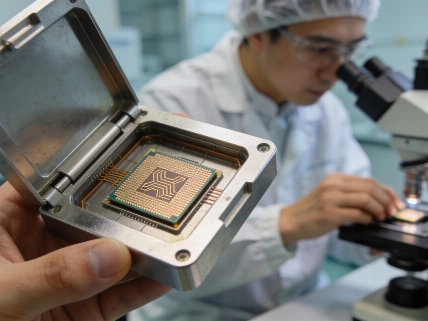

NTT DOCOMO has integrated a D-Wave hybrid quantum annealing application into its operational mobile network, targeting signaling load reduction across hundreds of base stations and demonstrating measurable improvements in network efficiency
Japanese telecommunications operator NTT DOCOMO has deployed a production-grade quantum optimization application, developed in partnership with D-Wave Quantum Inc., to manage signaling loads in its live mobile network. The system uses D-Wave's hybrid quantum annealing platform, accessed via the Leap(TM) cloud service, to optimize the assignment of Tracking Area Lists (TA-Lists) across hundreds of base stations. This approach is designed to reduce the frequency of location registration and paging signals, which are critical for device handoff and call routing but can create significant network overhead when not efficiently managed.
Hybrid Quantum-Classical Approach
The optimization problem addressed by DOCOMO involves balancing two competing network demands: minimizing location registration signals, which occur when devices move between tracking areas, and controlling paging signals, which are broadcast to locate devices for incoming connections. Reducing one type of signaling typically increases the other, making the task a complex combinatorial challenge. The deployed application leverages a hybrid quantum-classical solver, which combines quantum annealing with classical computation to search for network configurations that achieve a favorable trade-off between these objectives.
Operational Benchmark and Measured Impact
In a benchmark test involving 333 base stations, three TA-Lists, and nine tracking areas, the hybrid solver completed the multi-objective optimization in approximately five minutes. According to DOCOMO, the resulting configuration reduced daily peak location registration signaling by 65.3% and paging signaling load by 7.0% compared to previous operational baselines. These figures reflect the system's performance under real network conditions, with the optimized TA-Lists integrated directly into DOCOMO's day-to-day network planning and live infrastructure. The deployment supports a subscriber base exceeding 93 million mobile users across Japan.
Expanding Quantum Applications in Telecom
This deployment marks DOCOMO's second production use of D-Wave's quantum technology, following an earlier application focused on optimizing paging efficiency within individual tracking areas. The current system extends quantum optimization from isolated use cases to network-wide infrastructure, demonstrating the potential for quantum annealing to address large-scale, real-world combinatorial problems in telecommunications. The integration of quantum optimization into operational workflows distinguishes this effort from laboratory demonstrations or theoretical proposals, though independent replication and peer-reviewed validation of the claimed performance improvements remain important for broader industry adoption.
Classical Comparison and Industry Context
While quantum annealing is not a universal quantum computing platform, it is engineered to tackle specific optimization problems that are computationally intensive for classical algorithms. The practical value of such systems depends on their ability to deliver measurable improvements over the best available classical methods under realistic conditions. Related efforts to develop quantum optimization software for commercial applications have also received public funding, as seen in recent initiatives supporting D-Wave's algorithm development. The pace of progress in this area will be shaped by continued benchmarking, transparent reporting of operational results, and independent technical evaluation.
Quantum annealing is a specialized approach to quantum computing that exploits quantum tunneling and superposition to search for low-energy solutions in complex optimization landscapes. Unlike universal gate-based quantum computers, which can in principle run any quantum algorithm, quantum annealers are tailored for specific classes of problems such as combinatorial optimization. Hybrid quantum-classical solvers combine the strengths of both quantum and classical computation, using quantum resources to explore solution spaces that are difficult for classical algorithms alone. The effectiveness of quantum annealing depends on problem structure, hardware noise, and the quality of classical integration, making careful benchmarking and fair comparison with classical methods essential for assessing practical utility.