A large-scale robotics competition in Beijing tested 23 humanoid robots in a simulated firefighting and rescue scenario, revealing persistent challenges in perception, manipulation, and reliability outside controlled laboratory settings
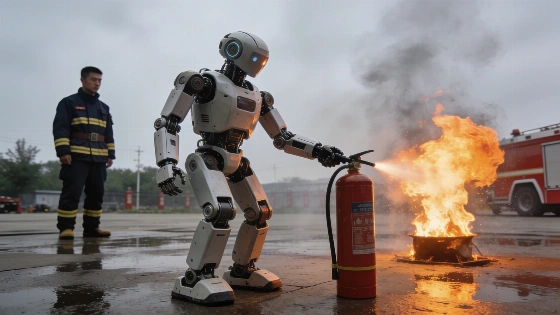
Twenty-three humanoid robots were evaluated in a simulated firefighting and rescue exercise at a real fire brigade in Beijing, as part of the second World Humanoid Robot Games. The event, designed to test robots' ability to operate in unpredictable real-world conditions, required each system to identify hazardous materials, shut off valves, and extinguish a simulated fire within a 30-minute window. Unlike previous competitions held in controlled indoor environments, this year's scenario exposed robots to outdoor variables such as rain and shifting light, increasing the complexity of perception and manipulation tasks.
According to reporting from Global Times, only three of the twelve teams that participated on Sunday completed the full sequence of tasks. Robots were required to locate and classify two randomly placed hazardous substances, report their findings using onboard cameras, close three randomly selected valves, and then retrieve and operate a fire extinguisher to suppress a staged fire. Human firefighters initiated the fire and monitored robot actions for safety and task accuracy. The majority of robots struggled with object recognition, precise manipulation, and maintaining balance on uneven surfaces, with some requiring multiple attempts to align tools or complete actions.
Performance Under Real-World Conditions
The competition highlighted the persistent gap between laboratory demonstrations and reliable field performance for humanoid robots. Environmental factors such as rain, variable lighting, and outdoor terrain disrupted visual recognition systems and motion planning algorithms. For example, UniX AI's robot completed the tasks within the allotted time but moved significantly slower than human firefighters and needed repeated attempts to correctly position its manipulator on the extinguisher. Failures in perception or actuation often resulted in incomplete runs or the need for human intervention.
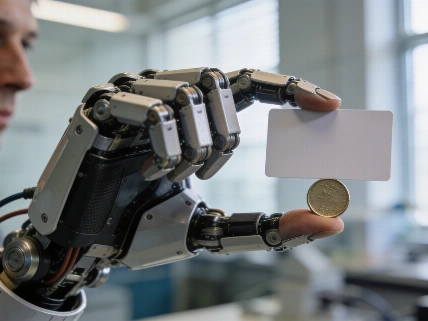
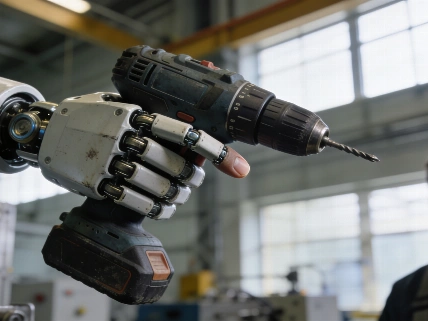
Robots in the event used a range of hardware configurations, including omnidirectional wheels for mobility and multi-jointed hands for dexterous manipulation. Several teams relied on China-developed servo actuators, with torque levels tailored for either precision or strength. Teleoperation remained a critical fallback: some teams used virtual reality headsets to provide direct human control during challenging segments, with operators guiding robots via first-person camera feeds. This reliance on human oversight underscores the current limitations of autonomous operation in unstructured environments.
Scaling Up and Technical Complexity
The second World Humanoid Robot Games expanded to five days, featuring 2,056 robots from 666 teams across 16 countries, and introduced new events such as long jump, weightlifting, tug-of-war, and table tennis. The number of participating teams increased by 138 percent compared to the inaugural edition, while the total number of robots quadrupled. Despite this growth, the firefighting challenge demonstrated that scaling up participation does not yet translate into robust, autonomous performance in complex real-world tasks.
Technical challenges were evident across perception, planning, and actuation. Robots needed to integrate high-precision joints for fine manipulation with high-torque actuators for stability and locomotion. The scenario required systems to coordinate multiple degrees of freedom, maintain balance, and adapt to unpredictable object placement. Failures in any subsystem-whether visual recognition, motion planning, or hardware reliability-could halt progress entirely. The event generated valuable failure data, which experts suggest will inform future improvements in robot perception, control, and AI-based decision-making.
Human Oversight and Safety Implications
While the competition aimed to advance the state of humanoid robotics, it also highlighted the ongoing necessity of human supervision for safety and task completion. Teleoperation and direct intervention were required in several cases, particularly when robots encountered unexpected obstacles or failed to execute precise actions. The presence of human firefighters ensured that safety protocols were maintained, especially when handling fire extinguishers and hazardous materials. These findings reinforce the importance of meaningful human control in current deployments of complex robotic systems, particularly in safety-critical environments.
As humanoid robots are increasingly proposed for roles in emergency response, manufacturing, and service industries, the Beijing competition underscores the need for rigorous real-world testing and transparent reporting of both successes and failures. Laboratory benchmarks and controlled demonstrations remain insufficient predictors of operational reliability in dynamic, unstructured settings. The evidence from this event suggests that significant engineering and algorithmic advances are still required before humanoid robots can be trusted with autonomous operation in high-stakes environments.
Teleoperation is a method in robotics where a human operator remotely controls a robot, often using real-time video feeds and input devices such as joysticks or VR headsets. This approach allows robots to perform complex or safety-critical tasks that exceed current autonomous capabilities, especially in unpredictable or hazardous environments. While teleoperation can compensate for limitations in robot perception and decision-making, it also introduces latency, requires skilled human oversight, and limits scalability. The balance between autonomous control and teleoperation remains a central challenge in deploying robots for real-world applications, particularly where safety and reliability are paramount.