
A US robotics company has presented its Phantom humanoid robot to federal agencies, showing it can traverse uneven ground and identify potential border crossings, but deployment remains limited and key technical and regulatory questions persist
A US-based robotics company, Foundation, has demonstrated its Phantom humanoid robot to officials from the Department of Homeland Security (DHS) and is in discussions with several national security agencies regarding potential use for border surveillance. The company claims Phantom can autonomously navigate rough terrain, distinguish people from obstacles, and map its environment to flag possible unauthorized crossings for human review. However, according to a report from Fox News, DHS has not entered into any agreements, pilot programs, or active contracts with Foundation, and no independent field trials have been reported.
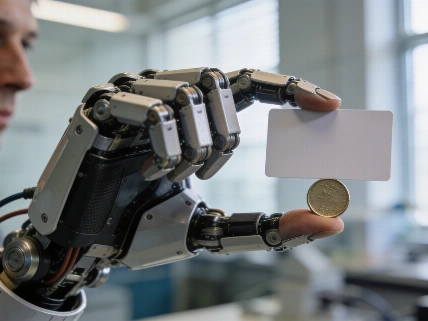
Phantom is designed to operate in environments that are difficult for conventional vehicles, drones, or fixed cameras, including uneven ground and potentially underground tunnels. The company envisions the robot conducting reconnaissance, identifying significant activity, and alerting human officers, who would retain responsibility for any enforcement decisions. Foundation has also demonstrated a tendon-driven robotic hand capable of catching a baseball, highlighting advances in dexterity and object handling, but these demonstrations have so far been limited to controlled settings.
Technical Capabilities and Limitations
The current Phantom model stands 1.8 meters tall, weighs 80 kilograms, and offers 29 degrees of freedom, a top speed of 1.7 meters per second, and a payload capacity of 40 kilograms. Its actuation system is based on proprietary cycloidal actuators, which the company says deliver up to 160 newton-meters of peak torque with low backlash and minimal maintenance. Phantom is powered by Foundation's Cortex AI model, which integrates language, visual, and multimodal inputs with physics-informed algorithms to translate instructions into physical actions. The company reports that Cortex uses Deep Variational Bayes Filters to encode sensory data and generate actions, aiming for adaptability and predictive power with less training data than conventional reinforcement or imitation learning approaches.
Despite these technical claims, Phantom's current generation has not been independently evaluated in operational border environments. Weather resistance remains a limitation, with the company stating that a more rugged, waterproof, and dustproof version is expected in the coming months. Foundation has indicated willingness to consider arming the robots if requested by government agencies, but emphasizes that Phantom is not intended to make enforcement decisions autonomously. Human officers would remain responsible for interpreting alerts and determining responses.
Deployment Status and Oversight
To date, Foundation's engagement with US agencies has been limited to demonstrations and discussions. DHS has confirmed that no pilot deployments or contracts are in place. The company suggests that a pilot could begin soon, but no timeline or independent evaluation protocol has been disclosed. The absence of field data means that Phantom's reliability, false-positive rates, and ability to operate in the full range of border conditions remain untested outside controlled demonstrations.
Continuous human oversight is a central feature of the proposed deployment model. While Phantom is designed to autonomously identify and report potential crossings, all enforcement actions would require human review. The company's statements do not clarify how the system handles ambiguous cases, sensor errors, or adversarial conditions, nor do they specify the procedures for human intervention or override in the event of system failure or misidentification.
Industrial and Security Context
Phantom is Foundation's first production humanoid robot, targeting both industrial and defense applications. The company positions its cycloidal actuators and Cortex AI model as key differentiators, aiming for high uptime and reduced maintenance in demanding environments. However, the transition from laboratory demonstration to reliable field deployment is a significant challenge in robotics, particularly for systems intended for security-sensitive applications. The lack of independent testing, published benchmarks, or regulatory certification limits the ability to assess Phantom's readiness for operational use.
Foundation's approach reflects a broader trend in robotics toward integrating advanced perception, mapping, and decision-support systems in mobile platforms. The company's willingness to discuss arming the robots raises additional legal, ethical, and policy questions, especially regarding meaningful human control and accountability in security contexts. Without independent evaluation and clear regulatory oversight, claims about the system's capabilities and safety remain provisional.
Phantom's reported specifications include a height of 1.8 meters, weight of 80 kilograms, 29 degrees of freedom, a top speed of 1.7 meters per second, and a payload capacity of 40 kilograms. The cycloidal actuators are said to deliver up to 160 newton-meters of peak torque, with a response time under 10 milliseconds. These figures are developer-reported and have not been independently verified in field conditions. The robot's AI system, Cortex, is described as using Deep Variational Bayes Filters for sensor data encoding and action generation, but no public benchmarks or comparative evaluations have been released.
Understanding the distinction between automation and autonomy is essential in evaluating systems like Phantom. Automation refers to the execution of predefined tasks with minimal human input, while autonomy involves the ability to make context-sensitive decisions in dynamic environments. In practice, most current robots-including Phantom-operate with conditional autonomy, where the system can perform certain functions independently but requires human oversight for critical decisions. The reliability, safety, and accountability of such systems depend on clear protocols for human intervention, robust failure handling, and transparent evaluation of real-world performance.