Florida State University has established a 14-credit graduate certificate in quantum information science and technology, aiming to train students and professionals in quantum materials, device engineering, and algorithm design using advanced research infrastructure
Florida State University (FSU) has announced a new graduate certificate program in quantum information science and technology, marking the first formal credential of its kind in Florida. The program, administered by the FSU Quantum Initiative, is designed to address the growing demand for technical expertise in quantum materials, device engineering, and quantum algorithm development. Applications are open through October 1, 2026, with the first cohort set to begin in Spring 2027.
Program Structure and Curriculum
The certificate requires completion of 14 credit hours, structured to provide both foundational knowledge and specialized training. Students must take a core course in Quantum Information and Computing (3 credits), select three advanced STEM electives (9 credits) from participating departments, and attend two semesters of the Quantum Science & Engineering Seminar (2 credits). The curriculum is interdisciplinary, drawing on faculty and resources from the FSU College of Arts and Sciences and the FAMU-FSU College of Engineering, including departments such as Physics, Chemistry & Biochemistry, Computer Science, Mathematics, Materials Science & Engineering, Electrical & Computer Engineering, and Mechanical & Aerospace Engineering.
Research Infrastructure and Industry Links
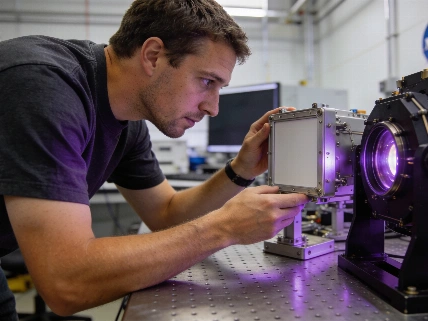
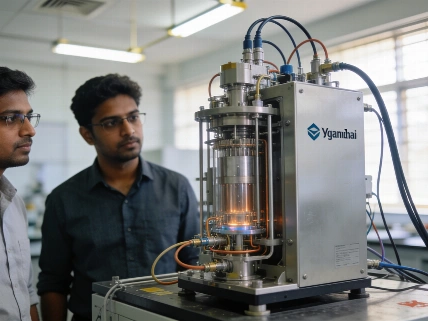
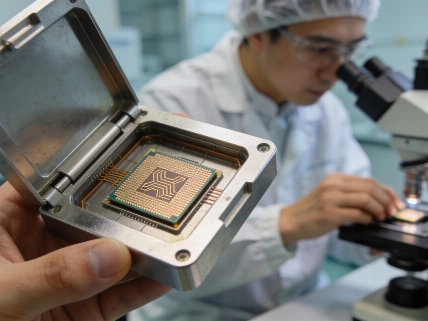
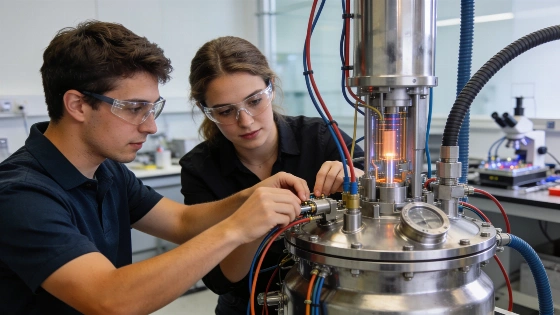
Enrollees will have direct access to FSU's major research facilities, including the National High Magnetic Field Laboratory (MagLab) and the Interdisciplinary Research & Commercialization Building (IRCB). The IRCB features cleanroom nanofabrication suites and sub-Kelvin dilution refrigerators, enabling hands-on experience with quantum device fabrication and low-temperature testing. The program is supported by a recent cluster hire of ten quantum-focused faculty members and integrates collaborative opportunities with commercial quantum technology partners such as IonQ, Amazon, Qblox, QuantrolOx, and Keysight.
Workforce Development and Regional Context
FSU's initiative is positioned as a workforce development pipeline for Florida's expanding technology sector, aiming to prepare graduate students and industry professionals for roles in quantum research and engineering. The program's leadership includes FSU Vice President for Research Stacey S. Patterson, FSU Quantum Initiative Director Michael Shatruk, and Deans Sam Huckaba and Suvranu De. The certificate is intended to complement existing graduate programs and provide a formal credential for those seeking to specialize in quantum information science and engineering.
Comparative Quantum Education Initiatives
While FSU's program is the first of its kind in Florida, similar efforts to expand quantum education are underway internationally. For example, a recent collaboration between BLOQ Quantum and Srirama Engineering College in India aims to integrate cloud-based quantum computing platforms into engineering curricula, as described in this report on quantum education partnerships. These initiatives reflect a broader trend toward formalizing quantum skills training to meet anticipated workforce needs.
Quantum information science combines principles from physics, computer science, and engineering to study how quantum systems can be used for computation, communication, and sensing. Unlike classical bits, quantum bits (qubits) can exist in superpositions of states, enabling new computational and cryptographic protocols. However, practical quantum devices require precise control, low error rates, and robust engineering to maintain coherence and deliver reliable results. Graduate programs in this field aim to equip students with both theoretical understanding and hands-on experience in device fabrication, cryogenic operation, and quantum algorithm implementation, bridging the gap between laboratory research and emerging quantum technologies.