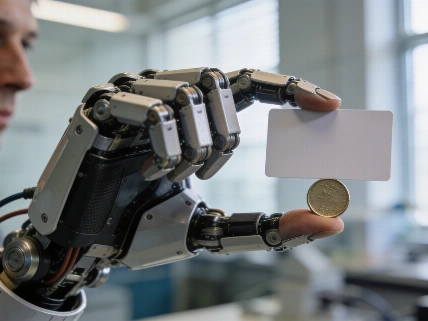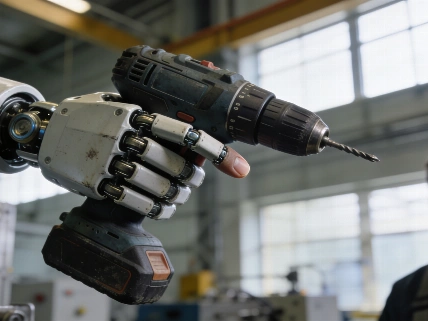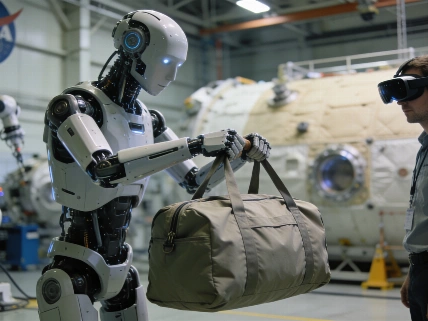
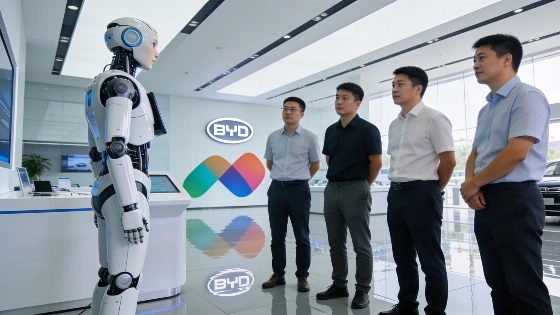
BYD, a leading Chinese electric vehicle manufacturer, will unveil its first functional humanoid robots in August, aiming to compete with Tesla's Optimus and leverage its large-scale manufacturing and battery expertise
BYD, one of the world's largest electric vehicle manufacturers, has announced plans to publicly demonstrate its first functional humanoid robots in August at its Di Space showroom. The company, which has built its reputation on vertically integrated production of batteries, semiconductors, and a wide range of vehicles, is now entering the competitive field of embodied artificial intelligence. The move positions BYD as a direct challenger to Tesla's Optimus project, with both companies seeking to apply their manufacturing scale and technical infrastructure to humanoid robotics.
According to company statements, the robots to be shown at Di Space will be functional and available for interactive demonstrations with visitors. While BYD has not disclosed detailed technical specifications, the company has emphasized its ability to produce key components in-house, including batteries and semiconductors, which could enable cost-effective scaling if the robots prove viable for industrial or commercial use. The demonstration is expected to focus on the robots' ability to perform basic tasks and interact with attendees, but independent technical documentation and systematic evaluation results have not yet been released.
Manufacturing Ambitions
BYD's entry into humanoid robotics follows a period of rapid expansion in China's robotics sector, with several domestic companies now ranked among the global leaders in the field. In June, BYD confirmed a significant investment in artificial intelligence, signaling its intention to leverage its manufacturing capacity and battery technology for embodied AI applications. The company's approach contrasts with Tesla's emphasis on software and autonomous driving, instead prioritizing large-scale production and integration of robotics into existing manufacturing workflows.
Industry observers note that BYD's core advantage may lie less in the novelty of its humanoid robots and more in its ability to manufacture them at scale. The company has suggested that China could become the first market to achieve full commercial deployment of humanoid robots, reflecting the country's strategic focus on robotics as a driver of economic growth. However, the timeline for widespread adoption remains uncertain, and no independent verification of BYD's production capacity or robot pricing has been provided.
Industrial Applications and Market Context
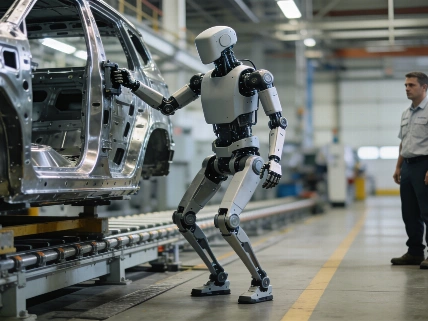
The initial target market for BYD's humanoid robots is expected to be factory automation, where robots could assist with tasks such as moving parts, assembling components, and inspecting products. This approach would allow BYD to test and refine its robots within its own manufacturing operations before offering them to external customers. If the robots demonstrate sufficient reliability and usability, potential applications could extend to warehouses, hospitals, hotels, retail, construction, and domestic environments. Some analysts have projected that the global humanoid robotics market could reach trillions of dollars, but such estimates remain speculative in the absence of large-scale, independently verified deployments.
Recent developments in the field highlight the competitive landscape. Tesla has yet to release Optimus as a commercial product, while other Chinese companies, such as Xpend, have announced plans to deploy thousands of robots by 2027. The race to introduce humanoid robots into the labor force is intensifying, with both technical capability and manufacturing scale seen as critical factors. For context, advances in full-body humanoid control have also been reported by other major players, including Google DeepMind's Gemini Robotics project, which has demonstrated multi-robot coordination and manipulation tasks in controlled settings.
Evidence and Limitations
As of June 2026, BYD has not released peer-reviewed technical documentation, benchmark results, or independent evaluations of its humanoid robots' performance. The company's announcement is based on planned demonstrations and internal investment in AI and robotics, rather than published evidence of reliable, autonomous operation in real-world environments. Key questions remain regarding the robots' autonomy, safety, failure rates, and the extent of human supervision required during operation. Without systematic testing and transparent reporting, it is not possible to assess the robots' readiness for deployment beyond controlled demonstrations.
Available figures indicate that China's humanoid robotics sector includes at least five companies among the global top five by production volume, but detailed breakdowns of robot capabilities, deployment environments, and safety records are limited. BYD's manufacturing scale is well established in the electric vehicle sector, with the company producing millions of vehicles annually, but the transferability of this expertise to humanoid robotics remains to be demonstrated through independent evaluation and real-world deployment.
Humanoid robots are designed to perform tasks in environments built for humans, but their development presents unique challenges in perception, manipulation, and safety. Unlike traditional industrial robots, which are often fixed and operate in structured settings, humanoid robots must navigate complex, dynamic environments and interact safely with people and objects. Achieving reliable autonomy requires advances in sensing, control, and machine learning, as well as rigorous testing to ensure safety and accountability. The distinction between automation and true autonomy is critical: many current systems rely on human supervision or teleoperation, and claims of independence must be supported by transparent evidence of performance in diverse, unstructured environments.